Your Soul Food for April 10th, 2026: Turning Your Stumbling Blocks into Steppingstones. A Story of Hope, Help and Healing!

Happy Soul Food Friday!
This week:

Spotify:  https://open.spotify.com/episode/11tts5ZpS85zjpuw49Xxph?si=uZsbpwClS6OJ543lbnryZw

Apple:  https://podcasts.apple.com/us/podcast/a-spirit-of-joy-instrumental-in-leading/id1517680573?i=1000758146917

Register here before we fill up: https://joyjam.communalspaces.org

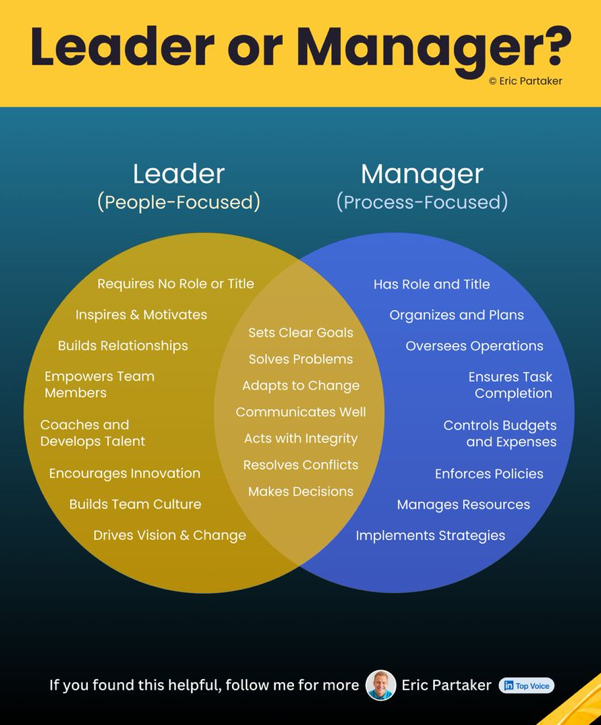
Are You Excited to Go to Work? Why Joy Is A Great Leadership Success Metric Most organizations run on a straight-line growth model. 

People do their work, achieve results, you make more money. Repeat. It’s logical, measurable – and especially reassuring to people who like dashboards.

The problem is that this model assumes that results and money will sustain motivation and maximize performance.  

Sometimes they do. When they don’t, the usual response is to double down on the same model and hope motivation catches up.  
The More Human Circular Model

There is another model that may look less efficient, but often works better in real life. Instead of chasing performance directly, you build a culture of joy that people actually enjoy being part of.  

Joy creates positive energy. Energy improves performance. Performance produces success. Success increases pride. Pride strengthens the culture of joy. And the cycle keeps feeding itself.  

It’s not linear. It’s circular.
LEARN TO LEAD FROM THE INSIDE OUT. The Amare Leadership Lab. Join a small, trusted circle of leaders who don’t pretend they have it all figured out. Five immersive, experimental lab sessions and a private breakthrough coaching session with Moshe. Show up fully, release what’s been holding you back, and create major shifts in you and your impact. Starts in early May, get more info now .
The Excitement Question Most Leaders Never Ask Richard Sheridan, founder of Menlo Innovations and author of Joy, Inc., built his company around a question most executives never think to put on a dashboard:

Are people excited to come to work?  

For Sheridan, excitement was the visible sign of joy, and joy was the sign the culture was working. He treated joy as the core measure of success. If the culture lacked joy, he assumed something in the system was wrong.
Window: 3 Examples Of Joy Fueling Success At Menlo Innovations, people work in pairs, talk constantly, and laugh more than you expect in a room full of programmers. The company has stayed profitable year after year in the volatile tech industry, in a workplace that looks nothing like the typical software company.  

Under Herb Kelleher, Southwest Airlines built a culture where humor, personality, and informality were not only allowed but expected. In an industry famous for bankruptcies and mergers, Southwest stayed profitable for decades while keeping employee loyalty and customer satisfaction near the top of the charts.

At Trader Joe’s, the difference is obvious the moment you walk into a store. Employees talk to customers, joke with each other, and seem unusually relaxed for retail. The company invests heavily in autonomy, internal promotion, and culture, and the result is some of the highest sales per square foot in the grocery business.
Experiential Amare Moment – Do This  Now Rate 1 to 10: How excited are you to go to work most days? Just notice your number. It’s a data point that may be more useful than the quarterly report.
Mirror – Three Questions To Reflect On When did work last feel genuinely energizing instead of just necessary? Do people around you seem alive at work, or just professionally responsible? What in our culture might be producing results but not producing joy? Different industries. Same loop.  

Joy produces positive energy, which leads to better performance,  which grows pride, resulting in more joy.

While the linear model tries to drive results and hopes joy follows, the circular model builds joy and lets results follow.
Research – Why Joy Improves Performance

Barbara Fredrickson’s
research shows that positive emotions such as joy expand thinking, creativity, and resilience, helping people perform better over time.  

Studies on positive affect at work have likewise found that employees who feel good while working show higher creativity, better decision-making, and stronger performance than those who do not. 

Bottom line? How people feel at work is not separate from results — it helps drive them. 
Door into Action: 5 Amare Steps To Bring Joy Back Into The System 1. Make progress visible and collaborative. Set up the workplace so people naturally show their work, get input, and help each other as they go.

2. Remove one daily irritation. Fix one process, rule, or habit that everyone complains about and nobody changes.

3. Bring personality to work. Encourage conversation, humor, and human interaction instead of treating professionalism like emotional restraint.

4. Track joy as a performance metric. Regularly ask how excited people feel about the work and share the results.

5. Make joy a leadership responsibility. Treat excitement about the work as something you and the leadership team are responsible for enabling.

Thanks, this week go to Shayna and Eric K for sharing their story, Drew and Charles for helping tell it, and to Moshe E for the Joy as a Success Metric article.

Please pay it forward with joy!

Love,

Neville

Subscribe to this Free Weekly Blog Here: Welcome to Soul Food Friday: A weekly blog to feed, grow and energize your soul – Happy Soul Food Friday!

Linked-In: https://www.linkedin.com/in/nevillebillimoria
Facebook: https://www.facebook.com/nbillimoria

Your Soul Food for June 6, 2025: What if we could redefine leadership? What if kindness came first?

Happy Soul Food Friday!

This week:

Jacinda Ardern reflects on a career focused on the power of kindness:

What if we could redefine leadership? What if kindness came first? 

New Zealand’s Jacinda Ardern broke the mold on leadership, motherhood and stepping down : NPR (short version 8 minutes)

Jacinda Ardern’s new memoir addresses motherhood, public office : NPR (longer version 30 minutes)

The book: Amazon.com: A Different Kind of Power: A Memoir: 9780593728697: Ardern, Jacinda: Books

Feeling Stressed? Here’s Why You Should Start Humming (Seriously)
Mindfulness practices, such as meditation, are often the antidote for dealing with stress—and for good reason: there are loads of studies about the benefits of being present. But for some, meditation can be a hard practice to develop.

Feeling Stressed? Here’s Why You Should Start Humming (Seriously)

Sinnerman-Nina Simone:

Something to take you out…

Nina Simone – Sinnerman (Audio)

Please pay it forward on purpose!

Love,

Neville

Linked-In: https://www.linkedin.com/in/nevillebillimoria
Facebook: https://www.facebook.com/nbillimoria

Your Soul Food for Friday February 21, 2025: Could Communication Save the World?

This week:

Given my penchant to say “yes” to the universe at my own peril, I get many queries about topics of import from all walks of life including from conscious business leaders, non-profit organizations, educators, influencers, wisdom traditionalists, students, neighbors and more…

In the last week, I got a real interesting set of questions with respect to communications specifically:

When working with leaders I talk about recognizing the difference between our assets and weapons.

As I see it, our two greatest assets as leaders are our (a) people and (b) self-reflection.

Our greatest weapon, however, is communication. 

So,

1. How would you create a culture of communication in your brand, businesses, or leadership? 

2. What would be significant communication hurdles you’d look to solve for by doing this?

Here is my response for the good or the order and, if appropriate, to disrupt the freakin’ disorder:

Note: Communications is my passion, discipline, and superpower so as Lynyrd Skynyrd would say, “I know a little ‘bout it, and baby I guess the rest” so please use what’s useful and discard the rest!

Welcome your thoughts too, Soul Food Community of several thousand strong, and got it going on…

Context (for me in the spirit of full transparency):

Even as a practicing lifetime peaceful warrior, steeped in the martial arts traditions for nearly 50 years, I am working hard to take the war language out of communications, as I don’t find it reflective of our current needs as individuals and as a culture, and unintentionally reinforces a command-and-control leadership/adversarial framework v. a collaborative/collective wisdom orientation.

There is a whole body of work around this that is way above my pay grade:

CNVC Founder – Center for Nonviolent Communication

Taking the War Out of Our Words:The Art of Powerful Non-Defensive Communication: Ellison, Sharon: 9780972002103: Amazon.com: Books

  • Western Science and Eastern Wisdom Traditions, they work together
  • Strengths-Based Frameworks not a Deficit Model, we are not motivated by our deficits
  • Leadership is Inside Out not Outside In, its not performative, its authentic- own it!
  • We > Me Collective Wisdom not just Individual Achievement, no one of us is as smart as ALL of us
  • Cultural Competencies not just Success Strategies: “Culture eats Strategy for Breakfast” as Peter Drucker famously reminds us

Imagine a world in which almost all organizations are typified by greed, selfishness, manipulation, secrecy, and a single-minded focus on winning. Wealth creation is the key indicator of success. Imagine that members of such organizations are characterized by distrust, anxiety, self-absorption, fear, burnout, and feelings of abuse. Conflict, lawsuits, contract breaking, retribution, and disrespect characterize many interactions and social relationships. Imagine also that scholarly researchers investigating these organizations emphasize theories of problem solving, reciprocity and justice, managing uncertainty, overcoming resistance, achieving profitability, and competing successfully against others.

For the sake of contrast, now imagine another world in which almost all organizations are typified by appreciation, collaboration, virtuousness, vitality, and meaningfulness. Creating abundance and human well-being are key indicators of success. Imagine that members of such organizations are characterized by trustworthiness, resilience, wisdom, humility, high levels of positive energy. Social relationships and interactions are characterized by compassion, loyalty, honesty, respect, and forgiveness. Significant attention is given to what makes life worth living. Imagine that scholarly researchers emphasize theories of excellence, transcendence, positive deviance, extraordinary performance, and positive spirals of flourishing.

Positive Organizational Scholarship (POS) does not reject the value and significance of the phenomena of the first world view. Rather, it emphasizes the phenomena represented in the second world view. A focus on competition and profitability in the first world view, for example, is crucial for understanding organizational survival and success. The second world view merely calls attention to phenomena that represent positive deviance—phenomena that have received limited scholarly attention in organizational studies. Most organizational theories and empirical research have, heretofore, adopted assumptions and variables that are more typical of the first world view than the second.

That said, I love assets and consider communications a meta competency that transcends and informs other skills that are critical to conscious and authentic leadership.

I consider the trifecta of skill sets, mindset, and heart set to be the building blocks for leadership from within (intrapersonal) and communication a meta competency for connecting, engaging, and influencing others (interpersonal)

This might be all semantics to you, but language matters to me!

With that said here goes…

How would you create a culture of communication in your brand, businesses, or leadership? 

  1. Assess present state

              What is the climate/culture now?

What are the positive deviants already modeling and behaving into the future state?

Is the future state a compelling vision that everyone knows, owns, and is energized by?

Are those modeling the heart/mind/skill sets being affirmed and recognized?

  1. Define future state in the language of your tribe

              Having values like trust and integrity or competencies like communications and a service orientation are great but define them in the context of what these actually look like in your enterprise with actual examples.

  1. Make these values a critical component of evaluative and developmental opportunities such as annual reviews, organizational goals, brand stories, etc.

For example, your annual review could have 3 parts; goals, values, and discretionary effort (weighted differently) but all assessed with periodicity. (That’s what we do at Mission Fed…)

  1. Use the Positive Org Scholarship criteria above to continue to help the individuals and org behave into the future state.

If Leadership is a skill, then by definition it can be taught!

Lead each gathering, meeting, training, with a “mission story” that incorporates these elements and integral to your brand experience and differentiation

What would be significant communication hurdles you’d look to solve for by doing this?

  1. Tone at the Top- are senior leaders modeling these behaviors or just asking others to do it?   Am I doing it?
  1. Tolerance for Misalignment- tolerating poor communicators (typically a function of ego-myopia and self-interest v. collective interest) suggesting these are flexible criteria not sacrosanct
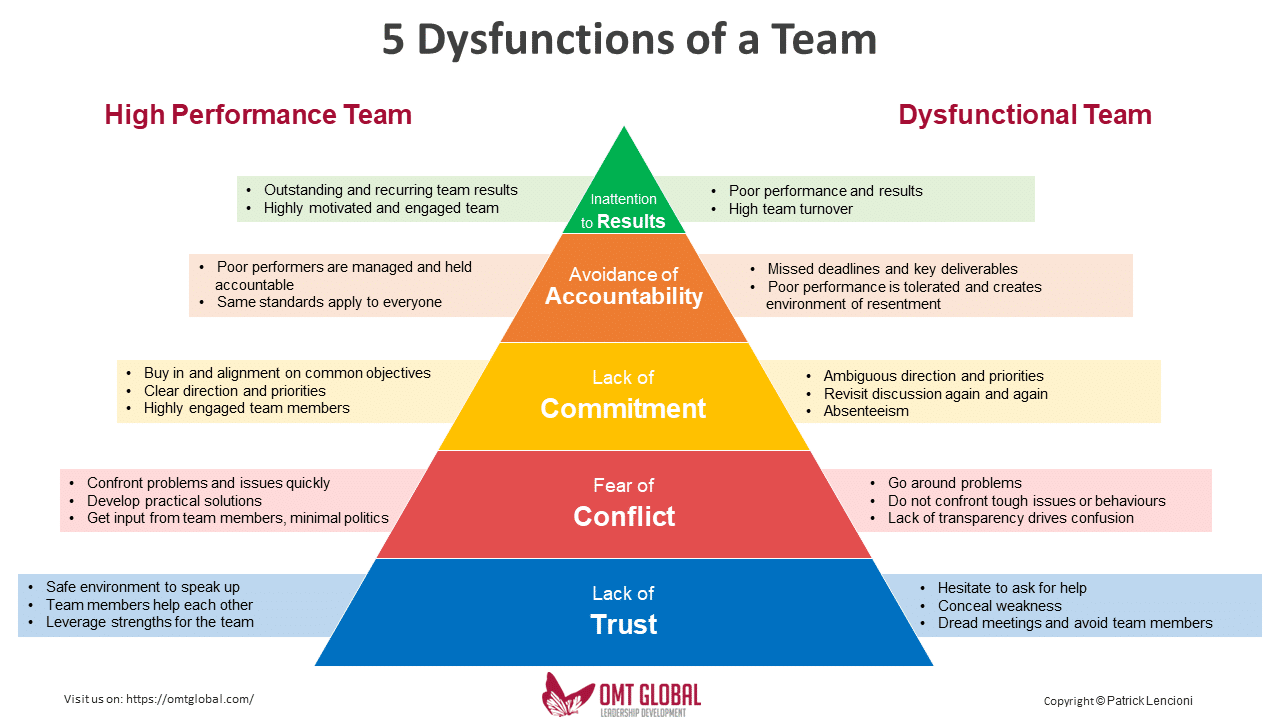
  1. Map against the 5 Dysfunctions of a Team (see below)

              For example, a low trust environment breeds negative conditions that preclude moving up the ladder to commitment, accountability, and results.

And then this hit my email box:

How Can You Recognize a Culture of Bad Leadership? Look for 5 Toxic Signs

Hope this provides some wind in your sails as YOU navigate turbulent seas, with your leadership chops at the helm,  communication skills as your rudder, and trust at your keel…

Thaks this week go to Kai H and Jeff H for the prompt, thought leaders Dr. Danny F, Eric K, and Dr. Alan D, as well as Dr. Herb S and Dr. Dan H. at UC San Diego’s Comm Dept.  for the foundational principles and practices in Communications.

Fair winds and Following Seas…

We do get by with a little help from our friends!

Love,

Neville

Linked-In: https://www.linkedin.com/in/nevillebillimoria
Facebook: https://www.facebook.com/nbillimoria

F: X!

Your Soul Food for Friday February 2, 2024: Better Rest, Upskilling Leadership, Mastering a Growth Mindset and Fostering a Great Culture

Happy Soul Food Friday!

This week:

  • Better Rest
  • Upskilling Leadership
  • Mastering a Growth Mindset
  • Fostering a Great Culture

The Seven Forms of Rest and Why You Need All of Them:

The Seven Forms of Rest and Why You Need All of Them | INTEGRIS Health (integrisok.com)

NCPC Mentorship 2.0: Fostering A Community of Practice:

If you are local and want to grow here is a 4-month program I have had the privilege of helping ideate as part of my service on the NCPC Board of Directors to ensure everyone has access and opportunity to upleveling their leadership skills to drive social impact.

The mentors are all amazing and the program is designed to be a value driver for all that participate.

Note: This is the last week to sign up so please help us spread the word!

The 3 daily tricks Jay Shetty says will help you master a growth mindset and achieve your goals
The 3 steps of growth to set you up for success.

Jay Shetty: 3 tricks for achieving your goals and mastering the growth mindset | Fortune Well

What is Culture with Jon Gordon:

Culture is not one person. It’s everyone.

Culture is not static. It’s dynamic. 

Every day, everyone in your organization creates your culture by what they value, believe, think, say, and do. 

Regardless of what your culture was like last year or even yesterday, what matters most is what you are doing today to build your culture and make it great. 

This past Thursday and Friday I had the honor and opportunity to speak to the Colorado Rockies entire organization. From the Owner, President, GM, Manager and Dominican coaches to athletic trainers, equipment managers, ticket sales, tech, etc. It’s rare for a professional sports team to bring everyone in the organization together, but the Rockies have a rare, special culture filled with amazing people. 

It occurred to me how important it was that everyone in the organization was learning the same principles and practices for enhanced mindset, leadership and teamwork at the same time.

Shared learning experiences like this create a common bond, a common understanding, a common language, and common practices, that reinforce and strengthen the culture and lead to collective growth.

While I’m a big believer of diversity of people, diversity of thought, diversity of ideas and diversity of innovative strategies in an organization, it’s essential to connect and unite around a set of common principles, practices and core values.

For a culture to be strong, everyone in an organization must know what they stand for and live these shared principles and core values.

When a diverse group of people know and show their values consistently together, they are well on their way to creating a culture of greatness and creating great results.

Culture is created and you and your team can create a great culture starting today by what you value, believe, think, say and ultimately do. 

Start by getting together and ask, “What do we stand for and what do we want to be known for?”

Then decide how you will live it and show it.

Thanks this week go to Larry H for the culture article.

Please pay it forward.

Love,

Neville

Follow me on Twitter: https://twitter.com/NevilleB108 
Follow me on Facebook: https://www.facebook.com/nbillimoria