Your Soul Food for Friday August 14, 2026: So What is Leadership Really and How Can We Grow Our Leadership Influence and Impact? + Join the NCPC Impact Leadership Accelerator!

This week:

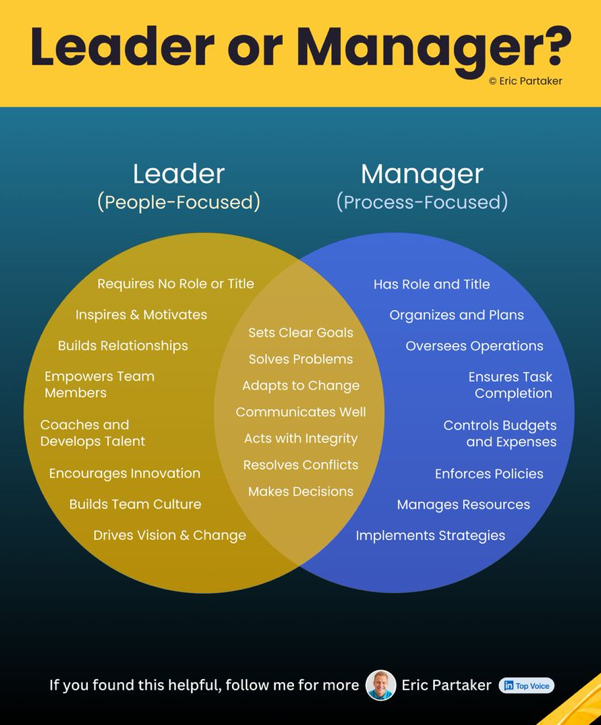
Leadership is a decision not a position.

Today more than ever, we need purpose-driven and conscious leaders of all stripes to help us navigate the uncertainties of an everchanging social, economic, and geopolitical landscape.

Academics used to call it a VUCA world- Volatile, Uncertain, Complex and Ambiguous

Now the pundits are referring to it as a BANI world- Brittle, Anxious, Nonlinear, and Incomprehensible

But forget the brainiacs and theoreticians, how are you experiencing this moment?

This week’s missive explores leadership including local and impactful options to upskill your meta-competencies in the leadership sphere.

You’ve got this and we need YOU!

  • A Stanford Business School Professor Just Gave the Best Definition of Leadership I’ve Ever Heard
  • What Causes Poor Leadership? Research Points to Four Leadership Failures
  • A CEO Should Only Do 3 Things. Delegate Everything Else
  • The one surprising habit shared by the world’s best decision-makers, according to psychologists
  • Steve Jobs Said Great Leaders Make One Difficult Choice Most Managers Avoid
  • + 𝗛𝗼𝘄 D𝗼 𝗜 𝗯𝗲𝗰𝗼𝗺𝗲 𝗮 B𝗲𝘁𝘁𝗲𝗿 L𝗲𝗮𝗱𝗲𝗿, Right Here in San Diego?

That last question doesn’t keep office hours. It shows up on the drive home. In the quiet after a hard board meeting. At the end of a day when you poured everything into the mission and still wonder if you got it right. If you lead, you know the rest of them:

How do I get to the next level? How do I build a network beyond my own organization? Where do I find the people, the ideas, the resources that would make me better at this? How do I move my vision — and my career — forward inside all of it?

Most leaders try to answer those alone. You don’t have to… (read on)


It has nothing to do with strategy, charisma, or vision. It’s about something much simpler.

“Great leaders are people who think of themselves as trustees of other people’s time.”

A Stanford Business School Professor Just Gave the Best Definition of Leadership I’ve Ever Heard


Companies create many of their own leadership problems by promoting capable people without preparing them to lead. What if the biggest leadership problem in your company is not a shortage of talented people, but the way you select, promote, and develop managers? Poor leaders are not bad people. Many are smart, hardworking, and technically gifted.

What Causes Poor Leadership? Research Points to 4 Leadership Failures


This idea reorganized my entire working life. It fits on an index card. I’ve founded seven companies, and for the first few of them, I wasn’t the best CEO. Not because I lacked effort — because I was drowning in it. I wrote the marketing copy, tweaked the proposals, sat in on every interview, and answered emails at midnight like it was a badge of honor…

A CEO Should Do Only 3 Things. Delegate Everything Else

The one surprising habit shared by the world’s best decision-makers, according to psychologists:


It’s time to start thinking about doing some thinking about thinking. There’s a scene in the UK mockumentary series Cunk on Earth where the ill-informed investigative reporter Philomena Cunk is in a museum, looking at busts of Greek philosophers. Philosophy, she explains, “is basically thinking about thinking, which sounds like a waste of time, because it is.” It’s a funny observation, but as usual, Cunk is wrong.

The one surprising habit shared by the world’s best decision-makers, according to psychologists | BBC Science Focus Magazine


Making people better requires high standards, honest feedback, and a workplace where people are not afraid of the boss. Apple CEO Steve Jobs speaks at All Things Digital June 1, 2010, in Rancho Palos Verdes, California. Jobs spoke about where he thought the industry was headed. There is a dangerous idea floating around the workplace: If you care about employees, you should avoid making them uncomfortable. That sounds compassionate. Sometimes it is…

Steve Jobs Said Great Leaders Make One Difficult Choice Most Managers Avoid

All fine and dandy but, what do YOU plan to do about it?

Leadership

That question doesn’t keep office hours.

It shows up on the drive home. In the quiet after a hard board meeting. At the end of a day when you poured everything into the mission and still wonder if you got it right.

If you lead a nonprofit, you know the rest of them:

How do I get to the next level? How do I build a network beyond my own organization? Where do I find the people, the ideas, the resources that would make me better at this? How do I move my vision — and my career — forward inside all of it?

Most leaders try to answer those alone. You don’t have to.

NCPC’s 𝗜𝗺𝗽𝗮𝗰𝘁 𝗟𝗲𝗮𝗱𝗲𝗿𝘀𝗵𝗶𝗽 𝗔𝗰𝗰𝗲𝗹𝗲𝗿𝗮𝘁𝗼𝗿 (𝗜𝗟𝗔) exists so San Diego’s nonprofit leaders can stop figuring it out in isolation. Learn alongside peers who get it. Build real relationships. Broaden your perspective and sharpen the skills that make you more effective — for your team, your mission, and yourself.

The next cohort starts in September.

Know someone carrying these questions alone? Send this their way.

#ImpactLeadershipAccelerator #NCPC #LeadershipDevelopment 

Here is to your leadership journey.

Please pay it forward!

Love,

Neville

Subscribe to the Free Weekly Blog Here: Welcome to Soul Food Friday: A weekly blog to feed, grow and energize your soul – Happy Soul Food Friday!

Linked-In: https://www.linkedin.com/in/nevillebillimoria

Your Soul Food for Friday February 21, 2025: Could Communication Save the World?

This week:

Given my penchant to say “yes” to the universe at my own peril, I get many queries about topics of import from all walks of life including from conscious business leaders, non-profit organizations, educators, influencers, wisdom traditionalists, students, neighbors and more…

In the last week, I got a real interesting set of questions with respect to communications specifically:

When working with leaders I talk about recognizing the difference between our assets and weapons.

As I see it, our two greatest assets as leaders are our (a) people and (b) self-reflection.

Our greatest weapon, however, is communication. 

So,

1. How would you create a culture of communication in your brand, businesses, or leadership? 

2. What would be significant communication hurdles you’d look to solve for by doing this?

Here is my response for the good or the order and, if appropriate, to disrupt the freakin’ disorder:

Note: Communications is my passion, discipline, and superpower so as Lynyrd Skynyrd would say, “I know a little ‘bout it, and baby I guess the rest” so please use what’s useful and discard the rest!

Welcome your thoughts too, Soul Food Community of several thousand strong, and got it going on…

Context (for me in the spirit of full transparency):

Even as a practicing lifetime peaceful warrior, steeped in the martial arts traditions for nearly 50 years, I am working hard to take the war language out of communications, as I don’t find it reflective of our current needs as individuals and as a culture, and unintentionally reinforces a command-and-control leadership/adversarial framework v. a collaborative/collective wisdom orientation.

There is a whole body of work around this that is way above my pay grade:

CNVC Founder – Center for Nonviolent Communication

Taking the War Out of Our Words:The Art of Powerful Non-Defensive Communication: Ellison, Sharon: 9780972002103: Amazon.com: Books

  • Western Science and Eastern Wisdom Traditions, they work together
  • Strengths-Based Frameworks not a Deficit Model, we are not motivated by our deficits
  • Leadership is Inside Out not Outside In, its not performative, its authentic- own it!
  • We > Me Collective Wisdom not just Individual Achievement, no one of us is as smart as ALL of us
  • Cultural Competencies not just Success Strategies: “Culture eats Strategy for Breakfast” as Peter Drucker famously reminds us

Imagine a world in which almost all organizations are typified by greed, selfishness, manipulation, secrecy, and a single-minded focus on winning. Wealth creation is the key indicator of success. Imagine that members of such organizations are characterized by distrust, anxiety, self-absorption, fear, burnout, and feelings of abuse. Conflict, lawsuits, contract breaking, retribution, and disrespect characterize many interactions and social relationships. Imagine also that scholarly researchers investigating these organizations emphasize theories of problem solving, reciprocity and justice, managing uncertainty, overcoming resistance, achieving profitability, and competing successfully against others.

For the sake of contrast, now imagine another world in which almost all organizations are typified by appreciation, collaboration, virtuousness, vitality, and meaningfulness. Creating abundance and human well-being are key indicators of success. Imagine that members of such organizations are characterized by trustworthiness, resilience, wisdom, humility, high levels of positive energy. Social relationships and interactions are characterized by compassion, loyalty, honesty, respect, and forgiveness. Significant attention is given to what makes life worth living. Imagine that scholarly researchers emphasize theories of excellence, transcendence, positive deviance, extraordinary performance, and positive spirals of flourishing.

Positive Organizational Scholarship (POS) does not reject the value and significance of the phenomena of the first world view. Rather, it emphasizes the phenomena represented in the second world view. A focus on competition and profitability in the first world view, for example, is crucial for understanding organizational survival and success. The second world view merely calls attention to phenomena that represent positive deviance—phenomena that have received limited scholarly attention in organizational studies. Most organizational theories and empirical research have, heretofore, adopted assumptions and variables that are more typical of the first world view than the second.

That said, I love assets and consider communications a meta competency that transcends and informs other skills that are critical to conscious and authentic leadership.

I consider the trifecta of skill sets, mindset, and heart set to be the building blocks for leadership from within (intrapersonal) and communication a meta competency for connecting, engaging, and influencing others (interpersonal)

This might be all semantics to you, but language matters to me!

With that said here goes…

How would you create a culture of communication in your brand, businesses, or leadership? 

  1. Assess present state

              What is the climate/culture now?

What are the positive deviants already modeling and behaving into the future state?

Is the future state a compelling vision that everyone knows, owns, and is energized by?

Are those modeling the heart/mind/skill sets being affirmed and recognized?

  1. Define future state in the language of your tribe

              Having values like trust and integrity or competencies like communications and a service orientation are great but define them in the context of what these actually look like in your enterprise with actual examples.

  1. Make these values a critical component of evaluative and developmental opportunities such as annual reviews, organizational goals, brand stories, etc.

For example, your annual review could have 3 parts; goals, values, and discretionary effort (weighted differently) but all assessed with periodicity. (That’s what we do at Mission Fed…)

  1. Use the Positive Org Scholarship criteria above to continue to help the individuals and org behave into the future state.

If Leadership is a skill, then by definition it can be taught!

Lead each gathering, meeting, training, with a “mission story” that incorporates these elements and integral to your brand experience and differentiation

What would be significant communication hurdles you’d look to solve for by doing this?

  1. Tone at the Top- are senior leaders modeling these behaviors or just asking others to do it?   Am I doing it?
  1. Tolerance for Misalignment- tolerating poor communicators (typically a function of ego-myopia and self-interest v. collective interest) suggesting these are flexible criteria not sacrosanct
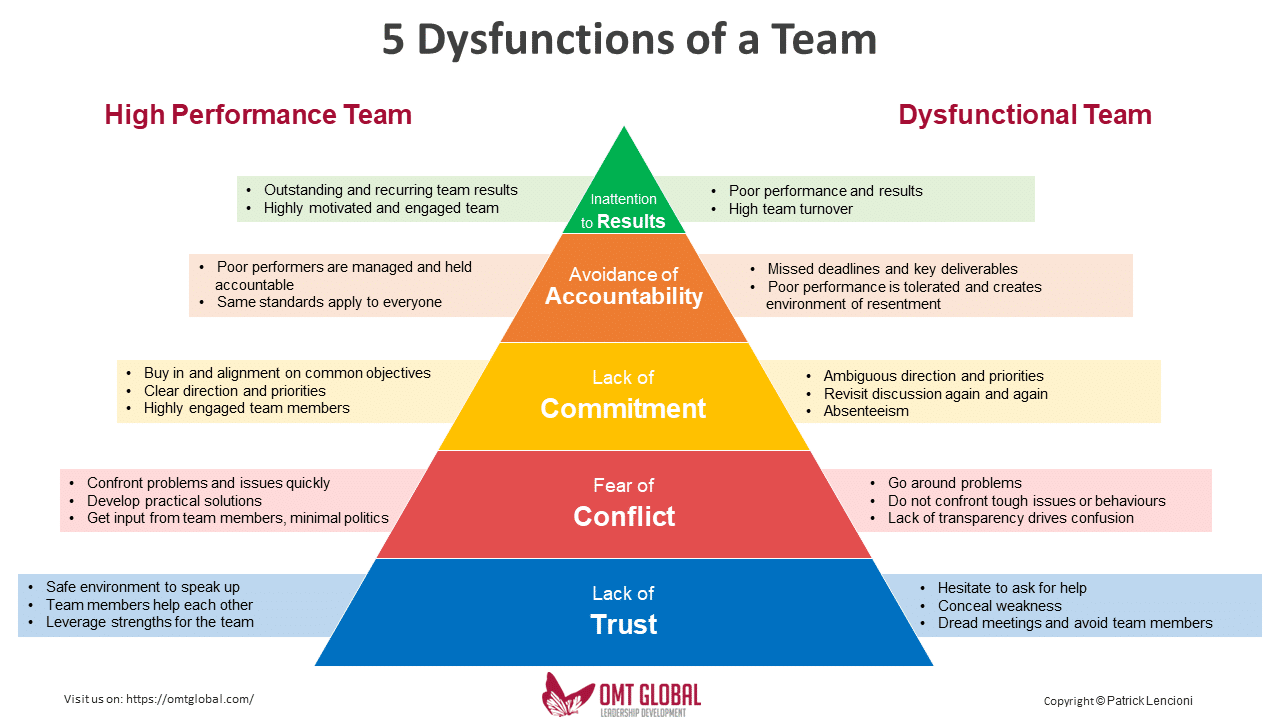
  1. Map against the 5 Dysfunctions of a Team (see below)

              For example, a low trust environment breeds negative conditions that preclude moving up the ladder to commitment, accountability, and results.

And then this hit my email box:

How Can You Recognize a Culture of Bad Leadership? Look for 5 Toxic Signs

Hope this provides some wind in your sails as YOU navigate turbulent seas, with your leadership chops at the helm,  communication skills as your rudder, and trust at your keel…

Thaks this week go to Kai H and Jeff H for the prompt, thought leaders Dr. Danny F, Eric K, and Dr. Alan D, as well as Dr. Herb S and Dr. Dan H. at UC San Diego’s Comm Dept.  for the foundational principles and practices in Communications.

Fair winds and Following Seas…

We do get by with a little help from our friends!

Love,

Neville

Linked-In: https://www.linkedin.com/in/nevillebillimoria
Facebook: https://www.facebook.com/nbillimoria

F: X!

Your Soul Food for Friday February 2, 2024: Better Rest, Upskilling Leadership, Mastering a Growth Mindset and Fostering a Great Culture

Happy Soul Food Friday!
This week:

  • Better Rest
  • Upskilling Leadership
  • Mastering a Growth Mindset
  • Fostering a Great Culture

The Seven Forms of Rest and Why You Need All of Them:

The Seven Forms of Rest and Why You Need All of Them | INTEGRIS Health (integrisok.com)

NCPC Mentorship 2.0: Fostering A Community of Practice:

If you are local and want to grow here is a 4-month program I have had the privilege of helping ideate as part of my service on the NCPC Board of Directors to ensure everyone has access and opportunity to upleveling their leadership skills to drive social impact.

The mentors are all amazing and the program is designed to be a value driver for all that participate.

Note: This is the last week to sign up so please help us spread the word!

The 3 daily tricks Jay Shetty says will help you master a growth mindset and achieve your goals
The 3 steps of growth to set you up for success.

Jay Shetty: 3 tricks for achieving your goals and mastering the growth mindset | Fortune Well

What is Culture with Jon Gordon:

Culture is not one person. It’s everyone.

Culture is not static. It’s dynamic. 

Every day, everyone in your organization creates your culture by what they value, believe, think, say, and do. 

Regardless of what your culture was like last year or even yesterday, what matters most is what you are doing today to build your culture and make it great. 

This past Thursday and Friday I had the honor and opportunity to speak to the Colorado Rockies entire organization. From the Owner, President, GM, Manager and Dominican coaches to athletic trainers, equipment managers, ticket sales, tech, etc. It’s rare for a professional sports team to bring everyone in the organization together, but the Rockies have a rare, special culture filled with amazing people. 

It occurred to me how important it was that everyone in the organization was learning the same principles and practices for enhanced mindset, leadership and teamwork at the same time.

Shared learning experiences like this create a common bond, a common understanding, a common language, and common practices, that reinforce and strengthen the culture and lead to collective growth.

While I’m a big believer of diversity of people, diversity of thought, diversity of ideas and diversity of innovative strategies in an organization, it’s essential to connect and unite around a set of common principles, practices and core values.

For a culture to be strong, everyone in an organization must know what they stand for and live these shared principles and core values.

When a diverse group of people know and show their values consistently together, they are well on their way to creating a culture of greatness and creating great results.

Culture is created and you and your team can create a great culture starting today by what you value, believe, think, say and ultimately do. 

Start by getting together and ask, “What do we stand for and what do we want to be known for?”

Then decide how you will live it and show it.

Thanks this week go to Larry H for the culture article.

Please pay it forward.

Love,

Neville

Follow me on Twitter: https://twitter.com/NevilleB108 
Follow me on Facebook: https://www.facebook.com/nbillimoria