A few weeks ago, in a message headlined “The End of Soul Food Friday?” I shared with all of you that Soul Food Friday needed a new home and some help, including underwriting part of the expense of hosting the site and the monthly subscription fees to maintain the site after 13 years.
An anonymous donor and dear friend of mine offered to match the first $100 as a way to support this ongoing effort.
Heartfelt thanks to Ricardo & Laurie R, Vicente R, Matt N, Genevieve T, Louis L, Killu S, Jaime M, Lee B, Jason M, Malcolm A, Frank M, Linda P, James W, Sean C, John R and Francisco E for stepping up with your kind contributions to keeping Soul Food Friday going!
If you would choose to make a contribution of any size to keep this labor of love alive, simply click below.
It is strictly a pay what you want model predicated on the Law of Reciprocity, where “largesse begets largess”
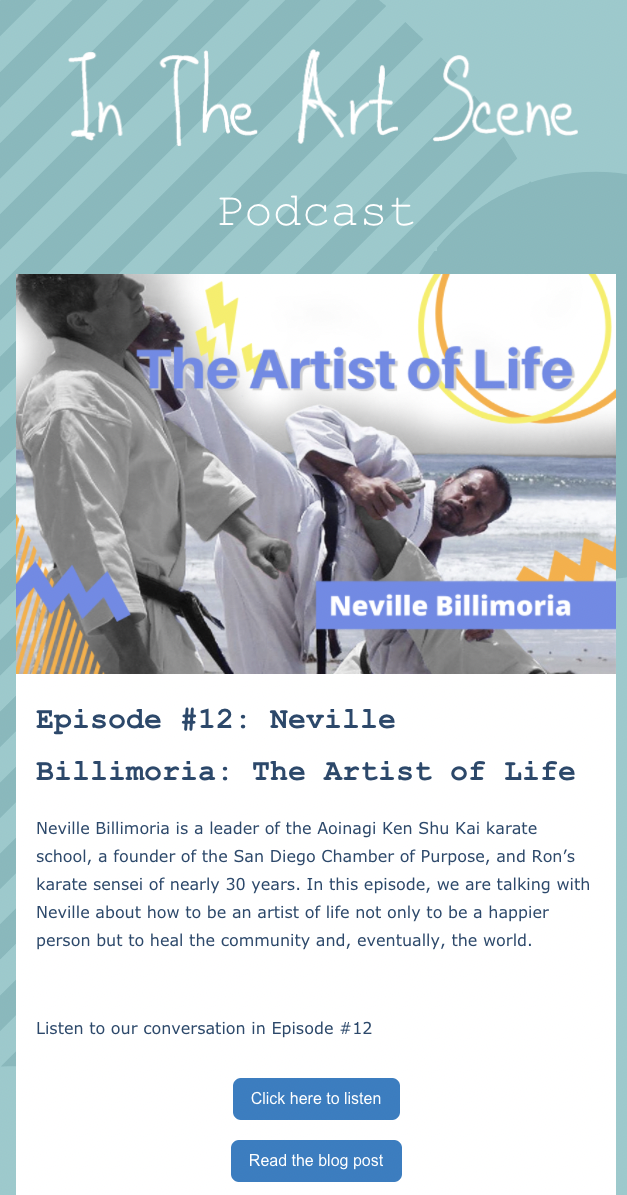
This episode is an interview with me by Ron and Galina, the creators and curators of In the Art Scene, about how to be an artist of life to become a happier person, to help heal our community and even the world.
This episode covers:
Education as a Key to Communal Wellbeing
Bridging the West and the East
How I Became a Martial Artist in the First Place
A Different Kind of Dojo Where It Is NOT About Fighting But About Living Well
“It’s the courage to raise a child that makes you a father.”—Barack Obama
For decades, men have been honored for being providers. I’d like to now see them honored for their caretaking and caregiving as well. It’s time…
These Unappreciated Animal Dads Make Big Sacrifices for Their Young:
From bullfrogs that build ditches to help their tadpoles to foxes that give their kits “lessons,” some animal fathers are more involved in raising their young than many realize.
Transcendent Leadership- Follow Your Heart’s Wisdom:
We’re mutually traversing some of the most perplexing times in recent history and some leaders’ response to this has been to harden themselves. If we choose to do this, we cut ourselves off from each other, because after all, connection is the heart of our humanity. Being vulnerable, heart-opened and heart-led has never been more essential…
Healing Reimagined: Reconnecting Traditional Healing with Modern Medicine:
In a world coming of age in the shadows of social media giants, we are in the midst of a losing battle to train empathetic and situationally aware doctors, nurses, and health care professionals.
Making contact and connection with people who seek healing has never been more difficult. Our technology driven approach to medicine often leaves much to be desired at the juncture of the doctor-patient relationship. In addition, the generational tendency to avoid or limit physical social interaction has stunted our greatest asset in our struggle for progress in compassionate patient care.
Healing Reimagined follows the author’s lifetime quest for the meaning of healing, intricately bridging underlying fundamental themes of traditional medicine and the communication deficiencies of modern medicine. Linking modern neurology and psychology with cross-cultural ancient healing traditions, we trace the thread that leads from the wisdom of traditional healing practices to the forefront of leading-edge research.
“Keep your sense of proportion by regularly, preferably daily, visiting the natural world.” — Caitlin Matthews
Magical Pictures of Nature
These Breathtaking Natural Wonders No Longer Exist:
Natural and Human-Caused Forces Constantly Reshape Earth’s Landscape
Landscapes shape our sense of place, yet Earth is constantly changing. The forces of volcanism, wind, water, sun, and, yes, people, relentlessly conspire to transform what we consider familiar terrain—pummeling cliffs into beaches, eroding vast canyons, forming new land with bubbling lava, and shifting the course of mighty rivers.
As we return to travel, we shouldn’t be surprised to find some things have changed. After all, change is the only constant—an idea seeded by Greek philosopher Heraclitus back in the fifth century B.C. and echoed by philosophers since. But people often forget that Heraclitus believed fear of change is also a constant. Perhaps it’s this sense of looming impermanence that compels travelers to see natural wonders before they’re forever changed.
Thanks this week go to Ron & Galina M, Arthur B, Elaine T, Marcy M, Mehrad N, and another big shout out to Ricardo & Laurie R, Vicente R, Matt N, Genevieve T, Louis L, Killu S, Jaime M, Lee B, Jason M, Malcolm A, Frank M, Linda P, James W, Sean C, John R and Francisco E for making this mission possible!
Please pay it forward, live soul-filled, and do subscribe to Soul Food Friday if you dig it!
“There are no strangers, there are only friends we haven’t met yet”…
This week: Juneteenth
This week is a good time to reflect on our country, its treatment of Black people, and to consider how our collective commitment to equity, diversity and inclusion can help unite our diverse society to explore and find solutions to end systemic racism
Congress Passes Legislation to Make Juneteenth a Federal Holiday
It’s the first federal holiday approved since Martin Luther King Jr. Day in 1983
June 19 marks a pivotal event in our country’s history. While the Emancipation Proclamation became official on January 1, 1863, many enslaved Africans lived in states where slavery continued or where they did not know that they were free. On June 19, 1865, Union Major General Gordon Granger informed more than 250,000 slaves in Texas that they were legally freed. The annual celebration of Juneteenth began a year later on June 19, 1866.
Also known as “Freedom Day,” “Emancipation Day” or “Jubilee,” Juneteenth is one of our country’s oldest celebrations of the abolition of slavery, but not every American is familiar with the observance. This year, we are hopeful that many more people in our UC San Diego community will take the opportunity to learn more about Juneteenth and explore the history and meaning of this annual event. Although Juneteenth is not a federal holiday, most states and the District of Columbia have passed legislation recognizing it as a holiday or observance. California recognizes the third Saturday of June in each year as Juneteenth National Freedom Day: A Day of Observance.
This is a good time to reflect on our country, its treatment of Black people, and to consider how our collective commitment to equity, diversity and inclusion can help unite our diverse society to explore and find solutions to end systemic racism.
“In the end, we will remember not the words of our enemies, but the silence of our friends.”
— Dr Martin Luther King Jr
The Danger of Silence with Clint Smith: (4 mins)
“We spend so much time listening to the things people are saying that we rarely pay attention to the things they don’t,” says slam poet and teacher Clint Smith. A short, powerful piece from the heart, about finding the courage to speak up against ignorance and injustice.
Ted Talk: How I Learned to Stop Worrying and Love Discussing Race with Jay Smooth: (11 mins)
Jay Smooth is host of New York’s longest running hip-hop radio show, the Underground Railroad on WBAI 99.5 FM in NY, and is an acclaimed commentator on politics and culture
Stages of Multicultural Curriculum Transformation and Leveraging the Promise and Possibility of Education:
Just as there are several conceptualizations for multicultural education there are several perceptions as to what constitutes multicultural curriculum transformation. Approaches for multicultural curriculum transformation range from slight curricular changes to a fully-revised social awareness and action conceptualizations. James Banks (1993), Peggy McIntosh (2000) and others have formulated continuums for curricular reform that help move transformation efforts from the former toward the latter. An informed and educated society is our way forward to equity and inclusion.
Thanks this week go to UC San Diego and their EDI focus, the North County Philanthropic Council with their commitment to DEI for our community, and all my friends in both low and high places!
Love All,
Neville
“Rules without Relationship lead to Rebellion.” –Andy Stanley
Your Soul Food for Friday June 11th 2021 The Week of World’s Oceans Day with Twenty Predictions for the Transformative 2020’s
Happy Soul Food Friday!
A Penny for My Thoughts?
“The End of Soul Food Friday?”
A few weeks ago, I shared with all of you that Soul Food Friday needs a new home and some support in various ways, one of which includes underwriting part of the expense of hosting the site and the monthly subscription fees to sustain this labor of love after more than 13 years of posting every week.
An anonymous donor and dear friend of mine has offered to match the first $100 as a way to support this ongoing effort.
Would you be willing to contribute any amount to keep Soul Food coming to your email box?
It is a pay what you choose/can afford model, and if yes, here’s how you can help:
Please click on this link below and any contribution up to $100 will be matched:
Staying in Tune with Our Inner and Outer Nature as we Celebrate World’s Oceans Day
Sir David Attenborough Explains What He Thinks Needs to Happen to Save The Planet
Twenty Predictions for the Transformative 2020’s with Yanik Silver
Elephant Pays Respects to Its Trainer with Heartbreaking Trunk Salute!
The Ocean: Life and Livelihoods
The ocean covers over 70% of the planet. It is our life source, supporting humanity’s sustenance and that of every other organism on earth. The ocean produces at least 50% of the planet’s oxygen, it is home to most of earth’s biodiversity, and is the main source of protein for more than a billion people around the world. Not to mention, the ocean is key to our economy with an estimated 40 million people being employed by ocean-based industries by 2030.
The ocean is now in need of our support.
With 90% of big fish populations depleted, and 50% of coral reefs destroyed, we are taking more from the ocean than can be replenished. To protect and preserve the ocean and all it sustains, we must create a new balance, rooted in true understanding of the ocean and how humanity relates to it. We must build a connection to the ocean that is inclusive, innovative, and informed by lessons from the past.
“The Ocean: Life and Livelihoods” is the theme for World Oceans Day 2021, as well as a declaration of intentions that launches a decade of challenges to get the Sustainable Development Goal 14, “Conserve and sustainably use the oceans, seas and marine resources”, by 2030.
Twenty Predictions for the Transformative 2020’s with Yanik Silver:
We are on the verge of a new age. Everything is accelerating faster and faster, and nearly every system is ready to be rebuilt to truly serve our world.
We stand at the threshold of a great potential. This decade will see more exponential growth, accelerated change and transformation than we have witnessed over the last 50—or maybe even 100—years (or more). And the good news is we get to consciously co-create our next stage.
The year 2020 is truly a landmark year. Just as 20/20 equals perfect vision, these enlightening predictions are a preview of what is on the horizon and what will happen in tandem with an increased awakening of consciousness.
This growing consciousness then becomes the true bedrock for all our decisions, actions, thoughts, and intentions, impacting everything spanning our communities, culture, commerce, and even a greater cosmic story, all unfolding here this decade. Buckle up….
Your Soul Food for Friday June 4th 2021: National Gun Violence Awareness Day #WearOrange on June 4, How We Tell Time, & Positive Forces of Nature
Happy Soul Food Friday!
This week:
The 7th National Gun Violence Awareness Day is June 4
June 4th is National Gun Violence Awareness Day, when we start Wear Orange Weekend to honor the people shot and killed or wounded by gun violence, and the survivors of gun violence. We honor them and renew our commitment to ending gun violence in America by taking action and taking part in Wear Orange.
The Hands of Time are Frozen at 7:39—Whether A.M. or P.M., I’ll Never Know:By Korn Ferry CEO Gary Burnison
Over the past year, staring at me on my desk has been a pocket watch on a chain—the one that had been passed down from my grandfather to my father to me. My grandfather carried it to work every day—first at the railroad and later at a wheat mill.
Throughout the pandemic, I’ve frequently held this watch in my hand, a tangible connection to my past. And it occurred to me—it will never tell time in the present again. Sure, I could probably get it fixed. But this heirloom is more poignant to me as a reminder to savor the past—while not trying to stay there. After all, time is the most precious of all commodities—we can’t make more of it.
This realization seemed particularly meaningful given the conversations we’ve been having recently. Just the other day, while speaking to a client’s leadership team, I was asked, “When are things going to get back to the way they were?” My answer was instantaneous: “They’re not—there’s no going back.”
Time has not stood still for any of us. Nor can we simply turn the clock back to 2019 and start again. That moment is gone forever.
It’s like a saying shared with me recently by an executive who had been in the Judge Advocate General’s (JAG) Corps for 33 years: “These things are irrelevant to fighter pilots: the runway behind them, the altitude above them, and three seconds ago.”
This is our “telling time.” Given what we know now—about ourselves and each other—we no longer contemplate when we will move forward. The only question is how. We have three choices: procrastinate, pause, or push.
The starting point is to accurately perceive the reality of today—an unbiased picture of where we are—personally and organizationally. Anticipation comes next. It’s future-focused, projecting beyond the horizon—Plan C for Plan B for Plan A. Navigation is the companion to anticipation—course correcting in real time. Together, they keep the wind at our back.
If anticipation is the course we chart, and navigation is the ship’s mast—then agility is the rudder. Indeed, these times take world-class agility that stretches our intellectual and strategic abilities to navigate in the moment.
As we anticipate and navigate, we keep making our way. After all, the path of progress is never linear. But that’s how we develop agility—from our experiences, both positive and negative.
Not that long ago, my daughter, Emily, and I were out riding our bicycles. The street was busy, so we rode on the sidewalk. Suddenly, as if from out of nowhere, a dog raced toward us and sank his teeth into my leg, just above the ankle. Fortunately, the dog had its shots and didn’t do any real damage. Afterwards, I had plenty of time to reflect on exactly what happened.
First of all, we were riding on the sidewalk, which was not where we were supposed to be. And, second, we failed to notice the dog on the lawn, which no doubt got scared as we “invaded” its space. Wrong place, wrong time. The fault was ours, not the dog’s—lesson learned.
Now with summer coming, I anticipate long bike rides on the weekends. But I won’t be riding on the sidewalk—agility ensures learning never ends. Here are some thoughts:
Connecting time and space. When I spoke with Nathan Blain, an organizational expert in our firm, this week, I asked him about the top concern he’s hearing from clients these days. He didn’t hesitate in his response: “Connectivity.” He shared a conversation he had the other day with a senior leader who expressed concern that, while her teams were productive, continued isolation is creating a culture of verticality—working only for their managers instead of working horizontally as part of cross-functional teams. “This organization had committed so much time and effort to collaboration, they can’t get caught up in silos again,” he told me. Regardless of where or how we work, we need a horizontal mindset—taking the time to connect across our organizational space, even as scattered as it might be right now.
Survival of the agile. Amid great uncertainty and ambiguity for more than a year—when change has been the only constant—agility was our survival. There was no other option. Although our firm’s research reveals there are many types of agility, learning agility tops them all. All of us have had to become increasingly learning agile—synthesizing and applying our past experiences in real time to fluid, changing conditions. Or, as I like to say—knowing what to do when we don’t know what to do. So, why learning agility and why now? The ability to navigate ever-present ambiguity with agility separates those who are merely effective from those who are truly exceptional. Agility transmutes loss into learning in first-time situations; the new world belongs to the most agile. Learning agile people are insatiably curious and engaged with the world around them. They don’t just rely on the same old solutions and status quo problem-solving tactics that worked in the past. They’re willing to go against the grain of what they know how to do and prefer to do.
Tempus fugit. Time flies. It’s wisdom as old as time itself, captured by the poet Virgil in 29 B.C.—and it’s as true today as it ever was. If we become stuck in the past, unable to keep pace, we will be left behind. As Ken Blanchard, the management expert and co-author of The One Minute Manager, described in a conversation we had a few years ago, we all must be the “president of the present” and the “president of the future”— both at the same time. If the past 15 months have taught us anything, it’s the importance of adaptability. This is the equivalent of surfing: paddling out and choosing the right wave. While you ride that wave, you decide whether to take it all the way to shore—or bail out and find a better one. We make our path as we walk it, with agility and learning in the moment—while elevating our horizon. Just like that old watch, nostalgia has its attraction—but all that remains are shadows of what was. In the words of Spanish poet Antonio Machado:
“Wanderer, your footsteps are the road, and nothing more; wanderer, there is no road, the road is made by walking. By walking one makes the road, and upon glancing behind one sees the path that never will be trod again. Wanderer, there is no road—Only wakes upon the sea.” Look up, look out, look forward. Indeed, a new world is right in front of us—waiting for us to discover. That’s how we tell time.
Maria Sharapova, Simona Halep, Garbine Muguruza: Stars praise Madison Keys for heartfelt campaign: The tennis stars took to social media to express their support for the initiative
The Story of an Adopted Pet Dog Who Adopted His Own Pet Dog Whoobie loved his owner so much, he thought it might be fun to have a little pet of his own. Whoobie was the smartest dog I have ever known. He was quick to learn tricks: all the typical ones like sit, lay down, roll over, and stay. Then he learned to shut doors and drawers. He danced on request. He could find any toy by name. If I said “run,” he would. If I told him we were having a visitor soon, he would sit at the window and wait, then howl with excitement when he heard the vehicle pull up…
This week: Mental Health Awareness Month- You Are Not Alone!
May is Mental Health Awareness Month:
Each year millions of Americans face the reality of living with a mental illness. During May, NAMI joins the national movement to raise awareness about mental health. Each year we fight stigma, provide support, educate the public and advocate for policies that support people with mental illness and their families.
Why ‘getting back to normal’ may actually feel terrifying: (Nat Geo)
After a year of anxiety, anger, and burnout, many people are struggling with returning to pre-pandemic behaviors. Experts weigh in on ways to work through the trauma. Doctors are forecasting what some experts are now calling “the fourth wave” of the COVID-19 pandemic. Experts say the mental health impacts will be “profound and far-reaching,” likely outlasting the physical health impacts, and straining already-stretched mental health systems in the United States and worldwide.
Some 15 months of lockdowns, loneliness, Zoom calls, grief, illness, monotony, job loss, and economic hardship has caused “an extraordinary rise in anxiety and depression,” says Boston College developmental psychologist Rebekah Levine Coley. “The level of these disorders … are unprecedented.”
Shift Happens- A Prospective Response for All Communities:
The Future of Healing: Shifting From Trauma Informed Care to Healing Centered Engagement (Medium.com)
Healing centered engagement is asset driven and focuses on the well-being we want, rather than symptoms we want to suppress…
During the early 1990s experts promoted the term “resiliency,” which is the capacity to adapt, navigate and bounce back from adverse and challenging life experiences. Trauma informed care encourages support and treatment to the whole person, rather than focusing on only treating individual symptoms or specific behaviors.
The term healing-centered engagement expands how we think about responses to trauma and offers more holistic approach to fostering well-being.
A healing centered approach to addressing trauma requires a different question that moves beyond “what happened to you” to “what’s right with you” and views those exposed to trauma as agents in the creation of their own well-being, rather than victims of traumatic events. Healing centered engagement is akin to the South African term “Ubuntu” meaning that humanness is found through our interdependence, collective engagement and service to others…
Meet Eddie Jaku, a 101-year-old Auschwitz survivor who describes himself as “the happiest man in the world.” He recently opened up to NBC’s Harry Smith about the secrets of living a life with kindness and gratitude. “Where there is life, there is hope,” he said.
How Can You Be Sure Someone Has True Leadership Skills? Look for These 4 Signs
10 DEI Resolutions for 2021
Look to this day! For it is life, the very life of life. In its brief course Lie all the verities and realities of your existence: The bliss of growth; The glory of action; The splendor of achievement;
For yesterday is but a dream, And tomorrow is only a vision; But today, well lived, makes every yesterday a dream of happiness, And every tomorrow a vision of hope.
Look well towards this day…
-Kalidasa
An excerpt adapted from A Path with Heart courtesy of Ken B:
My teacher, Jack Kornfield, published a beautiful and poignant article today about how to confront the most difficult situations in our lives with grace and wisdom.
“Very often what nourishes our spirit most is what brings us face to face with our greatest limitations and difficulties. My teacher Ajahn Chah called this “practicing against the grain,” or “facing into one’s difficulties.” Every life has periods and situations of great difficulty that call on our spirit. Sometimes we are faced with the pain or illness of a child or a parent we love dearly. Sometimes it is a loss we face in career or business. Sometimes it is just our own loneliness or confusion or fear. Sometimes we are forced to live with painful circumstances or difficult people. In this time of pandemic these problems can become more intense. Yet in these very difficulties, we can learn the true strength of our practice. At these times, the wisdom we have cultivated and the depth of our love is our chief resource. To meditate, to pray, to practice at such times can be like pouring soothing balm onto the aches of our heart. The great forces of greed, hatred, fear, and ignorance that we encounter can be met by the equally great courage of our heart.
Freedom is born out of our capacity to work with any energy or difficulty that arises. It’s the freedom to enter wisely into all the realms of this world, the beautiful and painful realms, the realms of sickness and health, the realms of war and of peace. We can’t find freedom in some other place or some other time, we must find it here and now in this very life.
Often we see only two choices for dealing with our problems. One is to suppress them and deny them, to try to fill our lives with only light, beauty, and ideal feelings. In the long run we find that this does not work, for what we suppress with one hand or one part of our body cries out from another. If we suppress thoughts in the mind, we get ulcers; and if we clench problems in our body, our mind later becomes agitated or rigid, filled with unfaced fear. A second strategy is the opposite, to let all our reactions out, freely venting our feelings about each situation. This, too, becomes a problem, for if we act out every feeling that arises, all our dislikes, opinions, and agitations, our habitual reactions grow until they become tiresome, painful, confusing, contradictory, difficult, and finally overwhelming. What is left? The third alternative is the power of our wakeful and attentive heart. We can face these forces, these difficulties with loving awareness.
The maturity we can develop in approaching our difficulties is illustrated by the traditional story of a poisoned tree. On first discovering a poisoned tree, some people see only its danger. Their immediate reaction is, “Let’s cut this down before we are hurt. Let’s cut it down before anyone else eats the poisoned fruit.” This resembles our initial response to the difficulties that arise in our lives, when we encounter aggression, compulsion, greed, or fear, when we are faced with stress, loss, conflict, depression, or sorrow in ourselves and in those around us. Our initial response is to avoid them, saying, “These poisons afflict us. Let us uproot them; let us be rid of them. Let us cut them down.”
Other people, who have journeyed further along the spiritual path, discover this poisoned tree and do not meet it with aversion. They have realized that to open to life requires a deep and heartfelt compassion for all. Knowing the poisoned tree is somehow a part of us, they say, “Let us not cut it down. Instead, let’s have compassion for the tree as well.” So out of kindness they build a fence around the tree so that others may not be poisoned and the tree may also have its life. This second approach shows a profound shift of relationship from judgment and fear to compassion.
A third type of person, who has traveled yet deeper in spiritual life, sees this same tree. This person, who has gained much vision, looks and says, “Oh, a poisoned tree. Perfect! Just what I was looking for.” This individual picks the poisoned fruit, investigates its properties, mixes it with other ingredients, and uses the poison as a great medicine to heal the sick and transform the ills of the world.
How can we do this? We can develop the seeds of wisdom, peace, and wholeness within each of our difficulties. We can make our very difficulties the place of our practice. Then our life becomes not a struggle with success and failure but a dance of the heart. Where better to meditate, to steady our hearts, to practice patience, calm, generosity, compassion than in our tough times? This is where the straw becomes spun into the gold of love.
MEDITATION: REFLECTING ON DIFFICULTY
Sit quietly, feeling the rhythm of your breathing, allowing yourself to become calm and receptive. Then think of a difficulty that you face, whether in your spiritual practice or anywhere in your life. As you sense this difficulty, take your time. Notice how it affects your body, how it feels in the heart, its energy in the mind. Feeling it carefully, begin to ask yourself a few questions, listening inwardly for their answers.
How have I approached this difficulty so far?
How have I suffered by my own response and reaction to it?
What does this problem ask me to let go of?
What suffering here is unavoidable, is my measure to accept?
What happens if I bring tender compassion to all the parts of this difficulty?
What courage is asked as I respond?
What great lesson might it be able to teach me?
What is the gold, the value, hidden in this situation?
In using this reflection to consider your difficulties, the understanding and openings may come slowly. Take your time. As with all meditations, it can be helpful to repeat this reflection a number of times, listening each time for deeper answers from your body, heart, and spirit.
Meet America’s Newest Chess Master, 10-Year-Old Tanitoluwa Adewumi At 10 years old, Tanitoluwa Adewumi just became one of the youngest chess masters in the United States — and he’s not done yet. He says he hopes to become the world’s youngest grandmaster.
“Is this the beginning, or is this the end? When will I see you again…”
Hi all,
After 13+ years, and over 670 posts going every week, rain or shine, Soul Food Friday now needs a new home.
What started out as a weekly email to friends and fam, with the sole intention of putting some positive energy out into the universe has grown over the years to over 6,000 people all over the world on the email list, and is now in need of a bit of help.
How you might consider helping:
If you have WordPress and/or MailChimp skills, I could use some help preparing and posting the content each week
If you see this blog as a force for good and positivity in your life, you might consider underwriting part of the expense of hosting the site and the monthly subscription fees (both relatively modest) to keep this going
If you would like to sponsor the site- recognizing that I refuse to be beholden to any agenda or ideology besides recognizing the positivity in humankind, and speaking truth to power when we are not modeling that- I am happy to chat further
If you would like to keep receiving this weekly missive in the meantime, please subscribe on the Soul Food Friday website, so I know the lemon is worth the squeeze, and I will keep on keeping on
If you believe that each of us can make a difference of consequence, do amplify positivity in the world with your gifts, talents, strengths and interests- we are better together!
For everything there is a season, and if this is the sunset of one thing for the sunrise of something else, so be it.
Should, on the other hand, this be a perennial then I am happy to play on, with a little help from my friends!
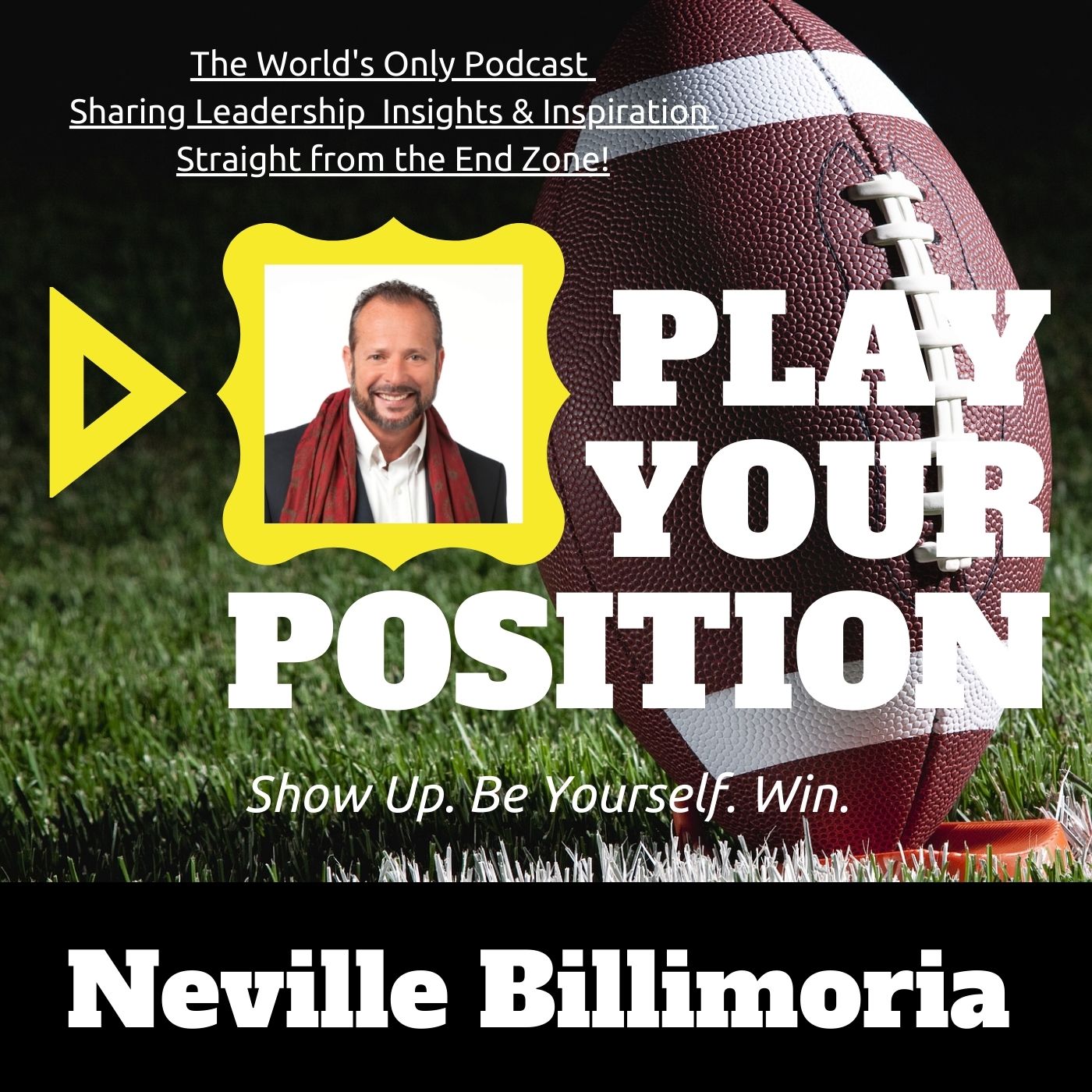
This week, I was featured on the Play Your Position Podcast that is available on Apple Podcasts and Spotify.
It was a fun interview with Mary Lou Kayser which is kind of a “best of” interview as it speaks to so many of the topics that matter deeply to me and influenced by so many of you over the years.
Thanks this week go to all my supports and influencers over the last 13 years, too many to mention each and every one of you, including but not limited to, Danny F, Alan D, the Conscious Leaders Men’s Group, the Far Future Design Society, the Bright Lights, the Mission Fed team, NCPC and the local philanthropic community, Steve S and the Chamber of Purpose pathfinders, all my nonprofit partners and friends changing the world through social mission work, Aoinagi Ken Shu Kai bringing the wisdom traditions to the UC San Diego campus ecosystem for nearly 4 decades, Tim D and the Port team, all our amazing partners and luminaries in education both in the K-12 districts, in the private and charter community, and the social entrepreneurs like John C, and last and certainly not least, my family that have taught me to love better and wider.
The list is long and if I left you out, my apologies. Please know that you made a difference in my life and that of others…
Pay it forward!
Love All,
Neville
“Between stimulus and response there is a space. In that space is our power to choose our response. In our response lies our growth and our freedom.” –Viktor Frankl
When I was about fourteen I was seized by enormous waves of grief over my parents’ breakup. I had read somewhere that running would help dispel anguish, so I began to run to school every day down Park Avenue in New York City. I was a great big overgrown girl (5 feet eleven by the age of eleven) and one day I ran into a rather frail old gentleman in his seventies and knocked the wind out of him. He laughed as I helped him to his feet and asked me in French- accented speech, “Are you planning to run like that for the rest of your life?”
“Yes, sir” I replied. “It looks that way.”
“Well, Bon Voyage!” he said.
“Bon Voyage!” I answered and sped on my way.
About a week later I was walking down Park Avenue with my fox terrier, Champ, and again I met the old gentleman.
“Ah.” he greeted me, “my friend the runner, and with a fox terrier. I knew one like that years ago in France. Where are you going?”
“Well, sir.” I replied, “I’m taking Champ to Central Park.”
“I will go with you.” he informed me. “I will take my constitutional.”
And thereafter, for about a year or so, the old gentleman and I would meet and walk together often several times a week in Central Park. He had a long French name but asked me to call him by the first part of it, which was “Mr. Tayer” as far as I could make out.
The walks were magical and full of delight. Not only did Mr. Tayer seem to have absolutely no self-consciousness, but he was always being seized by wonder and astonishment over the simplest things. He was constantly and literally falling into love. I remember one time when he suddenly fell on his knees, his long Gallic nose raking the ground, and exclaimed to me, “Jeanne, look at the caterpillar. Ahhhh!” I joined him on the ground to see what had evoked so profound a response that he was seized by the essence of caterpillar. “How beautiful it is”, he remarked, “this little green being with its wonderful funny little feet. Exquisite! Little furry body, little green feet on the road to metamorphosis.” He then regarded me with equal delight. “Jeanne, can you feel yourself to be a caterpillar?”
“Oh yes.” I replied with the baleful knowing of a gangly, pimply faced teenager.
“Then think of your own metamorphosis.” he suggested. “What will you be when you become a butterfly, une papillon, eh? What is the butterfly of Jeanne?” (What a great question for a fourteen-year-old girl!) His long, gothic, comic-tragic face would nod with wonder. “Eh, Jeanne, look at the clouds! God’s calligraphy in the sky! All that transforming. moving, changing, dissolving, becoming. Jeanne, become a cloud and become all the forms that ever were.”
Or there was the time that Mr. Tayer and I leaned into the strong wind that suddenly whipped through Central Park, and he told me, “Jeanne, sniff the wind.” I joined him in taking great snorts of wind. “The same wind may once have been sniffed by Jesus Christ (sniff). by Alexander the Great (sniff), by Napoleon (sniff), by Voltaire (sniff), by Marie Antoinette (sniff)!” (There seemed to be a lot of French people in that wind.) “Now sniff this next gust of wind in very deeply for it contains.. . Jeanne d’Arc! Sniff the wind once sniffed by Jeanne dArc. Be filled with the winds of history.”
It was wonderful. People of all ages followed us around, laughing—not at us but with us. Old Mr. Tayer was truly diaphanous to every moment and being with him was like being in attendance at God’s own party, a continuous celebration of life and its mysteries. But mostly Mr. Tayer was so full of vital sap and juice that he seemed to flow with everything. Always he saw the interconnections between things—the way that everything in the universe, from fox terriers to tree bark to somebody’s red hat to the mind of God, was related to everything else and was very, very good.
He wasn’t merely a great appreciator, engaged by all his senses. He was truly penetrated by the reality that was yearning for him as much as he was yearning for it. He talked to the trees, to the wind, to the rocks as dear friends, as beloved even. ‘Ah, my friend, the mica schist layer, do you remember when…?” And I would swear that the mica schist would begin to glitter back. I mean, mica schist will do that, but on a cloudy day?! Everything was treated as personal, as sentient, as “thou.” And everything that was thou was ensouled with being. and it thou-ed back to him. So when I walked with him, I felt as though a spotlight was following us, bringing radiance and light everywhere. And I was constantly seized by astonishment in the presence of this infinitely beautiful man, who radiated such sweetness, such kindness.
I remember one occasion when he was quietly watching a very old woman watching a young boy play a game. “Madame”, he suddenly addressed her. She looked up, surprised that a stranger in Central Park would speak to her. “Madame,” he repeated, “why are you so fascinated by what that little boy is doing?” The old woman was startled by the question, but the kindly face of Mr. Tayer seemed to allay her fears and evoke her memories. “Well, sir,” she replied in an ancient but pensive voice, “the game that boy is playing is like one I played in this park around 1880, only it’s a mite different.” We noticed that the boy was listening, so Mr. Tayer promptly included him in the conversation. “Young fellow, would you like to learn the game as it was played so many years ago?”
“Well. . .yeah. sure, why not?” the boy replied. And soon the young boy and the old woman were making friends and sharing old and new variations on the game—as unlikely an incident to occur in Central Park as could be imagined.
But perhaps the most extraordinary thing about Mr. Tayer was the way that he would suddenly look at you. He looked at you with wonder and astonishment joined to unconditional love joined to a whimsical regarding of you as the cluttered house that hides the holy one. I felt myself primed to the depths by such seeing. I felt evolutionary forces wake up in me by such seeing, every cell and thought and potential palpably changed. I was yeasted, greened, awakened by such seeing, and the defeats and denigrations of adolescence redeemed. I would go home and tell my mother, who was a little skeptical about my walking with an old man in the park so often, “Mother, I was with my old man again, and when I am with him, I leave my littleness behind.” That deeply moved her. You could not be stuck in littleness and be in the radiant field of Mr. Tayer.
The last time that I ever saw him was the Thursday before Easter Sunday, 1955. I brought him the shell of a snail. “Ah. Escargot.” he exclaimed and then proceeded to wax ecstatic for the better part of an hour. Snail shells, and galaxies, and the convolutions in the brain, the whorl of flowers and the meanderings of rivers were taken up into a great hymn to the spiraling evolution of spirit and matter. When he had finished, his voice dropped, and he whispered almost in prayer, “Omega …omega. . .omega..” Finally he looked up and said to me quietly, “Au revoir, Jeanne”.
“Au revoir, Mr. Tayer,” I replied, “I’ll meet you at the same time next Tuesday.”
For some reason. Champ, my fox terrier didn’t want to budge, and when I pulled him along, he whimpered, looking back at Mr. Tayer, his tail between his legs. The following Tuesday I was there waiting where we always met at the corner of Park Avenue and 83rd Street. He didn’t come. The following Thursday I waited again. Still he didn’t come. The dog looked up at me sadly. For the next eight weeks I continued to wait, but he never came again. It turned out that he had suddenly died that Easter Sunday but I didn’t find that out for years.
Some years later, someone handed me a book without a cover which was titled The Phenomenon of Man. As I read the book I found it strangely familiar in its concepts. Occasional words and expressions loomed up as echoes from my past. When, later in the book, I came across the concept of the “Omega point.” I was certain. I asked to see the jacket of the book, looked at the author’s picture, and, of course, recognized him immediately. There was no forgetting or mistaking that face. Mr. Tayer was Teilhard de Chardin, the great priest-scientist, poet and mystic, and during that lovely and luminous year I had been meeting him outside the Jesuit rectory of St. Ignatius where he was living most of the time.
I have often wondered if it was my simplicity and innocence that allowed the fullness of Teilhard’s being to be revealed. To me he was never the great priest-paleontologist Pere Teilhard. He was old Mr. Tayer. Why did he always come and walk with me every Tuesday and Thursday, even though I’m sure he had better things to do? Was it that in seeing me so completely, he himself could be completely seen at a time when his writings, his work, were proscribed by the Church, when he was not permitted to teach, or even to talk about his ideas? As I later found out, he was undergoing at that time the most excruciating agony that there is—the agony of utter disempowerment and psychological crucifixion. And yet to me he was always so present—whimsical, engaging, empowering. How could that be?
I think it was because Teilhard had what few Church officials did—the power and grace of the Love that passes all understanding. He could write about love being the evolutionary force, the Omega point, that lures the world and ourselves into becoming, because he experienced that love in a piece of rock, in the wag of a dog’s tail, in the eyes of a child. He was so in love with everything that he talked in great particularity, even to me as an adolescent, about the desire atoms have for each other, the yearning of molecules, of organisms, of bodies, of planets, of galaxies, all of creation longing for that radiant bonding, for joining, for the deepening of their condition, for becoming more by virtue of yearning for and finding the other. He knew about the search for the Beloved. His model was Christ. For Teilhard de Chardin, Christ was the Beloved of the soul.
Years later, while addressing some Jesuits, a very old Jesuit came up to me. He was a friend of Teilhard’s—and he told me how Teilhard used to talk of his encounters in the Park with a girl called Jeanne.
Jean Houston Pomona, New York March, 1988
“The day will come when, after harnessing space, the winds, the tides and gravitation, we shall harness for God the energies of love.
And on that day, for the second time in the history of the world, we shall have discovered fire!”–Pierre Teilhard de Chardin
What the Supermoon Looked Like Around the World: The moon is nearly as close as it gets to Earth on its orbit, creating a spectacular sight!
5 Nudges That Work Better Than a Vaccine Mandate, According to an Employment Law Expert: You have incredible influence to nudge your team to get their Covid shots. Don’t be shy about exercising it.
Julie Lythcott-Haims’s new book, Your Turn: How to Be an Adult, is a handbook on adulthood. Her 2017 memoir, Real American, is the story of her coming to terms with her biracial identity. She is the former dean of freshmen and undergraduate advising at Stanford, where she earned her B.A. She also earned a law degree from Harvard and a master’s in fine arts and writing from California College of the Arts.
Thanks this week go to Mehrad N for the Dr. Tayer story, and to lovers of humanity everywhere!
Please pay it forward.
Love, Neville
“When you squeeze an orange, orange juice comes out — because that’s what’s inside. When you are squeezed, what comes out is what is inside.” — Dr. Wayne Dyer: Motivational author and speaker
There’s a Name for the Blah You’re Feeling: It’s Called Languishing– Adam Grant
The neglected middle child of mental health can dull your motivation and focus — and it may be the dominant emotion of 2021.
At first, I didn’t recognize the symptoms that we all had in common. Friends mentioned that they were having trouble concentrating. Colleagues reported that even with vaccines on the horizon, they weren’t excited about 2021. A family member was staying up late to watch “National Treasure” again even though she knows the movie by heart. And instead of bouncing out of bed at 6 a.m., I was lying there until 7, playing Words with Friends.
It wasn’t burnout — we still had energy. It wasn’t depression — we didn’t feel hopeless. We just felt somewhat joyless and aimless. It turns out there’s a name for that:
It takes a lot of work to create a world-class organization. It’s hard to develop a successful team. It’s not easy to build a great culture. It’s challenging to work toward a vision and create a positive future. It’s difficult to change the world.
As a leader, you will face all kinds of challenges, adversity, negativity, and tests. There will be times when it seems as if everything in the world is conspiring against you. There will be moments you’ll want to give up.
There will be days when your vision seems more like a fantasy than a reality. That’s why positive leadership is so essential.
When some people hear the term positive leadership they roll their eyes because they think I’m talking about Pollyanna positivity, where life is full of unicorns and rainbows. But the truth is that we are not positive because life is easy. We are positive because life can be hard.
Positive leadership is not about fake positivity. It is the real stuff that makes great leaders great. Pessimists don’t change the world. Critics write words but they don’t write the future.
Naysayers talk about problems but they don’t solve them. Throughout history we see that it’s the optimists, the believers, the dreamers, the doers, and the positive leaders who change the world.
The future belongs to those who believe in it and have the belief, resilience, positivity, and optimism to overcome all the challenges in order to create it.
If you want to get control of your negative thoughts and stop the spiral into fear and pessimism, it’s simpler than you think and it’s a valuable skill for any leader to know.
1) First, be aware of your thoughts.
Observe your thoughts, keeping in mind that complaints, self-doubt, fear, and negativity lead to unhappiness, failure, and unfulfilled goals over time. When you notice these thoughts, it’s high time for an intervention.
2) Talk yourself through the fear.
Understand that fear is a liar. If you believe the fear-based thoughts you think (I’m not good enough, I’m not smart enough, the world is falling apart, etc.), everything around you will validate what you believe to the point where you eventually start to believe it. But know this: Just because you have a negative thought doesn’t mean you have to believe it. Don’t believe the lie.
3) Speak truth to the lies.
Instead of listening to the negative lies, choose to feed yourself with the positive truth.
Speak truth to the lies and fuel up with words, thoughts, phrases, and beliefs that give you the strength and power to overcome challenges and create an extraordinary life, career, and team. The truth is that no matter what is happening around you and regardless of what negative thoughts pop into your head, you possess the capability and power to take positive action.
4) Try feeling grateful instead of stressed.
Research shows we can’t be stressed and thankful at the same time. If you feel blessed, you won’t be stressed.
5) Talk to yourself instead of listening to yourself.
Dr. James Gills is the only person to complete six Double Ironman triathlons, and the last time he did it he was 59 years old. When asked how he did it, he said, “I’ve learned to talk to myself instead of listen to myself. If I listen to myself, I hear all the doubts, fears, and complaints of why I can’t finish the race. If I talk to myself, I can feed myself with the words I need to keep moving forward.”
6) Start a success journal.
At the end of the day, instead of thinking of all the things that went wrong, write down the best thing that happened to you that day – the one thing that made you feel great.
This is a great exercise to do with children as well. When you look for the good and focus on it, you will start seeing more of it. And you’ll teach your children to view their life this way, too.
Positive leaders invest their time and energy in driving a positive culture. They create a shared vision for the road ahead. They lead with optimism and belief and address and transform the negativity that too often sabotages teams and organizations.
Happiness: A Skill You Can Learn!
Western neuroscience has now confirmed what Eastern wisdom has known for a long time: happiness is a skill we can learn. Research shows that happiness, compassion and kindness are the products of skills that can be learned and enhanced through training, thanks to the neuroplasticity of our brains.
Mindfulness changes your brain: Recent research has shown that an 8 week mindfulness meditation class can lead to structural brain changes including increased grey-matter density in the hippocampus, known to be important for learning and memory, and in structures associated with self-awareness, compassion and introspection.
Positive emotions make us more resilient: Our emotions affect our long term well-being. Research shows that experiencing positive emotions in a 3-to-1 ratio with negative ones leads to a tipping point beyond which we naturally become more resilient to adversity and better able to achieve things.
Happiness is contagious:Our happiness influences the people we know and the people they know. Research shows that the happiness of a close contact increases the chance of being happy by 15%. The happiness of a 2nd-degree contact (e.g. friend’s spouse) by 10% and the happiness of a 3rd-degree contact (e.g. friend of a friend of a friend) by 6%.
Happier people live longer:Happiness doesn’t just feel good. A review of hundreds of studies has found compelling evidence that happier people have better overall health and live longer than their less happy peers. Anxiety, depression, pessimism and a lack of enjoyment of daily activities have all been found to be associated with higher rates of disease and shorter lifespans
Happiness is good for your heart:Harvard School of Public Health examined 200 separate research studies on psychological wellbeing and cardiovascular health. Optimism and positive emotion were found to provide protection against cardiovascular disease, to slow progression of heart disease and reduce risk, by around 50%, of experiencing a cardiovascular event, such as a heart attack.
Giving is good for you:When we give to others it activates the areas of the brain associated with pleasure, social connection and trust. Altruistic behaviour releases endorphins in the brain and boosts happiness for us as well as the people we help. Studies have shown that giving money away tends to make people happier than spending it on themselves.
Together we are stronger: Having a network of social connections or high levels of social support has been shown to increase our immunity to infection, lower our risk of heart disease and reduce mental decline as we get older. Not having close personal ties has been shown to pose significant risks for our health.
Optimism helps us achieve our goals:Research shows that people who are optimistic tend to be happier, healthier and cope better in tough times. “Go confidently in the direction of your dreams. Live the life you have imagined” – Henry David ThoreauOur happiness is not set in stone: Although our genes influence about 50% of the variation in our personal happiness, our circumstances (like income and environment) affect only about 10%. As much as 40% is accounted for by our daily activities and the conscious choices we make. So the good news is that our actions really can make a difference.
Happiness leads to success: Most people think that if they become successful, then they’ll be happy. But recent discoveries in psychology and neuroscience show that this formula is backward: Happiness fuels success, not the other way around. When we’re positive, our brains are more motivated, engaged, creative, energetic, resilient, and productive.
Source: actionforhappiness.org
Want to Raise Successful Kids? Science Says These 7 Habits Lead to Great Outcomes
It’s not just one study. It’s study after study after study.
When facing as much uncertainty as we have over the last year, resilience comes to mind as an increasingly critical skill. Resilience enables us to remain optimistic amidst disruption and destabilization. But what effect does focusing on the positive have on resilience?
Expressing gratitude in a meaningful way requires thoughtful reflection. It means not only processing an event or situation and identifying those who were involved in it, but also making connections between those people, their actions, and the impact. Instead of checking a box when you complete a task then moving on, expressing gratitude encourages you to focus on outcomes collaboratively, acknowledging that we can’t do everything solo.
How does this show up at work? Whether you’re working remotely, in the office, or a bit of both, the link between gratitude and resilience makes a compelling case for more gratitude at work.
PositivePsychology.com writes that emotional resilience comes from five components: social competence, problem-solving, autonomy, forgiveness, empathy, and – according to more recent studies – gratitude. HBR suggests that to build resilience, you should write down what you’re grateful for to tap into the benefits of a positive outlook and regularly expressing gratitude.
What better time to practice a way to build your resilience than right now, as we slowly yet steadily emerge from a pandemic? You have a great opportunity today to begin practicing a new habit to increase your resilience.
Here are some ideas for practicing gratitude:
If you’re a leader of a team, dedicate time in your regular team meetings to thank a team member for their effort or work with specific examples.
Write a thank-you note or email. It doesn’t have to be a lengthy summary, but putting into writing your gratitude towards someone and sharing it with them starts a chain of positivity for both you and them.
Reflect at the end of every day, week, or month about your work and what you’re grateful for. Whether it’s a development opportunity, a coworker’s friendship, a stretch assignment, an exciting project, or even a small detail, take the time to think about it intentionally.
Get in the habit of expressing gratitude spontaneously and frequently. When someone does something you’re grateful for, don’t wait! Let them know on the spot with a heartfelt acknowledgment of their action and the impact.
Ask a direct report how they prefer to be appreciated and thanked – and use that information!
One leadership lesson for tough times is to focus on our vision, relying on our “why” for direction and stability. Resilience helps us continue to move forward toward that vision with the result in mind and gratitude is an integral part of that. As you take time to reflect on gratitude and resilience, ask yourself: Who has helped you recently? How will you thank them?
31 Vintage Images from the Nat Geo Archives that Take You Back in Time:
Thanks this week go to Adam G, Jon G, Larry H, Sanya D, Paula M, Cathy J, and the entire Mission Fed team for caring about the wellbeing of our extended community!
Please pay it forward!
Love,
Neville
“Be yourself; everyone else is already taken.” —Oscar Wilde
“The greatest threat to our planet is the belief that someone else will save it.”
This week:
Reflections by Incredible Phantom
Ecoside- A Crime with No Name
Carbon Dioxide Levels are Higher than They’ve been at Any Point in the Last 3.6 million Years
Bonobos Offer Clues To Why Humans Evolved To Value Niceness
Animal Wonders of the World That Will Blow Your Mind!
And Into Action:
Getting Our Climate Act Together: Addressing Climate Change at All Levels Thursday, April 29, 2021 5 p.m. PDT
Reflections by Incredible Phantom:
FOR MANY YEARS NOW THESE CONFLICTS IN MY HEAD HAS BEEN A MONKEY ON MY BACK,
SO TO MAKE IT CLEARER TO ME I DECIDED TO TRY A POEM AS A HACK.
DO NOT FOR EVEN A MOMENT IN TIME BELIEVE THE WORLD IS A BETTER PLACE,
REFLECT AND BE WARNED THAT SO FAR ITS A LOSING RACE.
ALL RELIGIONS BELIEVE IN PEACE , MORALITY AND BROTHERHOOD OF MAN,
AND INSTEAD ITS BRED HATRED AND GOT BLOOD ALL OVER ITS HAND.
WHAT THIS WORLD NEEDS IS A SPIRITUALLY OF A DIFFERENT KIND,
ONE THAT BRINGS HARMONY AND PEACE OF MIND.
CHILDREN ARE SOLD AND INNOCENTS ARE SLAUGHTERED DAILY WITHOUT SECOND THOUGHT,
BY POWER BROKERS AND POLITICS THAT ARE EXTREMELY FRAUGHT.
THE POWERFUL AND THEIR CRIMES ARE ALWAYS BAILED OUT IN DUE TIME,
WHEREAS THE POOR DO NOT EVEN HAVE A DIME.
AS HUMANS WE PRIDE OURSELVES AS THE MORE SUPERIOR AND INTELLIGENT BEING,
YET WE HAVE WIPED OUT MILLIONS OF SPECIES WITHOUT CARING OR SEEING.
THE TRUMPS, PUTINS AND MODIS ARE VOTED BY US INTO POWER,
AND THEN WE SIT BACK AND REFLECT IN OUR IVORY TOWERS.
THE GAP BETWEEN THE HAVES AND HAVE NOTS HAS GONE SO FAR,
AT SOME POINT SOON THIS WILL BRING ON A SOCIAL UPHEAVAL NOT SEEN BEFORE.
WE HAVE DUE TO OUR CARELESSNESS AND GREED DESTROYED NATURE,
AND YET WE HAVE RIDICULOUS DOUBTS SO PLEASE LETS MATURE.
PEOPLE ARE YET JUDGED BASED ON DIFFERENCES IN RELIGION, COLOUR AND LANGUAGE EVEN IN THEIR PRIME,
SUCH ARCANE PRACTICES SHOULD HAVE NO PLACE IN OUR WORLD AND ARE A CRIME.
CAPITALISM AND SOCIALISM HAVE FOR CENTURIES BEEN AROUND,
BUT THE ANGER GROWS AS NOW WE DO NOT EVEN TRY TO FIND SOME COMMON GROUND.
TECHNOLOGY OF TODAY IS A GAME CHANGER AND ALL A RAGE,
BUT TRY EXPLAINING THAT TO ONE WHO CANNOT MAKE ENDS MEET ON MINIMUM WAGE.
MATERIALISM AND OVER CONSUMPTION WITHOUT RESTRAIN AND THOUGHT,
THATS WHAT HAS LED TO OUR CURRENT ENVIRONMENTAL DISASTER AND MORALE DROUGHT.
OUR CHILDREN ARE GROWING UP IN A WORLD OF STRESS, DOUBTS AND DEBTS,
THATS WHY YOUTH MENTAL ISSUES HAVE SOARED TO LEVELS TO FORGET.
COLONIALISM YET EXISTS BUT IN THE GUISE OF 3RD WORLD DEVELOPMENT AND AID,
CHINA NOW OWNS WHOLE COUNTIES IN AFRICA AND TAKE A GUESS IF ITS THE POLITICIANS AND BROKERS OR THE PEOPLE THAT WILL BE PAID.
THE WORLD SPENDS TRILLIONS OF DOLLARS ON WEAPONS TO KILL HUMANITY,
BUT 10 MILLION CHILDREN DIE OF DISEASE OR AS CHILD SOLDIERS WHICH IS INSANITY.
COUNTRIES IN THE 21ST CENTURY ARE YET BRUTALLY RULED BY KINGS, DICTATORS AND EVIL FRATERNITIES,
I HOPE YOUTH POWER WILL CHANGE THIS FOR ETERNITY.
SOCIAL MEDIA IS ON ITS WAY TO BE ONE OF THE MOST UNFORESEEN TYPES OF DESTRUCTIVE FORCES,
MISINFORMATION AND FEAR MONGERING ARE ITS SOURCES.
IT IS ATROCIOUS THAT WOMEN ARE YET EXPLOITED AND TREATED BADLY IN SOME LANDS,
WE AS A SOCIETY HAVE A DUTY TO CORRECT THIS AND TAKE IT IN OUR OWN HANDS.
OUR CRUELTY IN MANY DIFFERENT WAYS TO VAST POPULATIONS OF ANIMALS IS NOW AN OPEN SECRET ESPECIALLY FOR OUR MEALS,
ITS TIME WE UNDERSTAND THEY HAVE RIGHTS AND TO HEAL.
FOR SURE THERE ARE MANY MORE ISSUES THAT NEED PEOPLES SEAL,
BUT THE BEGINNING IS THAT WE MUST MAKE A CONSCIOUS EFFORT TO REALLY FEEL.
THE ONLY THING ON MY BUCKET LIST IS A YEARNING TO LIVE A VERY SIMPLE HUMBLE LIFE AND HELP THE NEEDY AND POOR,
THIS IS THE ONLY WAY I CAN FEEL WHOLE, WHEN ITS TIME TO GO THROUGH THAT FINAL DOOR.
I FEEL I MUST SHARE THIS WITH MY LOVED ONES AND DEAREST FRIENDS,
AS YOU HAVE BEEN A CONSTANT FROM THE VERY BEGINNING TO THE END. INCREDIBLE PHANTOM
Ecoside- A Crime with No Name:
Lawyers from around the world are working together to draft a legal definition for a crime that so far hasn’t had a name under international law: “ecocide.” The term is broadly defined as the systematic destruction of the environment. The move comes at a time when action to protect the environment is undeniably necessary. And the science is clear: Without serious action to mitigate damage, all life on Earth will pay dearly as climate change continues to shape our world. If these lawyers succeed, they would be raising ecocide to the level of genocide in international law and providing a powerful tool to hold entities that pollute our planet accountable. What would it mean to make environmental degradation a crime? And how powerful is international arbitration in preventing this type of destruction?
Bonobos Offer Clues To Why Humans Evolved To Value Niceness:
Humans evolved to be nice — at least sometimes. The trait has helped us succeed as a species. But how did it happen? A look at some peace-loving apes in Democratic Republic of the Congo offers clues.
Want to do something? Getting Our Climate Act Together: Addressing Climate Change at All Levels Thursday, April 29, 2021 5 p.m. PDT Chancellor Pradeep K. Khosla invites you to join us for Getting Our Climate Act Together: Addressing Climate Change at All Levels. The science is in: Climate change is real. So, what now — and how? Hear experts discuss the issues and how we can protect the health and well-being of our global population, our most vulnerable communities and our environment. From algae flip-flops to open-source education, scientists, policy scholars, physicians and educators from across UC San Diego will explore new and practical ways to address the urgent impacts of climate change.

















 Happy Soul Food Friday!