Are You Happy? Through it all, What Makes You Happy?

06.28.19-1

This week: Are YOU Happy?

Some tips and tricks to help you courtesy of Bill Gates, Harvard, Yale, Shawn Achor and more:

  • Follow through on your commitments
  • Have a mindset of giving
  • Treat your body like a sacred temple
  • Put family first
  • Focus on your strengths
  • Invest in experiences
  • Learn to savor more
  • Express gratitude and spread kindness
  • Exercise more – 7 minutes might be enough
  • Sleep more – you’ll be less sensitive to negative emotions
  • Move closer to work – a short commute is worth more than a big house
  • Spend time with friends and family – don’t regret it on your deathbed
  • Go outside – happiness is maximized at 57°F
  • Help others – 100 hours a year is the magical number
  • Practice smiling – it can alleviate pain
  • Plan a trip – but don’t take one
  • Meditate – rewire your brain for happiness
  • Practice gratitude – increase both happiness and life satisfaction
  • Getting older will make yourself happier


Bill Gates says he’s happier at 63 than he was at 25 because he does 4 simple things

  • Microsoft cofounder Bill Gates recently did an “Ask Me Anything” on Reddit.
  • He was asked two compelling questions: “Are you happy?” And shortly after, “Through it all, what makes you happy?”
  • Gates said that following through on commitments, having a “giving” mindset, treating his body like a temple, and putting his family first have all contributed to his happiness today.

In the most recent “Ask Me Anything” on Reddit, Microsoft cofounder Bill Gates was asked a host of humanitarian-related questions ranging from topics like climate change to the future of education.

About 30 minutes into his live session, questions shifted to the personal life of Bill Gates. Gates, now 63, was asked two compelling questions: “Are you happy?” And shortly after, “Through it all, what makes you happy?”

To the first question, the world’s second-richest man responded: “Yes! When I was in my 30s, I didn’t think people in their 60s were very smart or had much fun. Now I have had a counter-revelation. Ask me in 20 years and I will tell you how smart 80-year-olds are.”

To the second question, Gates said, “Some recently said that when your children are doing well it really is very special, and as a parent, I completely agree. Sometimes following through on commitments to yourself, like doing more exercise, also improves your happiness.”

Gates’ “counter-revelation” of happiness in his 60s versus that in his 20s or 30s is an interesting one. In his 30s, things were unquestionably “fun” from the business standpoint of relentlessly driving Microsoft’s original mission to put “a computer on every desk and in every home.”

But that mission was fulfilled, at least in the developed world. Things have since shifted for Gates. He recently shared in a Facebook post: “When I was in my 20s and early 30s, I was fanatical about software. I didn’t take vacations or weekends off and I wasn’t interested in getting married. (Obviously, that changed when I met Melinda!)”

He is now enjoying the fruits of his labor through his family- and personal-life ambitions, as well as fulfilling his larger-than-life vision of ending the world’s extreme poverty and hunger through the Bill & Melinda Gates Foundation.

But before you say, “I’m not Bill Gates: I don’t have the same luxuries in life,” you don’t have to be a billionaire to achieve the happiness of which he speaks. Paraphrasing his new revelations in life, here’s how anyone can achieve the same level of happiness as Gates.

1. Follow through on your commitments.

How people become smarter as they age is not so much about increasing intellectual knowledge or accumulating more wealth (although both will happen by virtue of making good choices). It’s about intentionally choosing and following through on what matters most — following through on your commitments, as Gates said.

Maybe you feel stuck in a dead-end job, chose the wrong career, or feel that you were made for something else —something more significant.  While it’s totally normal to question your career direction or motivation to do your job, what is not normal is for these feelings to reside permanently in the deepest crevices of your mind when you know you were made for something bigger.

If you grapple with thoughts about “what if,” start the beginning of your journey with this question: Am I doing what I want — what most matters to me?

At some point, a person needs to break the cycle of swallowing his own voice to speaking into his truth faultlessly about what matters.

When you ask yourself what you want, and you hear from deep down inside your gut, “This is what I want,” that discerning voice is the voice of truth to which you should commit wholeheartedly.

2. Have a mindset of giving.

The late motivational guru Jim Rohn said, “Only by giving are you able to receive more than you already have.” Through his generous foundation, Gates has achieved this on a scale most of us reading this article can’t fathom.

In 2006, his close friend Warren Buffett, now the third-richest person on the planet, signed papers that gave $31 billion of his fortune to fund the Gates Foundation’s work in fighting infectious diseases and reforming education.

Closer to home, consider giving for your own well-being. Science has confirmed that giving makes us feel happy, is good for our health, and evokes gratitude. One Harvard Business School report even concluded that the emotional rewards are the greatest when our generosity is connected to others, like contributing to a cancer-stricken friend’s GoFundMe campaign.

And you needn’t restrict your idea of giving to financial generosity. Consider as well the positive effects of giving your time, mentoring others, supporting a cause, fighting injustice, and having a pay-it-forward mentality.

3. Treat your body like a sacred temple.

Gates said that exercise leads to happiness. He is an avid tennis player. And according to research, he’s dead on. Exercise has been shown to improve your mood and decrease feelings of depression, anxiety, and stress.

Conversely, if you cringe at the thought of having to fight for a treadmill at a crowded and sweaty gym, your mood can benefit from a simple exercise no matter the intensity or length of it.

One study of 24 women diagnosed with depression showed that exercise of any intensity significantly decreased feelings of depression. In fact, it reduced depressed mood 10 and 30 minutes following the physical activity.

4. Put family first.

Gates’ priorities shifted to more focus on family life and the special feeling of seeing his children excel in life.

The choice not to place family life on equal par with, or even ahead of, career priorities can be costly. Scientific analysis of the causes that lead to death in the workplace listed, among other things, “long hours/overtime” and “work-family conflict” as common sources of workplace stress destroying the health of U.S. workers.

If work-life balance is a struggle of guilt because you think your business or career will suffer, the solution is simple: Set nonnegotiable boundaries around your family priorities first, and then use the same rigor to place strict boundaries at work.

Having solid lines around each area of life will ultimately make you more focused, efficient, and effective at work. And your kids will love that daddy or mommy comes home on time to watch a ballet recital or little league game.

Read the original article on Inc. Copyright 2019. Follow Inc on Twitter.

I’m taking Yale’s class on happiness — and halfway through, these 4 tricks are already working

  • Yale’s most popular class ever, “The Science of Well-Being,” was designed by professor Laurie Santos.
  • She collected all the psychological science related to happiness and came up with a step-by-step process for boosting your own.
  • After five weeks in the class, the writer Justin Maiman says that the principles — such as taking time to savor experiences and focusing on your strengths — are already working.

Happiness can be learned.

That’s the central idea behind Yale’s most popular class ever. Professor Laurie Santos has collected all the psychological science out there and come up with a step-by-step process for boosting your own happiness.

I took the 10-week course online through Coursera for free. It’s officially called “The Science of Well-Being” and has already been taken by more than 225,000 students online. About one in four students at Yale have taken it since it was first offered.

Santos told me she designed the course for three reasons: to synthesize what psychologists have learned about making our lives better, to help undergrads overcome stress and unhappiness on campus, and “to live a better life myself.”

Five weeks in, I’m a convert. Here’s why: The seminars are great, but you also get a lot of homework centered around daily exercises geared toward changing your habits — recognizing and then dropping bad ones while developing new good habits.

Here are just four exercises I picked out from a slew of new tips and tricks I’ve learned so far. Again, the point here is that these positive habits have been tested and proven to work, based on psychological science.

Focus on your strengths

This first homework was all about identifying your signature strengths and refocusing on them each day. I took the VIA Survey online — anyone can take this test for free, check it out here — which revealed my 24 greatest strengths. My top four: love of learning, appreciation of beauty and excellence, leadership, and fairness.

If you’re pretty self-aware, the results won’t be a big surprise. The key though is to identify them and find situations to use your strengths every day. That’ll lead you down the path to flourishing. Studies show happiness increases and depression decreases when a person uses his or her signature strengths regularly. In my case, I looked for simple ways to use fairness, humor, and love of learning throughout my day. Pro tip: Additional research shows that if you’re able to “bundle” four of your top strengths while at work, you’ll likely flourish and have more positive experiences, and you are more likely to think of your work as a “calling.”

Invest in experiences

I spend money on experiences such as live music, trips, and meals over new toys. It’s always made me happier. Now I know that research backs this up, regardless of income levels: Going for a walk or traveling to a new place are much better investments in terms of happiness than buying material things.

Turns out your stuff loses “happiness value” almost as soon as you’ve purchased it. Paying for experiences, however, has multiple benefits for happiness. One, the anticipation of the experience leads to more happiness and joy. Two, talking about the experience afterward with friends reignites your own happy memories and, incredibly enough, sharing these tales with friends tends to boost their happiness, too. Finally, we don’t tend to get used to experiences the way we do with new stuff. There’s no time to get used to a trip to Mexico City, but science shows the joy you get from buying some awesome new thing, such as a phone, begins to diminish immediately. It’s just how your brain works.

Learn to savor more

Savoring is the act of stepping outside of an experience to review and really appreciate it — a way of helping you to stay present in the moment. And savoring often forces you to enjoy an experience for longer.

My homework was to pinpoint a moment to savor each day. One of mine stuck out: I was running around the park when a strong gust of wind at my back almost lifted me off the ground. It was a strange and wonderful moment, and I made sure to tell my wife when I got home. Looking for these moments has boosted my sense of awe at the world around me. Research shows reliving these happy memories can make your positive emotions last up to a month.

Express gratitude and spread kindness

This one is fun. If you’re generally thankful and show appreciation for what you have, your happiness levels soar. Sounds too easy, but it works. One exercise we did was make a list of five things we were grateful for each day. Staring at your list simply makes you thankful and reflective. Even doing this once a week has been shown to boost happiness and reduce ill health symptoms.

Meanwhile, doing random acts of kindness is another way to find happiness. One study showed that spending money on others makes you happier than spending it on yourself, even across different cultures and income levels. For example, small changes, such as spending $5 to buy a friend, colleague, or stranger a coffee, boosted happiness levels. So I’ve been buying a lot of coffees.

Santos adds, “It kind of seems like our brains are wired to see other people’s rewards as our own rewards. And so it’s kind of like getting a little click of cocaine every single time you do a nice thing for another person. It’s kind of an accident of the way our social brain is wired up.”

Read more: 10 proven ways to increase your happiness

The road to happiness

Remember to also do the things you probably already know are proven to boost your well-being, such as exercising daily and getting as much sleep as possible.

But the key here is to pick up a new habit that will lead you to feeling happier. So find one above that works for you and try it. It’s been well worth it already for me.

Justin Maiman writes a weekly newsletter called Ginger that’s devoted to moments of inspiration. You can read Ginger and subscribe for free here. He’s a journalist with more than 20 years of experience in digital media and television, including working at media titans like Business Insider, Yahoo, Bloomberg, Fox News and PBS affiliates in St. Paul and Boston. He’s currently the president and managing director of Cochrane Media, a boutique media shop in New York.

10 Proven Ways To Increase Your Happiness

Belle Beth Cooper,

Buffer

Nov. 15, 2013, 1:33 PM

06.28.19-2

Flickr/Chimothy27

Happiness is so interesting, because we all have different ideas about what it is and how to get it. It’s also no surprise that it’s the No.1 value for Buffer’s culture, if you see our slidedeck about it. So naturally we are obsessed with it.

I would love to be happier, as I’m sure most people would, so I thought it would be interesting to find some ways to become a happier person that are actually backed up by science. Here are ten of the best ones I found.

1. Exercise more – 7 minutes might be enough

You might have seen some talk recently about the scientific 7 minute workout mentioned in The New York Times. So if you thought exercise was something you didn’t have time for, maybe you can fit it in after all.

Exercise has such a profound effect on our happiness and well-being that it’s actually been proven to be an effective strategy for overcoming depression. In a study cited in Shawn Achor’s book, The Happiness Advantage, three groups of patients treated their depression with either medication, exercise, or a combination of the two. The results of this study really surprised me. Although all three groups experienced similar improvements in their happiness levels to begin with, the follow up assessments proved to be radically different:

The groups were then tested six months later to assess their relapse rate. Of those who had taken the medication alone, 38 percent had slipped back into depression. Those in the combination group were doing only slightly better, with a 31 percent relapse rate. The biggest shock, though, came from the exercise group: Their relapse rate was only 9 percent!

You don’t have to be depressed to gain benefit from exercise, however. It can help you to relax, increase your brain power and even improve your body image, even if you don’t lose any weight.

A study in the Journal of Health Psychology found that people who exercised felt better about their bodies, even when they saw no physical changes:

Body weight, shape and body image were assessed in 16 males and 18 females before and after both 6 × 40 mins exercise and 6 × 40 mins reading. Over both conditions, body weight and shape did not change. Various aspects of body image, however, improved after exercise compared to before.

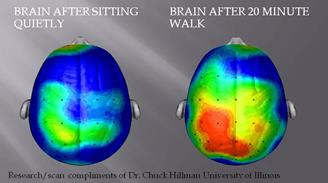
We’ve explored exercise in depth before, and looked at what it does to our brains, such as releasing proteins and endorphins that make us feel happier, as you can see in the image below.
06.28.19-3

2. Sleep more – you’ll be less sensitive to negative emotions

We know that sleep helps our bodies to recover from the day and repair themselves, and that it helps us focus and be more productive. As it turns out, it’s also important for our happiness.

In NutureShock, Po Bronson and Ashley Merryman explain how sleep affects our positivity:

Negative stimuli get processed by the amygdala; positive or neutral memories gets processed by the hippocampus. Sleep deprivation hits the hippocampus harder than the amygdala. The result is that sleep-deprived people fail to recall pleasant memories, yet recall gloomy memories just fine.

In one experiment by Walker, sleep-deprived college students tried to memorize a list of words. They could remember 81% of the words with a negative connotation, like “cancer.” But they could remember only 31% of the words with a positive or neutral connotation, like “sunshine” or “basket.”

The BPS Research Digest explores another study that proves sleep affects our sensitivity to negative emotions. Using a facial recognition task over the course of a day, the researchers studied how sensitive participants were to positive and negative emotions. Those who worked through the afternoon without taking a nap became more sensitive late in the day to negative emotions like fear and anger.

Using a face recognition task, here we demonstrate an amplified reactivity to anger and fear emotions across the day, without sleep. However, an intervening nap blocked and even reversed this negative emotional reactivity to anger and fear while conversely enhancing ratings of positive (happy) expressions.

Of course, how well (and how long) you sleep will probably affect how you feel when you wake up, which can make a difference to your whole day. This graph showing decreases in brain activity provides great insight into how important getting enough sleep is for productivity and happiness.

06.28.19-4.jpg


Another study tested how employees’ moods when they started work in the morning affected their work day.

Researchers found that employees’ moods when they clocked in tended to affect how they felt the rest of the day. Early mood was linked to their perceptions of customers and to how they reacted to customers’ moods.

And most importantly to managers, employee mood had a clear impact on performance, including both how much work employees did and how well they did it.

Sleep is another topic we’ve looked into before, exploring how much sleep we really need to be productive.

3. Move closer to work – a short commute is worth more than a big house

Our commute to the office can have a surprisingly powerful impact on our happiness. The fact that we tend to do this twice a day, five days a week, makes it unsurprising that its effect would build up over time and make us less and less happy.

According to The Art of Manliness, having a long commute is something we often fail to realize will affect us so dramatically:

… while many voluntary conditions don’t affect our happiness in the long term because we acclimate to them, people never get accustomed to their daily slog to work because sometimes the traffic is awful and sometimes it’s not. Or as Harvard psychologist Daniel Gilbert put it, “Driving in traffic is a different kind of hell every day.”

We tend to try to compensate for this by having a bigger house or a better job, but these compensations just don’t work:

Two Swiss economists who studied the effect of commuting on happiness found that such factors could not make up for the misery created by a long commute.

4. Spend time with friends and family – don’t regret it on your deathbed

Staying in touch with friends and family is one of the top five regrets of the dying. If you want more evidence that it’s beneficial for you, I’ve found some research that proves it can make you happier right now.

Social time is highly valuable when it comes to improving our happiness, even for introverts. Several studies have found that time spent with friends and family makes a big difference in how happy we feel, generally.

I love the way Harvard happiness expert Daniel Gilbert explains it:

We are happy when we have family, we are happy when we have friends and almost all the other things we think make us happy are actually just ways of getting more family and friends.

George Vaillant is the director of a 72-year study on the lives of 268 men.

In an interview in the March 2008 newsletter to the Grant Study subjects, Vaillant was asked, “What have you learned from the Grant Study men?” Vaillant’s response: “That the only thing that really matters in life are your relationships to other people.”

He shared insights of the study with Joshua Wolf Shenk at The Atlantic on how the men’s social connections made a difference to their overall happiness:

The men’s relationships at age 47, he found, predicted late-life adjustment better than any other variable, except defenses. Good sibling relationships seem especially powerful: 93 percent of the men who were thriving at age 65 had been close to a brother or sister when younger.

In fact, a study published in the Journal of Socio-Economics states than your relationships are worth more than $100,000:

Using the British Household Panel Survey, I find that an increase in the level of social involvements is worth up to an extra £85,000 a year in terms of life satisfaction. Actual changes in income, on the other hand, buy very little happiness.

I think that last line is especially fascinating: Actual changes in income, on the other hand, buy very little happiness. So we could increase our annual income by hundreds of thousands of dollars and still not be as happy as if we increased the strength of our social relationships.

The Terman study, which is covered in The Longevity Project, found that relationships and how we help others were important factors in living long, happy lives:

We figured that if a Terman participant sincerely felt that he or she had friends and relatives to count on when having a hard time then that person would be healthier. Those who felt very loved and cared for, we predicted, would live the longest.

Surprise: our prediction was wrong… Beyond social network size, the clearest benefit of social relationships came from helping others. Those who helped their friends and neighbors, advising and caring for others, tended to live to old age.

5. Go outside – happiness is maximized at 57°F

In The Happiness Advantage, Shawn Achor recommends spending time in the fresh air to improve your happiness:

Making time to go outside on a nice day also delivers a huge advantage; one study found that spending 20 minutes outside in good weather not only boosted positive mood, but broadened thinking and improved working memory…

This is pretty good news for those of us who are worried about fitting new habits into our already-busy schedules. Twenty minutes is a short enough time to spend outside that you could fit it into your commute or even your lunch break.

A U.K. study from the University of Sussex also found that being outdoors made people happier:

Being outdoors, near the sea, on a warm, sunny weekend afternoon is the perfect spot for most. In fact, participants were found to be substantially happier outdoors in all natural environments than they were in urban environments.

The American Meteorological Society published research in 2011 that found current temperature has a bigger effect on our happiness than variables like wind speed and humidity, or even the average temperature over the course of a day. It also found that happiness is maximized at 57°F, so keep an eye on the weather forecast before heading outside for your 20 minutes of fresh air.

The connection between productivity and temperature is another topic we’ve talked about more here. It’s fascinating what a small change in temperature can do.

6. Help others – 100 hours a year is the magical number

One of the most counterintuitive pieces of advice I found is that to make yourself feel happier, you should help others. In fact, 100 hours per year (or two hours per week) is the optimal time we should dedicate to helping others in order to enrich our lives.

If we go back to Shawn Achor’s book again, he says this about helping others:

…when researchers interviewed more than 150 people about their recent purchases, they found that money spent on activities — such as concerts and group dinners out — brought far more pleasure than material purchases like shoes, televisions, or expensive watches. Spending money on other people, called “prosocial spending,” also boosts happiness.

The Journal of Happiness Studies published a study that explored this very topic:

Participants recalled a previous purchase made for either themselves or someone else and then reported their happiness. Afterward, participants chose whether to spend a monetary windfall on themselves or someone else. Participants assigned to recall a purchase made for someone else reported feeling significantly happier immediately after this recollection; most importantly, the happier participants felt, the more likely they were to choose to spend a windfall on someone else in the near future.

So spending money on other people makes us happier than buying stuff for ourselves. What about spending our time on other people? A study of volunteering in Germany explored how volunteers were affected when their opportunities to help others were taken away:

Shortly after the fall of the Berlin Wall but before the German reunion, the first wave of data of the GSOEP was collected in East Germany. Volunteering was still widespread. Due to the shock of the reunion, a large portion of the infrastructure of volunteering (e.g. sports clubs associated with firms) collapsed and people randomly lost their opportunities for volunteering. Based on a comparison of the change in subjective well-being of these people and of people from the control group who had no change in their volunteer status, the hypothesis is supported that volunteering is rewarding in terms of higher life satisfaction.

In his book Flourish: A Visionary New Understanding of Happiness and Well-being, University of Pennsylvania professor Martin Seligman explains that helping others can improve our own lives:

…we scientists have found that doing a kindness produces the single most reliable momentary increase in well-being of any exercise we have tested.

7. Practice smiling – it can alleviate pain

Smiling itself can make us feel better, but it’s more effective when we back it up with positive thoughts, according to this study:

A new study led by a Michigan State University business scholar suggests customer-service workers who fake smile throughout the day worsen their mood and withdraw from work, affecting productivity. But workers who smile as a result of cultivating positive thoughts — such as a tropical vacation or a child’s recital — improve their mood and withdraw less.

Of course it’s important to practice “real smiles” where you use your eye sockets. It’s very easy to spot the difference.

06.28.19-5.jpg

According to PsyBlog, smiling can improve our attention and help us perform better on cognitive tasks:

“Smiling makes us feel good which also increases our attentional flexibility and our ability to think holistically. When this idea was tested by Johnson et al. (2010), the results showed that participants who smiled performed better on attentional tasks which required seeing the whole forest rather than just the trees.”

A smile is also a good way to alleviate some of the pain we feel in troubling circumstances:

Smiling is one way to reduce the distress caused by an upsetting situation. Psychologists call this the facial feedback hypothesis. Even forcing a smile when we don’t feel like it is enough to lift our mood slightly (this is one example of embodied cognition).

One of our previous posts goes into even more detail about the science of smiling.

8. Plan a trip – but don’t take one

As opposed to actually taking a holiday, it seems that planning a vacation or just a break from work can improve our happiness. A study published in the journal, Applied Research in Quality of Life showed that the highest spike in happiness came during the planning stage of a vacation as employees enjoyed the sense of anticipation:

In the study, the effect of vacation anticipation boosted happiness for eight weeks. After the vacation, happiness quickly dropped back to baseline levels for most people.

Shawn Achor has some info for us on this point, as well:

One study found that people who just thought about watching their favorite movie actually raised their endorphin levels by 27 percent.

If you can’t take the time for a vacation right now, or even a night out with friends, put something on the calendar — even if it’s a month or a year down the road. Then whenever you need a boost of happiness, remind yourself about it.

9. Meditate – rewire your brain for happiness

Meditation is often touted as an important habit for improving focus, clarity and attention span, as well as helping to keep you calm. It turns out it’s also useful for improving your happiness:

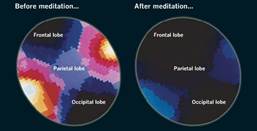
In one study, a research team from Massachusetts General Hospital looked at the brain scans of 16 people before and after they participated in an eight-week course in mindfulness meditation. The study, published in the January issue of Psychiatry Research: Neuroimaging, concluded that after completing the course, parts of the participants’ brains associated with compassion and self-awareness grew, and parts associated with stress shrank.

Meditation literally clears your mind and calms you down, it’s been often proven to be the single most effective way to live a happier live. I believe that this graphic explains it the best:
06.28.19-6.jpg

According to Shawn Achor, meditation can actually make you happier long-term:

Studies show that in the minutes right after meditating, we experience feelings of calm and contentment, as well as heightened awareness and empathy. And, research even shows that regular meditation can permanently rewire the brain to raise levels of happiness.

The fact that we can actually alter our brain structure through mediation is most surprising to me and somewhat reassuring that however we feel and think today isn’t permanent.

We’ve explored the topic of meditation and it’s effects on the brain in-depth befor e. It’s definitely mind-blowing what this can do to us.


10. Practice gratitude – increase both happiness and life satisfaction

This is a seemingly simple strategy, but I’ve personally found it to make a huge difference to my outlook. There are lots of ways to practice gratitude, from keeping a journal of things you’re grateful for, sharing three good things that happen each day with a friend or your partner, and going out of your way to show gratitude when others help you.

In an experiment where some participants took note of things they were grateful for each day, their moods were improved just from this simple practice:

The gratitude-outlook groups exhibited heightened well-being across several, though not all, of the outcome measures across the 3 studies, relative to the comparison groups. The effect on positive affect appeared to be the most robust finding. Results suggest that a conscious focus on blessings may have emotional and interpersonal benefits.

The Journal of Happiness studies published a study that used letters of gratitude to test how being grateful can affect our levels of happiness:

Participants included 219 men and women who wrote three letters of gratitude over a 3 week period.

Results indicated that writing letters of gratitude increased participants’ happiness and life satisfaction, while decreasing depressive symptoms.

For further reading, check out 7 Simple productivity tips you can apply today, backed by science, which goes even deeper into what we can do to be more grateful.

Quick last fact: Getting older will make yourself happier

As a final point, it’s interesting to note that as we get older, particularly past middle age, we tend to grow happier naturally. There’s still some debate over why this happens, but scientists have got a few ideas:

Researchers, including the authors, have found that older people shown pictures of faces or situations tend to focus on and remember the happier ones more and the negative ones less.

Other studies have discovered that as people age, they seek out situations that will lift their moods — for instance, pruning social circles of friends or acquaintances who might bring them down. Still other work finds that older adults learn to let go of loss and disappointment over unachieved goals, and hew their goals toward greater wellbeing.

So if you thought being old would make you miserable, rest assured that it’s likely you’ll develop a more positive outlook than you probably have now.

Read the original article on Buffer. Copyright 2019.


Speaking of Harmonizing with Nature…

Summer Solstice Follow Up:

If you always wanted to see a sunrise from Stonehenge on the Solstice but couldn’t get there in person, you are in luck!

This short article explains this project and contains the link to the virtual view. Enjoy!

https://www.theguardian.com/uk-news/2019/jun/21/sunrise-stonehenge-visible-around-world-live-feed-solstice?CMP=Share_iOSApp_Other


Thanks this week to Greg C, Ron M, and everyone in my life who makes me happier!
Please pay it forward
Love,
Neville

Follow me on Twitter: https://twitter.com/NevilleB108
Follow me on Facebook: https://www.facebook.com/nbillimoria

“We tend to forget that happiness doesn’t come as a result of getting
something we don’t have,
but rather of recognizing and appreciating what we do have.”

— Frederick Koenig

Your Soul Food for Friday Summer Solstice 2019: Love of Nature, Giving, History and Humanity

This week:

06.21.19-1

Love of Nature- Summer Solstice 2019 Salutations from Billy S:
Wishing you a wonderful summer solstice!

This is a time of changing seasons, in the Northern Hemisphere summer begins, and for the Southern Hemisphere it’s the beginning of winter.

The summer solstice is the longest day and the shortest night in our year. The sun also now sets the farthest north on the horizon.
At this time of the year, the days are warm, all the plants are energized by the sun and the land is filled with rich new growth.

Summer is truly a celebration of the primal creative force of nature, fertile and blooming with abundance.
Humans for many millennia have marked this sacred time in the yearly cycle of life.
Celebrating the solstice can be a beautiful reminder that our lives are part of a larger order, always changing always renewing.
The beginning of summer represents a time for purification and renewed energy.
This is a time of cutting through resistance and obstacles, using the sun energy to illuminate and light your way upon your path.
Fire is especially important, symbolizing the light, heat and power of the sun.
Into a fire, you can throw a piece of paper with written goals you strive to achieve, and anything to release.

Now is a good time to plant seeds for a more intuitive, simpler and natural lifestyle.
Stay in tune with nature!


Love of Giving- This Might Flip Your Paradigm:

“So much of what we call love is fish love.” with Rabbi Dr. Abraham Twerski

https://youtu.be/YNx7kDJ2kDI


Love of His/Herstory- Getting Perspective Through Pictures:
Guessing You Have Never Seen Some of These Historic Pics…
http://www.douglascountygensoc.org/photos004.html


06.21.19-2

World Refugee Day Fundraiser for Compassion It:
Fundraiser by Sara Schairer
for Compassion it


June 20 is World Refugee Day. Please donate and help us embed compassion within refugee camps around the world.

According to @[13204463437:274:UNHCR, the UN Refugee Agency], “We are now witnessing the highest levels of displacement on record. An unprecedented 70.8 million people around the world have been forced from home. Among them are nearly 25.9 million refugees, over half of whom are under the age of 18.”

In honor of World Refugee Day, we’re launching the second fundraising campaign for Compassion It’s efforts to support the American Refugee Committee. We raised $10,000 in our first fundraiser (!!!!) and now only need $5,000 more to reach our goal! In case you missed the first fundraiser, here are details about this incredible initiative: In April, the American Refugee Committee (ARC) brought together 20+ thought leaders to come up with ideas for cultivating compassion within refugee camps, and they invited me and my teammate Burrell Poe to join. That meeting in Minneapolis went so well that the ARC has asked us to join them at a refugee camp in Rwanda at the end of July 2019. We will help develop a scalable process and methods that embed compassion within refugee camps. (Learn more: https://amandi.global/) This is an important opportunity to be a part of a global compassion initiative. This program may impact not only millions of refugees, but it would also tremendously benefit the front-line staff members who suffer from burnout and empathy fatigue. I’m honored and thrilled that Compassion It will be able to influence a global effort to impact refugees and humanitarian aid workers. If this is something you’re excited about, too, would you consider making a donation to help us reach our goal? Feel free to reach out if you have questions. Thank you! -Sara

How much would you like to donate?

06.21.19-3


About the Nonprofit

06.21.19-6

Compassion it
EIN 46-1164639
Visit Guidestar Page

MISSION COMPASSION IT’s mission is to inspire daily compassionate actions. VISION At COMPASSION IT, we strive to improve the social consciousness of the world. We envision a time when we can measure a million acts of compassion taking place each day, all over the globe.


If you are local:
National Philanthropy Day 2019- Last Call for Nominations is today!

06.21.19-4.jpg

National Philanthropy Day 2019

Call for Nominations

Extended Deadline:
Friday, June 21, 5:00 p.m.

Nominate Now!

Joining a Legacy of Philanthropists, Fundraising Professionals and Volunteers who have made an outstanding impact
in our community.

Nominate an Individual, Organization, or Company
that is Making a Great Difference

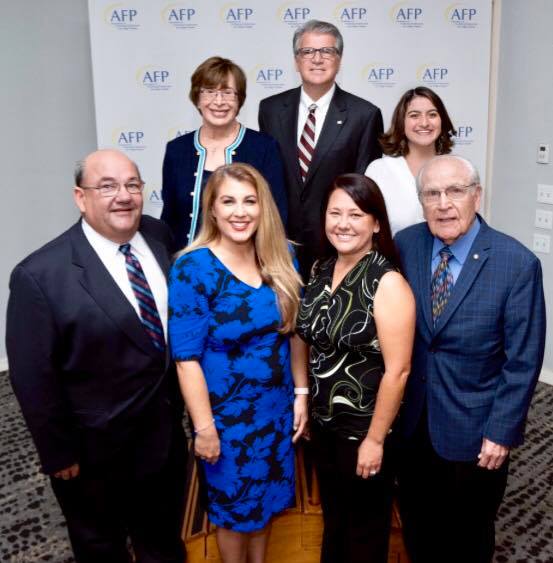
National  Philanthropy Day 2018 Awardees

06.21.19-5

Do you know of a philanthropic story, or story
of giving that needs to be told?

Is there someone who is doing good work for your community?

Submitting a nomination for National Philanthropy Day San Diego
is a great way to show your admiration and appreciation.

And the nominations process has been streamlined!

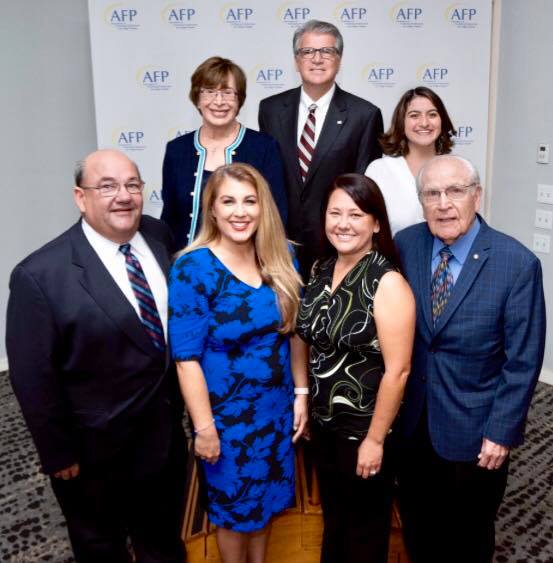
The AFP San Diego Chapter annually recognizes individuals and organizations whose philanthropic achievements have made an impact in the San Diego region, Imperial County and Tijuana. On Monday, November 4th, we look forward to building on the success of our predecessors and celebrating and honoring the rich diversity of our region.

Please help AFP San Diego honor those most deserving!

Nomination Categories:

Outstanding Philanthropist
Outstanding Fundraising Volunteer
Outstanding Organizational Volunteer
Outstanding Grant Making Organization
Outstanding Philanthropic Business or Corporation
Outstanding Development Professional
Outstanding Youth/Student Volunteer


Nominations will close on June 21, 2019 at 5:00 PM.


For more information, including the categories and criteria,

Click Here.

For Questions: Contact Katie Gomez, AFP San Diego Chapter Manager, katiegomez@afpsd.org

Thanks this week go to Billy S, Arman S-B, Larry H, Sara S, Team AFP, and Compassion IT souls everywhere.

Can you help me pay it forward?
Love,
Neville

Follow me on Twitter: https://twitter.com/NevilleB108
Follow me on Facebook: https://www.facebook.com/nbillimoria

”Ring the bells (ring the bells) that still can ring
Forget your perfect offering
There is a crack in everything (there is a crack in everything)
That’s how the light gets in”—
Leonard Cohen

Your Soul Food for Friday June 14 2019: Passion + Purpose = World Change

Happy Soul Food Friday!

This week:

NevilleDrumSFF

Pattern Interrupt!

The Power of Music

Enjoy this range from opera to flamenco- all on a ukulele!

https://www.facebook.com/AllChosenMusic/videos/590330801474276/UzpfSTE0NTAyNTU3ODY6MTAyMTc1MjYzNjAyOTgxMjE/?from_close_friend=1


Experts Say ‘How Much’ Is the Wrong Way to Assess Screen Time (Time)
Way back in the late 1990s—not long after home Internet use became widespread in the U.S.—researchers started turning up links between time spent on computers and poor mental health. A 1998 study in the journal CyberPsychology and Behavior found heavy internet use—defined as 38 hours or more of non-work, non-school online activity—was associated with “significant social, psychological, and occupational impairments.”
https://apple.news/AVQh-iWlWRaKTUEwaXTCCHg


Is Technology Weakening Your Leadership?

When used effectively, technology can enhance your success as a leader, and, when used ineffectively, technology can undermine your success as a leader. When should you come out from behind the veil of technology?

https://peterstark.com/technology-leadership/


Marcy Morrison Interviews Neville Billimoria – Passion + Purpose = World Change

Here is an interview I did this week hoping to touch one life for the better…

https://www.youtube.com/watch?v=vhkDrNyZbfk


Thanks this week go to Arman S-B, Peter B-S, & Marcy M.

Please pay it forward!

Love,

Neville

SunsetSFF

Adventure is not outside man; it is within. ” ― George Eliot

Love, Inspiration, Transformation & Social Equity

This week:

06.07.19-1

Pattern Interrupt!
I Love You Hooman
This vid will touch your heart!
https://youtu.be/VomYt89dp70


Once a homeless teen dad, CSUSM honors graduate uses his story to inspire others:
Commencement speaker Stephen “Vee” Vandereb plans to teach sociology, helping students overcome the challenges of their past…
https://www.sandiegouniontribune.com/communities/north-county/story/2019-05-16/once-a-homeless-teen-dad-csusm-honors-graduate-uses-his-story-to-inspire-others

‘It’s a miracle’: Helsinki’s Radical Solution to Homelessness:

As in many countries, homelessness in Finland had long been tackled using a staircase model: you were supposed to move through different stages of temporary accommodation as you got your life back on track, with an apartment as the ultimate reward.

“We decided to make the housing unconditional,” says Kaakinen. “To say, look, you don’t need to solve your problems before you get a home. Instead, a home should be the secure foundation that makes it easier to solve your problems.”
https://www.theguardian.com/cities/2019/jun/03/its-a-miracle-helsinkis-radical-solution-to-homelessness?CMP=Share_iOSApp_Other


Does Your Education Level Affect Your Health?
Some clever studies have teased out causal effects by taking advantage of natural experiments.
https://www.nytimes.com/2019/06/03/upshot/education-impact-health-longevity.html


06.07.19-2.jpg

Public libraries are not just about books. At their heart, they are about social equity!
Bad libraries build collections, good libraries build services, great libraries build communities
https://www.theguardian.com/commentisfree/2019/may/10/public-libraries-are-not-just-about-books-at-their-heart-they-are-about-social-equity?fbclid=IwAR3WLkd-u4J4CsyjFJLTwcVCHHC8Fkl5diL3kpLXbTtJlwgQ7o4uWn7Tbtg


06.07.19-3

Thanks this week go to Bob C, Brenda H, Sean D and everyone making our world better!
Please pay it forward
Love,
Neville

Follow me on Twitter: https://twitter.com/NevilleB108
Follow me on Facebook: https://www.facebook.com/nbillimoria

Cooperation is the thorough conviction that nobody can get there unless everybody gets there“–Virginia Burden

Kids and Pressure, Writing Tips and the Inaugural Purpose Newsletter

This week:

05.31.19-1

If You Feel Pressure – WATCH THIS by Jay Shetty
This might garner some well-deserved empathy for our kids…
https://www.youtube.com/watch?v=V4a7giVa2E0

Video of Joyful Afghan Boy Dancing on New Prosthetic Leg Goes Viral:
When Ahmad Rahman was eight months old he and his sister, Salima, were injured when fighting broke out between Afghan government forces and the Taliban in their village in Logar province. Rahman was shot in the leg, which was later amputated. His story is one of tens of thousands in Afghanistan, of people losing limbs due to war, but a video of him testing out his new prosthetic leg has provided a moment of joy.
https://www.theguardian.com/world/2019/may/09/video-of-joyful-afghan-boy-dancing-on-new-prosthetic-leg-goes-viral?CMP=Share_iOSApp_Other

Check Out The Chamber of Purpose San Diego Inaugural Purpose Newsletter:

Welcome to the Inaugural Purpose Newsletter

Your Leadership team has been hard at work reconstituting our Chamber of Purpose efforts around the 3 C’s of Connect, Coach and Champion.  This Newsletter is one outcome of a renewed effort to ensure we all are connected and purpose-filled as we make purpose-driven the norm rather than the exception.

05.31.19-2

Here is what we have been up to since we last connected…

We are concurrently working on updating our web presence, supporting this year’s 21st Annual Cause Conference in October (by shining a bright light on the leaders and organizations modeling Purpose with our Second Annual Purpose Awards), as well as co-creating a Summer Party bringing together kindred spirits in the purpose ecosystem on August 1.

In each Newsletter, we intend to spotlight articles of relevance, calendar items of interest, and in subsequent issues feature talented Chamber of Purpose members, like you.  If you or your organization would like to be featured, please send a picture and short write up of 100 words and a website link to  chamberofpurpose@gmail.com and we will schedule you to be featured in one of our upcoming issues.
Soon, our website will have tools to easily upload your organization’s purpose-related events. In the meantime, we’d be so grateful if you would send us an email with upcoming events to include in future editions (subject line: Upcoming Event). Also, we’re very interested in your content recommendations for our Newsletter and social media sites. Please email us content that you think will resonate with our community with the subject line: Content Ideas.
Thanks for your continued commitment to advancing our community by living and working in purpose!

Love,

Neville Billimoria & Steven Schindler your co-leads (on behalf of the entire Chamber of Purpose Leadership team

Spotlight Video

05.31.19-3

Spotlight Article:   Socially Responsible Business Can Only Succeed If It Becomes a Movement

05.31.19-4


What does it take to cause something big about a community to change — something that no one individually has much power over, even something as big as [Read More at HBR]


Featured Articles

05.31.19-5

Capitalism is getting a bad rap lately. Particularly from younger generations. The misuse of capitalist power by a few has lead to negative stereotypes that paint it with an immoral and predatory brush.  But capitalism, when done right  [Read More at Entrepreneur]


05.31.19-6 The Bicycle Mayor & Leaders Program is a global initiative to accelerate the progress of cycling in cities and help get another one billion people onto bikes. Pretty simple, right?

Bicycle Mayors are a catalyst to bring together the public and private realms to uncover the massive economic, health, and environmental benefits of increased cycling capacity.  [Read More at FastCompany]

05.31.19-7


Profits are in no way inconsistent with purpose – in fact, profits and purpose are inextricably linked.  [Read More about Blackrock]


If you are local:

Join Me for Triton Talks
Saturday, June 1 | 2:00 – 3:00 p.m.
Free for Alumni & Guests

Look deeper. Hear from select 2019 Alumni Award honorees and award-winning graduate students in a TEDx-like forum that will inform and inspire you. Learn how Tritons are disrupting the status quo and shaping what’s yet to come.

https://www.alumni.ucsd.edu/s/1170/rd18/wide-notitle.aspx?sid=1170&gid=1&pgid=9426

Featured Presenters
Suman Kanuganti, MBA ’14
As the technologist and innovator who co-founded and serves as CEO of Aira Tech Corp., Suman is leveling the playing field for people who are blind or have low vision by empowering them to fully engage, explore and experience the visual world.

Bryn Sakagawa, MPIA ’98
As Health Office Director at the United States Agency for International Development (USAID), Bryn is focused on improving the well-being and health of populations around the world.

Angela Nicholson, PhD ’20
As a graduate student at UC San Diego, Angela recently won first place at GradSLAM with her presentation titled, “RNA Regulation: the Tail Wagging the Dogma”.

Emily Pierce, PhD ’20
As a graduate student at UC San Diego, Emily recently won third place at GradSLAM with her presentation titled, “War and Peace of Cheese”.

Joanna Wang, PhD ’19
As a graduate student at UC San Diego, Joanna recently won second place at GradSLAM with her presentation titled, “Using Color to Fight Infection”.
Learn How to Crush Performance at Work- Tuesday June 4th @ 7pm
KeynoteFlyer_6_4_2019

Thanks this week go to Marlaine C, Ron M, Feroza A, and the entire Chamber of Purpose San Diego team!
Please pay it forward
Love,
Neville

Follow me on Twitter: https://twitter.com/NevilleB108
Follow me on Facebook: https://www.facebook.com/nbillimoria

‘The two most important days in your life are the day you are born
and the day you find out why.’- Mark Twain

The Power of Apology, Forgiveness, Gratitude & Love

This week:

It’s all about education…

  • Billionaire Pledges to Pay Student Debt for 2019 Class at Historic Black US College:
  • Apology, Forgiveness, Gratitude, Love with Dr. Ed DeRoche:
  • Teachers Predict Pupil Success Just As Well As Exam Scores:         
  • 88% of Employers Believe Students Are Not Prepared For The Workforce:
  • Survey on Value of Non Degree Credentials:
  • Making Playgrounds A Little More Dangerous:
  • High School Senior Loses 115 Pounds By Walking To School, Changing Diet:

05.24.19-1

Billionaire pledges to pay student debt for 2019 class at historic black US college:

Robert Smith makes pledge to eliminate students’ debt estimated at $40m at Morehouse, Martin Luther King’s alma mater.

“On behalf of the eight generations of my family that have been in this country, we’re gonna put a little fuel in your bus,” Smith said. “This is my class, 2019. And my family is making a grant to eliminate their student loans.”

https://www.theguardian.com/us-news/2019/may/19/morehouse-college-billionaire-pledge-pay-student-debt?CMP=Share_iOSApp_Other

Apology, Forgiveness, Gratitude, Love with Dr. Ed DeRoche:

Last month I read a novel titled, The Hummingbird, by Stephen P Kiernan, (Harper Collins Publishers, 2015). In the book one of the characters asked another “what would be your answer to each of these four questions?”

Is there anyone you need to say ‘I’m sorry’ to?
Is there anyone you need to say ‘I forgive you’ to?
Is there anyone you need to say ‘thank you’ to?
Is there anyone you need to say ‘I love you’ to?

I bookmarked the page saying to myself, “Here is your May Blog – apology, forgiveness, gratitude (thanks), and love.”
I was struck by the power of the four questions and what they say about “reflection” – something I do not think we do often in our classrooms. As you know, ”reflection” is a component in learning, a source of both knowledge and beliefs, and an aspect of critical thinking—looking back on the implications of one’s actions.
I asked a few teachers what they thought about the idea of having students answer these questions about once a month during class-meeting time.
“I like it! What a good way to teach students to reflect on the substance of the questions. I would have them write down their answers and discuss them in class, but only those students who want to do so publically.”
Another teacher suggested that she would have her students add their own reflective question(s) to the list.
I have written about gratitude (thanks) and love in two previous blogs—November 2018 and February 2019. Before we revisit those two virtues, some commentary about “apology and forgiveness.”

 Apology
The question—how does one “apologize?”
How to apologize can be the key to getting true forgiveness and moving a relationship forward in a positive way,” writes Marlee McKee. McKee offers seven tips for apologizing sincerely and successfully:

  1. Ask for permission to apologize.
  2. Let them know that you realize you hurt them.
  3. Tell them how you plan to right the situation.
  4. Let them know that inherent in your apology is a promise that you won’t do what you did again.
  5. After you’ve talked through things, formally ask them for forgiveness.
  6. Consider following up with a handwritten note.
  7. Now it’s time for both people to go forth and live out their promises.

https://www.mannersmentor.com/gracious-living/how-to-apologize-the-7-steps-of-a-sincere-apology

 Forgiveness
Teaching children “forgiveness” as you may have guessed, is a parent and teacher responsibility. Enright and Fitzgibbons write that “Forgiveness is a virtue hard to exercise and challenging to implement in the face of injustice, but one that offers a concrete hope for peace.”
They recommend “family forgiveness gatherings” at least once a week, such as during mealtimes, to talk about “what forgiveness means, how it feels, and what is easy and hard about.” Here is a strategy that would work in the classroom as well.
Robert Enright, Forgiveness is a Choice (Washington: APA, 2001); Robert Enright and Richard Fitzgibbons, Helping Clients Forgive (Washington: APA, 2000); cf. International Forgiveness Institute, web-site: www.forgiveness-institute.org

Jamie Perillo, LPC, a child and family psychotherapist and parent educator, offers seven ideas to help parents and teachers get started on teaching children forgiveness. He notes that to forgive is to say, “I do not like your words or actions, but I am willing to let it go because it does not help me to hold onto these feelings.” He suggests that we look beyond the action and explore the person— helping her/him to answer the question: “what triggered the behavior?”
Perillo also suggests that the child (student) should be encouraged to “identify the feeling” he/she is experiencing (angry, embarrassment, disappointment) and then “state the feeling before offering forgiveness.”
We need to teach our children at home and in school that there are usually two or more sides to an issue or problem. “We need to teach our kids to be able to see things from the other side. Forgiving is much easier when we know the whole story and not just half of it. Ask your kids how they would want someone to respond when they did something wrong. They would want to be forgiven. Then tell them to do likewise.”
https://psychcentral.com/blog/how-to-teach-a-child-forgiveness/

Gratitude (Thanks)
In the November blog, I wrote that Robert A. Emmons, Ph.D., the world’s leading scientific expert on gratitude, said: “You literally cannot overplay the hand of gratitude; the grateful mind reaps massive benefits in every domain of life that has been examined so far. There are countless ways in which gratitude could pay off in the workplace” (and in homes and schools).
I wrote that studies have shown that people who experience gratitude and thanks have more positive emotions (joy, love, happiness) and exhibit fewer negative emotions (bitterness, envy, resentment.) The “gratitude experience” also contributes to feelings of connectedness, relationships, and better physical health.

Love
In the “What’s LOVE got to do with it?” blog, I noted that, Barbara Fredrickson, psychologist and author of the book Positivity, discusses “the science of happiness” and ten positive emotions including love.
“Love,” she writes, “comes into play in a close and safe relationship. Love is the most common feeling of positivity and comes in surges. Love fosters warmth and trust with the people who mean the most to us. Love makes us want to do and be better people.”
This might be a good time for you to reflect on each of the four questions and plan your next steps. Take 10 minutes and ask yourself “is there anyone I need to say I’m sorry, I forgive you, I thank you, I love you to?”

Teachers predict pupil success just as well as exam scores:         

New research finds that teacher assessments are equally as reliable as standardized exams at predicting educational success.

https://www.sciencedaily.com/releases/2019/05/190513081407.htm

88% of Employers Believe School Leavers Are Not Prepared For The Workforce:

Reimagining education so every young person can thrive in a world of constant change by tackling causes not symptoms. We challenge assumptions and explore opportunities. Learn what change is needed and target action where it’s most transformational. All with the recognition that big change only happens when we work together.

https://www.big-change.org/

 Survey on Value of Non Degree Credentials:

“Through this new research, we’re seeing that not only do short-term credentials and certificates deliver an immediate impact for adults looking to upskill, but they also have the potential to foster the sort of wage increases needed to sustain a family and power true social and economic mobility,”

https://www.insidehighered.com/quicktakes/2019/05/15/survey-value-nondegree-credentials

Making Playgrounds a Little More Dangerous:

“I came to the counterintuitive conclusion that engaging in risk is actually very important in preventing injuries,” a researcher says.

https://www.nytimes.com/2019/05/10/well/family/adventure-playgrounds-junk-playgrounds.html

High school senior loses 115 pounds by walking to school, changing diet:

https://abcnews.go.com/GMA/Wellness/high-school-senior-loses-115-pounds-walking-school/story?id=63047775

Thanks this week go to Ed DeR, Paula C, John C, Marlaine C, and whole-person educators everywhere!

Please Pay it Forward!
Love,
Neville

Follow me on Twitter: https://twitter.com/NevilleB108
Follow me on Facebook: https://www.facebook.com/nbillimoria

“The best way to make your dreams come true is to wake up.”—Paul Valery

Remembering Living Saints, Solving the Mysteries of Aging, Meeting the World’s Oldest Athletes & a Tribute to Mom’s Everywhere!

This week:

05.17.19-1

Remembering Jean Vanier, The ‘Living Saint’:
Remember a philosopher and humanitarian who dedicated his life to helping those less fortunate.
Jean Vanier passed away in Paris on Tuesday at the age of 90.
https://www.npr.org/2019/05/09/721828948/remembering-jean-vanier-the-living-saint

The Science of Aging- Solving the Mysteries of Optimal Aging for the Body and Mind:
Jeanne Calment, a Frenchwoman born in 1875, stayed physically active and mentally alert until passing away at almost 123 years of age. She outlived her daughter and her grandson and has been recognized as the longest-living human. She cycled regularly until she sustained a leg fracture at age 100; smoked a daily cigarette until 117; and enjoyed “considerable” quantities of chocolate until her death.
https://inside.salk.edu/spring-2019/the-science-of-aging/?utm_source=cc&utm_medium=email&utm_campaign=190510_IS_Spring2019&content=button

Age is No Barrier: Meet the World’s Oldest Top Athletes:
Meet 5 Pensioners Aged up to 108, Who Thrive on Extreme Exercise
https://www.theguardian.com/global/2019/apr/07/age-is-no-barrier-meet-the-oldest-top-athletes?CMP=Share_iOSApp_Other

Maria Shriver’s Sunday Paper for Mother’s Day:
Happy Mother’s Day to all who have mothered and who are mothering. May you stay the course. May you know that what you are doing is what the world needs more of. May you never doubt the importance of what you do. And may you enjoy it along the way. Any time the job gets hard, just remember this: mothering is the most important job in the entire world. It’s not easy, but it’s one of the most rewarding things we’ll ever do…

05.17.19-2

05.17.19-3.png

“Sometimes the strength of motherhood is greater than natural laws.”  — Barbara Kingsolver

I’VE BEEN THINKING…

I love Mother’s Day because I just love, love, love being a mother.

It’s such an honor to bring a child into this world. It’s such a humbling experience to try to get it “right” and do your best. It’s humbling because you never know if what you’re doing is what your child actually wants or needs. That’s especially the case when you have more than one child because you quickly learn that each of them is different. There is no “one size fits all” when it comes to mothering.

Over the years, I’ve learned that you have to feel your way into mothering, a.k.a. the most important job in the world. It’s a job that is unrelenting, but that gives back over and over again.

My favorite Mother’s Day gift is the gift of my children’s presence. They are, without a doubt, my favorite people in the world! I love being in their company. I love laughing with them, playing with them and observing them. I also love listening to their exaggerated stories about all the crazy things they remember me doing when they were young (or even last week!).

05.17.19-4

Mother’s Day is also an emotional time for me, though, because I miss my own mother. I think it’s hard to fully enjoy Mother’s Day when your mother has passed because, the truth is, I miss her each and every day of the year. There is so much I’d love to discuss with her at this moment in my life. I still need her advice, her counsel, her wisdom and her judgment. I just need her.

When I see other women with their mothers, I feel a tug at my heart. When I see other kids with their grandmothers, I wonder if they know how blessed they are to be in their company. I wonder whether they are doing all they can to soak up the wisdom from their lessons and their stories.

I’ve written a lot about my mother over the years. I even did an ESPN film called “Brave in the Attempt” about her mission to change the world for those with special needs. But at this time in my life, I find myself wondering how deeply I truly knew my mother. I mean, how well did I really know her inner-most thoughts and feelings? Did I really understand her struggles, her pain, her anguish, and her joy?

I find myself wondering how she really felt about so many of life’s biggest moments. Now that my oldest daughter is engaged, I think about what was going through my own mother’s heart and mind when I stood on the brink of my own marriage. Did she feel what I’m feeling now?

I also wonder how she got through the days when all her children left home. Did she feel lonely? Did we hurt her by moving away? I wonder how she truly felt about getting old. I know she didn’t like it, but how did she manage her fears? I wonder how she managed her loneliness, grief and loss?

I once tried to ask my mother a few of these questions and she said she didn’t know what I was talking about. She came from a tough family and an even tougher generation. It was an era when there was no talk of self-care or self-love. There was no talk of feelings or emotions.

If my mother were here today, I guess the most important thing I’d like to tell her is the same thing I told her in the hospital as she took her final breaths:

“Mummy, you did such a good job as a mother and I’m so honored to be your daughter. I’m so sorry for you that you were never nurtured, hugged or even loved in a deeply personal and intimate way. That must have been so hard for you. It must have been tiring, pretending to be so tough and so strong.”

If my mother were here today, I would hold her. She would hate it, but I wouldn’t let her push me away because, as a mother myself, I know that everyone responds to love, nurture and safety.

I know that if she were here today, she would eventually soften into my embrace. Deep in my heart, I know she would love it. At the end of the day, I believe that the greatest gift we can give someone we love is to see them, hold them, nurture them, and know them for who they really are.

So on this Mother’s Day, if your mother is here, hug her, hold her and comfort her. If she pulls away, stay the course. Look deep into her eyes and tell her that you see her. If you can, thank her for doing her best.

And if you’re gathering with your own children this morning, thank them for the joy they have brought into your life. Thank them for the honor and privilege it’s been to raise them.

Mothering requires us to do our best all the time. No one gets it totally right, but it has been my honor to try. That’s why this morning, I’m going to be loving on my kids. And if one of them hugs me, I’ll relax into their embrace. Being mothered never loses its impact.

Happy Mother’s Day to all who have mothered and who are mothering. May you stay the course. May you know that what you are doing is what the world needs more of. May you never doubt the importance of what you do. And may you enjoy it along the way. Any time the job gets hard, just remember this: mothering is the most important job in the entire world. It’s not easy, but it’s one of the most rewarding things we’ll ever do. I’m so grateful to my children for the fun, laughter, and wonder they’ve brought to my life. How rewarding it has been to raise them and watch them grow. How amazing it is to be their mom.

Love,

05.17.19-6

P.S. I hope you’ll also remember today that some moms face challenges due to poverty, lack of healthcare, etc. Please consider donating to a cause that benefits mothers. Or, give to The Women’s Alzheimer’s Movement and support our mission to protect the minds of all the women we love.

Dear God, thank you for the gift of the women in my life who have mothered me. May I never forget to thank them, embrace them, and cherish them for all that they’ve given me.

If you are local…
Vote with Your Pocketbook and Support Organizations that Support San Diego!

05-17-19-7 05-17-19-8

05.17.19-5

Refer a Friend and get $40 each!

Now your friends and family can earn $40 once when they open any one of these services and meet the promotion criteria:

  • Checking Account
  • Credit Card
  • Auto Loan
  • Personal Loan
  • Mortgage Loan
  • Home Equity Loan

And, you’ll earn $40 for referring them to Mission Fed!

Tell your friends to open an account by June 30, 2019!

Make sure your friends and family take advantage of this great offer and have them bring the coupon from our website with them when they visit the branch. There’s no limit to how many people you can refer!

Plus, all year long we are rewarding members with our $1 Million Mission Fed Money Match. Are you next?

05-17-19-9

The new primary member must be 18 years of age, open Mission Fed eligible accounts and meet the minimum transaction requirements for the accounts they choose by 6/30/19. To be eligible, the new member may not be a signer on a Mission Fed account within the last twelve (12) months. The new member must be eligible for membership and all accounts and loans are subject to approval. The new Checking Account must have a minimum of five (5) eligible member-initiated transactions completed and posted to the account prior to the 91st day of initial account opening. A Mission Fed Credit Card must be opened with a minimum of five (5) purchase transactions or one (1) balance transfer posted within 90 days of initial account opening. New Auto Loans, Personal Loans, Mortgage Loans and Home Equity Loans must be funded within 90 days of initial account opening. Indirect auto loans, share secured loans and auto leases are not eligible for this promotion. A Savings, Checking or Money Market Account must be opened in addition to the new loan or credit card. Upon satisfaction of the above requirements, the $40 will be automatically deposited to the new member and referring member accounts on the 91st day of the new member’s initial account opening. $500 minimum balance required to earn .05% Annual Percentage Yield on Smart Checking as of 5/1/19. The rate may change after account opening. APY is accurate as of the last dividend declaration date. Fees may reduce earnings on the account. Visit MissionFed.com/Refer-A-Friend for Official Rules, a list of eligible member-initiated transactions and other details. No other promotional offer may be used in conjunction with this special offer. Programs, rates, terms, conditions and services are subject to change without notice. For Mission Fed Money Match, certain restrictions apply; visit MissionFed.com/MoneyMatch for Official Rules.

Insured by NCUA
05-17-19-10
Equal Housing Lender

Mission Federal Credit Union
P.O. Box 919023, San Diego, CA 92191-9023 | 858.524.2850 | 800.500.6328 | MissionFed.com

Copyright © 2019 Mission Federal Credit Union – Rates, terms, conditions and services subject to change without notice.

Thanks this week go to Cathy S, Ron M and Caring Moms Everywhere!
Please Pay it Forward with Purpose
Love,
Neville

Follow me on Twitter: https://twitter.com/NevilleB108
Follow me on Facebook: https://www.facebook.com/nbillimoria

“God made the world for the delight of human beings.”—Mother Teresa

“Do The Right Thing. It Will Gratify Some People And Astonish The Rest”

05.10.19-1

“Sometimes I wonder whether the world is being run by smart people who are putting us on or by imbeciles who really mean it.”—Mark Twain

This week:

People are taking their comedians seriously and their politicians as a joke”
When you chip away at the press, you chip away at our democracy.
We are all members of Team USA and not members of enemy camps so let’s stop making a mockery of the first amendment.

The 2019 White House Correspondents’ Dinner last week: Reporters, Politicians and Celebs Gather to Honor the First Amendment
Keynote Ron Chernow makes a spirited case for the first amendment.  (2:19)
https://binged.it/2HaIHt2

For The Complete Remarks in the White House Correspondents’ Dinner Keynote:
A historic review of the relationship between the press and the white house, where civility has been part of our culture, and where our best presidents have handled the press with wit, grace, charm, candor and even humor… (29 minutes)
https://binged.it/2PWwRoQ

05.10.19-2.jpg

More than 1 million species at risk of extinction because of humans UN warns:
Six months after the United Nations announced the world has less than 12 years to act on climate change, the agency is warning an estimated 1 million species are threatened with extinction thanks to human consumption.
Our current rate of species extinction “is already tens to hundreds of times higher than it has been, on average, over the last 10 million years”…
https://www.ajc.com/news/world/more-than-million-species-risk-extinction-because-humans-warns/4czBDthqUdICehOzNRIoOJ/

Here is the Intergovernmental Science-Policy Platform on Biodiversity and Ecosystem Services Media Release:

Nature’s Dangerous Decline ‘Unprecedented’
Species Extinction Rates ‘Accelerating’

Current global response insufficient;
‘Transformative changes’ needed to restore and protect nature;
Opposition from vested interests can be overcome for public good

Most comprehensive assessment of its kind;
1,000,000 species threatened with extinction

https://www.ipbes.net/news/Media-Release-Global-Assessment


What American Collapse Teaches Us About Human Nature:

If Cruelty, Selfishness, and Greed are Good For Us…Why Aren’t Americans the Happiest People in the World? First they compete for schools. Then, for the right universities. Then, the right jobs. Then the right promotions. Then the right toys to prove how powerful and wealthy they are. Then, if they’re lucky, healthcare and retirement. The competition never ends.

Americans are among the world’s unhappiest people. They’re more stressed out than Iraqis and Venezuelans. Iraqis and Venezuelans. Depression and anxiety are endemic, epidemic. Suicide is skyrocketing. Americans don’t expect life to ever get better again. The young have given up on having sex, relationships, and ever moving out of their family homes.

Americans aren’t the happiest. They’re the unhappiest, among rich countries, becoming a weird, unique outlier of despair and misery. And all that should teach us something deep and true about ourselves — if, that is, we’re open and willing to learn…

https://eand.co/what-american-collapse-teaches-us-about-human-nature-943b32ef3842?source=email-825f64e43327-1556896047706-digest.reader——2-49——————8ee22b0d_354a_4aed_89e6_abe5707779f7-1&sectionName=top

An antidote- be a lover of humanity and a defender of this tiny planet!

If you are local…
Nominate Individuals and Organizations That Make a Difference for National Philanthropy Day 2019!

05.10.19-3.jpg

National Philanthropy Day 2019

Call for Nominations

Nominations close on
June 14, 5:00 p.m.

Nominate Now!

Joining a Legacy of Philanthropists, Fundraising Professionals and Volunteers who have made an outstanding impact
in our community.

Nominate an Individual, Organization, or Company
that is Making a Great Difference

National  Philanthropy Day 2018 Awardees

05.10.19-4.jpg

Do you know of a philanthropic story, or story
of giving that needs to be told?

Is there someone who is doing good work for your community?

Submitting a nomination for National Philanthropy Day San Diego
is a great way to show your admiration and appreciation.

And the nominations process has been streamlined!

The AFP San Diego Chapter annually recognizes individuals and organizations whose philanthropic achievements have made an impact in the San Diego region, Imperial County and Tijuana. On Monday, November 4th, we look forward to building on the success of our predecessors and celebrating and honoring the rich diversity of our region.

Please help AFP San Diego honor those most deserving!

Nomination Categories:

Outstanding Philanthropist
Outstanding Fundraising Volunteer
Outstanding Organizational Volunteer
Outstanding Grant Making Organization
Outstanding Philanthropic Business or Corporation
Outstanding Development Professional
Outstanding Youth/Student Volunteer

Nominations will close on June 14, 2019 at 5:00 PM.

For more information, including the categories and criteria,
Click Here
.

For Questions: Contact Mark Lagace, AFP San Diego Chapter President, mlagace@home-start.org


Thanks for reading and paying it forward!

Love,

Neville

Follow me on Twitter: https://twitter.com/NevilleB108
Follow me on Facebook: https://www.facebook.com/nbillimoria

05.10.19-5.jpg

An Immigrant Story-Am I That Immigrant You Are Fearful About?

This week: An Immigrant Story that is Real Getting Personal

05.03.19-1

We had a Celebration of Life for my Dad, affectionately known as, “Dr. Billi” this past weekend, who passed at the ripe old age of 89 after a rich life well lived on multiple continents!

Dad, was a physician that in the 1970s left a good but known life in India, for the promise of a better but unknown life in America.
45 years ago, along with his wife and 3 kids and nothing but a suitcase each, he left India to create a better life for his family, to advance his career, and contribute to the emerging field of diagnostic medicine.

05.03.19-2

Go West young man. Go West!

Dad’s is the classic immigrant story.
Migration is an adaptive strategy for living systems. Birds, Fish, Insects, Animals and Humans typically migrate as resources are depleted, or climate and/or social/economic/political conditions change…
Humans mostly do it by necessity because they have no choice.
Others do it by choice because they are pioneers and trailblazers unwilling to “settle”.
The American West was “won” by pioneers and trailblazers. Their rugged individualism and spirit for better and for worse are celebrated in the American ethos.

05.03.19-3

Manifest Destiny:

Dad didn’t come to the US to simply extract value or live off the fat of the land.

He came to America, both to contribute to and benefit from the greater good he in turn could advance and manifest.

His nearly 40 years of medical practice at Loma Linda University Medical Center in the second half of his life, required starting from scratch, retaking medical exams and leaving family and friends.

As a teacher and a clinician, he taught every radiology resident and cared for innumerable patients, while pioneering computerized axial tomography (CAT scans) to create better diagnostic tools to serve humanity. He might have saved someone in your family’s life.

He never missed a day of work, except for annual vacations and addressing some sporadic medical issues of his own, retiring after decades of contribution to the local and medical community.

05.03.19-4

Dad was a member of the Zoroastrian faith, one of the first monotheistic religions on the planet, that now has less than 200,000 practitioners left on earth. His ancestors were also immigrants and came from a long line of priests. They left Persia generations earlier due to religious persecution and left with nowhere to go ended up sailing to the coast of India. Here, the locals that didn’t speak the same language, greeted them with a full cup of milk, suggesting that there was no place for them and they were full. (Sound familiar?)

After considering this dilemma, the newly arrived immigrants poured copious amounts of sugar in the milk and stirred it without spilling a drop, suggesting they would only add sweetness to the current condition not drain resources.

As a result they were let in and settled in Gujarat on the west coast of India.

The rest as they say is history.

The Parsi community as they came to be known (Pars = Persia) made and continue to make significant contributions to India and the world as captains of industry, professionals, philanthropists, educators, politicians and more… (look them up if you are interested)

05.03.19-5

Dad was a lifelong learner, and loved books and quotes.

On Dad’s passing we found a handwritten note in his wallet that said,

“In life, be like a cube of sugar, so when you are gone you leave a sweet taste”.

While his particular migration was by choice and not by necessity, the aspiration and outcome was the same.

Making life sweeter for others and for yourself.

As each of us faces our own mortality, in whatever time we have left, we must decide whether our fears or our dreams will dictate our present and determine our future.

If not forced to migrating geographically- and the threat of climate change suggests we are about to see massive human migrations the likes of which we have not seen in recent memory globally in the next decades- let us at least all migrate our thinking and actions to be more tolerant, more inclusive, more global, more sporting, more mischievous and more fun as was so brilliantly and authentically modeled by my Dad.

Odds are you might find your story is tied to our story.

We are all in pursuit of the American dream and striving to make life sweeter for all.

It is not a zero sum game unless you choose to make it so…

05.03.19-6

I love you Dad!
Thanks for EVERYTHING!

05.03.19-7

Paying it forward and spreading the light this week so you don’t have to do so yourself…Love,
Neville

05.03.19-8

“In life, be like a cube of sugar, so when you are gone you leave a sweet taste”—Dr. Billi”

Your Soul Food for Earth Day Week Friday April 26 2019: The Power t Rise Again, Defending Against Mass Extinction, The Earth’s Prayer, Green Space For Kids & Things YOU can Do In Nature

“We may stumble and fall, but shall rise again;
it should be enough if we did not run away from the battle.”  — Mahatma Gandhi

This week:

Us humanoids tend to regard ourselves as the pinnacle of evolution when we’re actually the little sisters & brothers of creation. But plants, animals and landscape have been around much longer. We have a lot to learn from these teachers about how to live in balance…

Image result for earth day

International Earth Day 2019- Over 1 Billion People in 192 Countries are Dedicated to Protecting Millions of Animal and Plant Species from Going Extinct:
Did you know…

  • Insect populations have decreased by more than 75% in Germany over the last 28 years, which is “alarming” because 80% of wild plants rely on bees and other insects for pollination, and 60% of bird species rely on insects for food.
  • Primates are also under “extraordinary threat,” with close to 60% of the world’s 504 primate species under threat of extinction and 80% in “severe population decline.”
  • In the past 20 years, by-catch from global fishing operations has affected 75% of all toothed whale species, such as dolphins and porpoises, 65% of baleen whale species, such as humpback and blue whales and 65% of pinniped species, such as sea lions.
  • In addition, 40% of the world’s bird population is in decline, with 1 in 8 species threatened with global extinction.
  • Big cats, such as leopards, tigers and cheetahs, are in “critical decline,” and many will become extinct in the next 10 years. They are often exploited for their body parts and skins, and China retains the biggest market for these items.
  • Lizard populations are “especially vulnerable” to climate change, according to the organization. If the current decline continues, 40% of lizards will become extinct by 2080.
  • The American Bison, which one roamed from Alaska to New Mexico in the millions, now occupy less than 1% of their original habitat. The species is now compared to herded cattle due to its “small and tightly controlled” habitat.

Learn more about how Earth Day started and more about this year’s theme…
https://abcnews.go.com/International/earth-day-2019/story?id=62552199

The Earth’s Prayer:
I wrote this some years ago and shared it before, but for me it feels as relevant today as ever!
The Earths Prayer

Being surrounded by green space in childhood may improve mental health of adults:
Children who grow up with greener surroundings have up to 55 percent less risk of developing various mental disorders later in life.
This is shown by a new study emphasizing the need for designing green and healthy cities for the future.
https://www.sciencedaily.com/releases/2019/02/190226112426.htm

The Power to Rise Again
Enjoy the ‘Holy Week’ edition of Maria Shriver’s Sunday Paper…
https://mailchi.mp/mariashriver/power-to-rise-sunday-paper?e=7d1855a5da

If you are local…

https://files.constantcontact.com/c9c231f3001/0b4cfeec-a88e-4219-9fce-3dcfd5eb898c.jpg

Happy Earth Day 2019!

For nearly five decades, people have celebrated Earth Day on April 22nd. It has become a global day dedicated to creating meaningful connections with nature and taking action.

At The San Diego River Park Foundation, we know that conserving open space and connecting people with it is essential. These nature connections foster lifelong stewardship of the San Diego River and its associated ecosystem.

The deer in the photo above was taken on a property that was conserved by many of the readers of this e-blast who made donations toward its acquisition. Many others have contributed their time and talents to begin to heal this damage land. So when we see a deer, mountain lion, newt or eagle at this property, we pause and reflect.

There is an urgent need to take action in caring for and healing our local environment. The San Diego River ecosystem is globally significant and it is at risk.

Thankful, we can take meaningful action on Earth Day and throughout the year. We are hopeful and remain so appreciative of you. Thank you for your support!

4 SUGGESTIONS TO CELEBRATE EARTH DAY

https://files.constantcontact.com/c9c231f3001/d0082672-6db2-4dca-b90d-806ed834a8d4.png

Join the 100 TREES Campaign

Support Kids Learning How to Plant and Care for Trees

We have set a goal of this fall teaching 100 deserving kids how to plant and care for trees. We have found that not only will they be making a difference for nature, they also will have a lasting connecting to the tree they planted and much more.

We just kicked off a campaign to raise $2000 to support this effort. Your gift of $20 will support one kid having this life changing experience.

Thank you if you have already donated as we have secured funds for 13 students!

83 students to go!

Learn More


https://files.constantcontact.com/c9c231f3001/4a049115-d55f-4f5d-846b-85f91d98f139.jpg

Volunteer: Whether It is One Day a Year or More Frequently

First of all, thank you if you already volunteer!

There are so many different ways to volunteer such as an education docent, office helper, garden steward, or graphic designer. Volunteers are needed for river cleanups, open space management, habitat restoration, field monitoring and trail work. We have single events, monthly events and weekly ones.

To get involved, contact our office at 619-297-7380 or visit our web page.

Visit our website

https://files.constantcontact.com/c9c231f3001/f4d2dcb5-71f6-4256-a414-91deed13f13d.jpg

Become a Monthly Wildlife Club Donor

Acquiring open space which is at risk, is a target of opportunity. Sometimes we need to act fast!

Our Wildlife Club monthly donors are critical to this effort. They provide the assurance that we will have funds to take the first step toward conserving a property. Their funds give us the time to raise additional funds to complete an open space acquisition to permanently conserve a property for the deer, birds, amphibians, trees, and so much more including the American Badger!

It is easy to setup this reoccurring gift of just $8 per month (or more).

Learn More

Reconnect With Nature – Get Outdoors!

Spring is an incredible time to get out for a walk, hike, roll or ride!

Sometimes just exploring a new view or trail can be a fantastic way to reconnect with nature.

Each year we organize San Diego River Days to provide some opportunities for you.

River Days is May 11 – 19th and there are 55 different activities!

River Days Website

Save the Date – River Days is May 11 – 19th

www.sdriverdays.org

Together we can create a better future for the San Diego River and its ecosystem

Visit our website

The San Diego River Park Foundation 619-297-7380


Thanks this week go to all stewards of our tiny blue planet!
Please pay it forward…
Love,
Neville

Be yourself