
Happy Soul Food Friday!
Let’s face it.
The current model of leadership isn’t working for the planet because business has diminished values and outlooks that are traditionally thought of as feminine.
Seeking to reclaim feminine power and restore balance for both women and men, this charts a new path based on timeless Indian wisdom but informed by many other traditions and lived experiences.
Our current one-sided notion of a leader’s power is a root cause of a host of contemporary problems, including social breakdown, environmental degradation, an epidemic of depression, and corruption in business and government. Whether we are male or female, we have been trained to value leadership qualities that are traditionally thought of as masculine: hierarchical, individualistic, militaristic.
Honest reflection suggests that the current model of leadership in general, with spillover effects into all aspects of modern-day systems, isn’t optimized for people, planet, purpose, and profit because current systems have diminished the values and outlooks that are traditionally thought of as feminine.
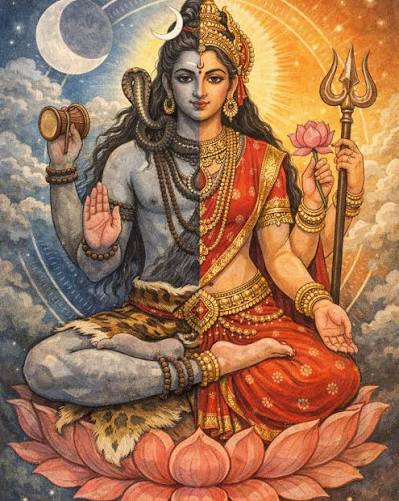
Ardhanarishvara is an androgynous composite deity in Hinduism representing the inseparable union of Lord Shiva (the right male half) and his consort Goddess Parvati or Shakti (the left female half), recognizing and celebrating the inseparability of female/male qualities
While I typically don’t cross-pollinate “church and state”, personal and professional, vocational, and avocational, after sharing this recent journey with a few friends and colleagues outside of our martial arts community of practice, I am getting some affirmative feedback and appreciation, so I decided to get vulnerable and share it more broadly here as well.
As some of you might know, I have been teaching the wisdom traditions (martial arts, yoga and meditation) at UC San Diego for 45 years and recently we ran a martial arts seminar for “students” coming in from all over the country and the world that now are Sensei in their own right and leaders in their fields including Physicians, Executives in high tech, Nonprofit leaders, Counselors, Battalion Chiefs, Professors, Deans and Educators at institutions of higher education in the US and Canada to mention just a few roles, and all just darn nice, smart and caring people.
This year’s camp theme was “Sacred Reunion”, bringing a balance of both Feminine and Masculine strengths to life, leadership, and a generative future, by practicing Radical Hospitality, from Ancestral Remembrance to Caring for the Future, by Finding My Way Back to Me
As leaders, by setting the conditions for hospitality, reflecting on our organization’s past, and striving to be effective stewards for the future, we can better serve ourselves, our community, and our planet.
This mindset, heart set and skill set requires attending to a higher purpose, retaining a stakeholder orientation, practicing conscious leadership, and building a conscious culture (the four tenets of Conscious Capitalism) They map well to our dojo community and karate-do practice:
- “The goal, aim, and purpose of Aoinagi Karate do is to seek and attain what is best” – Sensei Raymond Castilonia
- The word Samurai carries the meaning of service, derived from the Japanese verb sabarau (those who serve)
- Leadership in Bushido the historical code of the Japanese samurai, shifts the focus of leadership away from personal gain, ego, or public recognition, and places it squarely on responsibility, moral duty, and selfless service.
- A good dojo culture is built on mutual respect, humility, safety, and a shared commitment to continuous self-improvement. While martial arts techniques vary across styles, a healthy training environment consistently prioritizes the physical and emotional well-being of its students over ego or competition.
One model we explored was Shakti Leadership, and here is more on this framework.
While designed to positively impact business, it is equally applicable to any enterprise, community of practice, or system focused on social good.
Our current one-dimensional notion of a leader’s power is considered a root cause of a host of contemporary problems, including social breakdown, environmental degradation, an epidemic of depression, as well as corruption in business and government.
However we choose to self-identify, we have been trained to value leadership qualities that are traditionally thought of as masculine: hierarchical, individualistic, & militaristic.
With insights and teachings from the wisdom traditions and by reaching into ancient spiritual and mythical teachings, we can revive a feminine archetype of leadership that is generative, cooperative, creative, and empathetic. In the Indian yogic tradition with historic and philosophical connections to our practice, these qualities are associated with Shakti, the source of creation, sustenance and transformation that powers the cycle of life.
Ki is generally understood as the functional life force animating an individual body and immediate environment, whereas Shakti is the primordial, cosmic force responsible for all creation, existence, and consciousness in the universe. While Ki and Shakti come from different cultural lineages, metaphysical systems treat them as interconnected layers of the exact same universal energy.
Reaching into ancient spiritual and mythical teachings, from the Indian yogic tradition, these qualities are associated with Shakti, the source of creation, sustenance and transformation that powers the cycle of life.
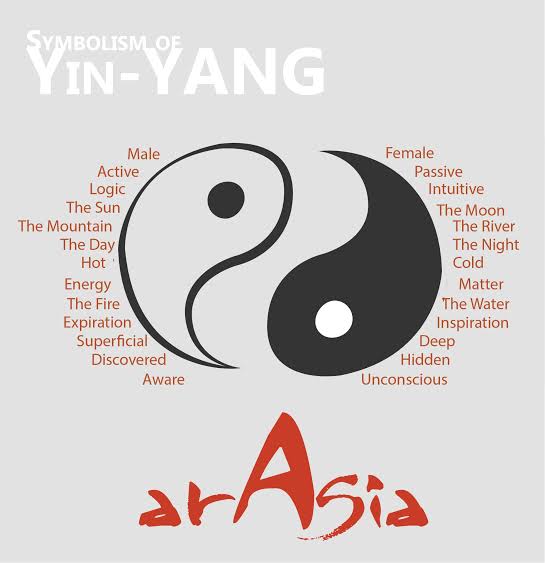
Thought leaders, Bhat and Sisodia seek to restore a long-lost balance, for men and women alike, of masculine and feminine energies.
All leaders should learn to value and understand “Shakti Leadership,” meaning acting from a consciousness of life-giving creativity and sustainability to achieve self-mastery and be of selfless service.
Here is a podcast to introduce the topic:
Podcast: Raj Sisodia and Nilima Bhat on Shakti Leadership – YouTube
We believe when leaders, learn to embrace this mindset, we can restore sanity, elevate humanity, and heal the planet by evolving consciously together.
Are you ready to incorporate some of the principles of Shakti Leadership into your practice?
Thanks to all the women leaders in our dojo for making us better!
Love,
Neville
“The future is not the result of choices among alternative paths offered by the present, but a place that is created – created first in the mind and will and created next in activity.
The future is not some place we are going to, but one we are creating.
The paths are not to be found, but made, and the activity of making them changes both the maker and the destination.” –John Scharr

