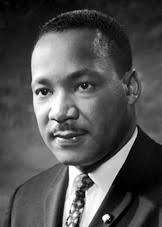
MLK Week: Character & Culture – “We are caught in an inevitable network of mutuality, tied in a single garment of destiny”

Injustice anywhere is a threat to justice everywhere.
We are caught in an inevitable network of mutuality, tied in a single garment of destiny.
Whatever affects one directly, affects all indirectly.”
MLK Jr. Letter from Birmingham Jail

 01.25.19-1

This week:

Martin Luther King Jr. would have turned 90 this month, so this week we celebrate his work and enduring legacy of fighting for justice and liberation. And we remind ourselves of the work to come.  Rev. Dr. Steven Bland Jr. said, “We aren’t a nation that is divided, but a nation that is disconnected.”  This resonates even more today at this remarkable time in our country. As we strive to reconcile the disunited states of America, some brands are courageous enough to stand up for the beliefs and values that they hold near and dear.

Here are some poignant examples…

Race Relations
Hilarious AeroMexico Ad Trolls Border Wall Debate With Mexican ‘DNA Discounts’:
Surprise! You’re part Mexican!
https://www.huffingtonpost.com/entry/aeromexico-ad-trolls-animostiy-stirred-up-over-border-wall_us_5c41369ce4b0bfa693c1a5c6


Gender Issues
Gillette…
“It’s time we acknowledge that brands, like ours, play a role in influencing culture. And as a company that encourages men to be their best, we have a responsibility to make sure we are promoting positive, attainable, inclusive and healthy versions” of what it means to be a

Shaving company Gillette has been bombarded with both praise and abuse after launching an advertising campaign promoting a new kind of positive masculinity. Engaging with the #MeToo movement, the company’s new advertising campaign plays on its 30-year tagline “The best a man can get”, replacing it with “The best men can be”. The film, called We Believe: the Best Men Can Be, immediately went viral with more than 4m views on YouTube in 48 hours and generated both lavish praise and angry criticism.

“This commercial isn’t anti-male. It’s pro-humanity,” wrote Bernice King, daughter of the late civil rights legend Martin Luther King. “And it demonstrates that character can step up to change conditions.”

https://gillette.com/en-us/the-best-men-can-be


And the backsplash…
Me Too Ad Cuts Deep With Men’s Rights Activists
https://www.theguardian.com/world/2019/jan/15/gillette-metoo-ad-on-toxic-masculinity-cuts-deep-with-mens-rights-activists?CMP=Share_iOSApp_Other


Color Flood
A more subtle yet equally powerful way to affirm diversity
https://www.youtube.com/watch?v=d8LJXcQhD0k

It doesn’t just have to be businesses serving as a force for good
Canadian Air Traffic Send Pizzas to US Controllers Without Pay:
…one of CATCA’s control centers in Edmonton, Alberta, had the idea of sending pizzas to the controllers in Anchorage, Alaska. The units are so close that they regularly interact and the Canadian controllers thought it would be a nice gesture of solidarity. The idea took hold, and other units along the border sent pizza to the controllers with whom they share airspace. But now, units have been randomly selecting other units to send pizza to, sometimes based on similarities they think they share.
https://www.cnn.com/2019/01/13/us/canadian-air-traffic-send-pizzas-to-us-controllers-without-pay/index.html


And here is a sound rejoinder to do it authentically!
Brand Purpose Is A Lie:
Purpose is something you believe, not something you make up one day as a marketing strategy
https://www.fastcompany.com/90293137/brand-purpose-is-a-lie

“An individual has not started living
until he can rise above the narrow confines of his individualistic concerns
to the broader concerns of all humanity.”
-Dr. Martin Luther King, Jr.

Thanks this week go to Alan D, Ron A, Ron M, Meg M, and all you fine individuals and organizations willing to stand up for what you believe!

Please Pay it forward…
Love,
Neville

Follow me on Twitter: https://twitter.com/NevilleB108
Follow me on Facebook: https://www.facebook.com/nbillimoria


01.25.19-2

Pure Inspiration- Unbridled Joy of Sport and Art to Spark Your Soul!

This week:

Who's Awesome!?

Unbridled Joy of Sport and Art
Enjoy the unbounded delight, off the charts athleticism, and total engagement of her team and audience in this amazing soul-filled routine by Katelyn Ohashi that is a Perfect 10 in more ways than one!
Watch it a second time and focus not on her routine (good luck) but on the crowd that are one with the experience …
https://www.youtube.com/watch?v=TZ7sO9BxKYQ

Behind each great talent and success story there is invariably a personal narrative, a heroine’s journey, an existential struggle and a coach/mentor/guide that helps press carbon into diamonds, turn stumbling blocks into stepping stones and convert the ordinary into magical…

UCLA Coach Helps Star Gymnast Find Her Way Back To A Sport She Loves
Perfect 10 Vid Gone Wild- Here is the Story Behind the Athlete & Her Coach
https://www.npr.org/2019/01/16/685777396/ucla-coach-helps-star-gymnast-find-her-way-back-to-a-sport-she-loves

In your life are you the performer, the coach, the performance or the audience?

Thanks this week go to Charles B, and inspirers everywhere!

Stay Soul Filled and Surround Yourself with Those That Actualize YOUR Greatness While Actualizing the Greatness in Others!
Love,
Neville

Follow me on Twitter: https://twitter.com/NevilleB108
Follow me on Facebook: https://www.facebook.com/nbillimoria

“One should guard against preaching to young people success in the customary form as the main aim in life.
The most important motive for work in school and in life is pleasure in work,
pleasure in its result, and the knowledge of the value of the result to the community.” Albert Einstein, On Education

Talking ’bout My Education- Build a Culture, Set by Character Based on Collaboration & Commitment. Social Transformation Follows Personal Transformation! (+ Free Time Sensitive Purpose Field Guide Offer)

This week:

“Your soul takes on the color of your thoughts” 

See Free Purpose Field Guide Offer (good thru Saturday) below…

01.11.19-1

Art & Education to Inspire Action: A Mission of Love and Reconciliation

On October 28, 1938, Nazi secret police arrested 10-year-old Alfred Schindler at school because he was Jewish. That day he and his family were pushed out of Germany. Alfred never returned home to see his friends again. Of the entire Schindler family, only he and his brother Max survived the Holocaust. For the first time ever, German schoolchildren at Bewegte Grundschule, a primary school not far from Berlin have embarked on an art and education program to learn about the hate that embroiled their small town and much of Europe during WWII. They read the story of Alfred Schindler, a child much like them and the last Jewish boy to ever attend their school. What these students learned wasn’t easy, but they said they wanted to know what happened and they want to remember.

https://thebutterflyprojectnow.org/connecting-usa-germany/


5 Guidelines for an Alchemical (Yoga) Class:
Insights for All Teachers of Integrity:
https://www.exploringbodymindfreedom.com/blog/2018/12/29/5-guideline-for-an-alchemical-yoga-class?utm_source=The+Pool&utm_campaign=2c86e3636c-EMAIL_CAMPAIGN_2018_12_31_08_47&utm_medium=email&utm_term=0_dafc7366b3-2c86e3636c-528935373


THE PRINCIPAL-  CHARACTER, COLLABORATION, COMMITMENT by Dr. Ed D:

01.11.19-2

This blog was written as a direct result of reading David Brooks’ column, “Good Leaders Make Good Schools which I will summarize below.  The column topic reminded me of previous notes and publications that I wrote about school leadership.

For example, several years ago, I published an article in the Journal of Humanistic Counseling, Education, and Development (September 2000, Vol. 39, Issue 1) titled, “Leadership for Character Education Programs.”  I suggested school principals and program leaders should be visionaries, missionaries, consensus builders, knowledge sources, standard bearers, architects, role models, communicators, collaborators, resource providers, and evaluators.  For each responsibility, I offered commentary about the “what and why.”

Elsewhere, I wrote described two views about character and leadership.

One was that of Zenger and Folkman (The Extraordinary Leader) who made a clear case that “Character is the center pole, the core of leadership effectiveness.”

The other was a summary of the Turknett Leadership Group’s “Leadership Character Model.”  Their view is that “Leadership is about character – who you are not, what you do.”  Their model includes three core qualities as the keys of leadership character:

1) Integrity [honesty, credibility, trustworthy];
2) Respect (empathy, lack of blame, motivational mastery, humility); and
3) Responsibility (self-confidence, accountability, focus on the whole, courage).
(www.turknett.com)

Current research about school principals is exciting and informative.  The Knowledge Center at www.wallacefoundation.org contains more than 70 publications about school leadership.  In my readings of a few of the reports, I found evidence that effective principals establish leadership teams, led by the principal, assistant principals, and teacher leaders.  Team members shared responsibility for student progress.

Another discovery (at least for me) was that effective principals encourage collaboration “paying special attention to how school time is allocated.”  Another study reported that, coupled with collaboration, “principals who rated highly for the strength of their actions (commitment) to improve instruction were also more apt to encourage the staff to work collaboratively.”  Note this important finding, “When principals and teachers share leadership, teachers’ working relationships with one another are stronger and student achievement is higher.”

Now, all of this information is what I call “in-house stuff.”  My point—the public knows little about these significant findings.

Thus, it is left to journalists and the media to bring this important information to the public, especially parents, board members, and community leaders.  David Brooks did this in his column, “Good Leaders Make Good Schools” (NYT, 3-12, 2018).

In brief, here is what he wrote.

If you want to learn how to improve city schools, look how Washington D.C., New Orleans, and Chicago are already doing it. Restructuring schools and increasing teacher quality don’t get you very far without a strong principal.

How do they do this he asks?  His answer, “They build a culture…set by their behavior (character).”

He also notes that “it takes five to seven years for a principal to have full impact on a school….When you learn about successful principals, you keep coming back to character traits they embody and spread:  energy, trustworthiness, honesty, optimism, determination, and promotes a collaborative power structure.”

In bold type he writes a key finding from researchers who studied principals in 180 schools across nine states and concluded, “We have not found a single case of a school improving its student achievement record in absence of talented leadership.”

Brooks concludes, “We went through a period when we believed you could change institutions without first changing the character of the people in them.  But we were wrong. Social transformation follows personal transformation.”

The question for current school principals posed by Baruti K. Kafele, an award-winning former urban principal in New Jersey: “Is my school a better school because I lead it?”

His answer:

“It’s my strong belief that to lead your school forward, you must consider this question daily.  To answer this question affirmatively, you must be absolutely clear about who you are as the school leader, what your mission is, what purpose drives your work, and how you envision the future of your leadership and school.  These characteristics determine who you are, what you’re about, why you’re about it, and where you are going.  They serve as a mirror for why you do this work in the first place. You must lead your school with the confidence to say, ‘Yes, my school is, in fact, a better school because I lead it.’  And when you do, students win.”

https://www.sandiego.edu/soles/character-education-resource-center/


Teachers and Trust: Cornerstones of the Finnish Education System:
Public school teachers in Brazil, Indonesia or Peru have stable jobs, enjoy high level of legal protection, and are part of teacher unions that shield them politically. Public school teachers in Finland also have stable jobs and are rarely fired. They are represented by a powerful teacher union, which is very influential among other stakeholders in policy discussions. Why do student learning outcomes among these countries vary dramatically?

http://blogs.worldbank.org/education/teachers-and-trust-cornerstones-finnish-education-system?cid=SHR_BlogSiteShare_XX_EXT


Soul Food Bonus- Free Purpose Field Guide Available Thru This Saturday Jan 12! (after which it is $10)

01.11.19-3

Snap up this free resource from a valued member of our Chamber of Purpose Community, Brandon Peele.
The Purpose Field Guide is a multimedia purpose discovery program / e-book that empowers you to use 2019 to awaken your true purpose and make your highest contribution.
Get it now while it’s free and share with your community! (It goes up to $10 on Sunday.)
Together we will create a flourishing world!
http://PurposeFieldGuide.com

Thanks this week go to Steve S,  Hayley E, Ed DeR, Paula C and Brandon P for building purposeful learning communities everywhere!

Please Pay it Forward!
Love,
Neville

Follow me on Twitter: https://twitter.com/NevilleB108
Follow me on Facebook: https://www.facebook.com/nbillimoria

“There are two educations: the one that teaches how to make a living
and the other that teaches how to live”
—Anthony DeMello

Your Soul Food for the First Friday of 2019: Captured in a Spell of Gratitude, 10 Heartwarming Stories & 4 Conscious Choices to Energize You to Live Your BEST Life in the New Year

Happy Soul Food Friday for the New Year!

image 1

This week:

This missive sent out to my inner circle was well received so I am sending it out more broadly to kick off the New Year with full intention to actualize your joy, wisdom and well-being in the new year…

Captured in a Spell of Gratitude

“Silence is the Language of God.

All Else is Poor Translation.”- Rumi

Creating a Masterpiece:

As artists we seem to share the same canvas and similar aspirations about the masterpiece. It is threaded by respect for life, helping others find freedom, living in harmony and being of service. In weaving this fabric we simultaneously make our dreams, and those of the planet come true. Alignment with nature both outer nature and our inner nature is a powerful multiplex, moving energy in both directions.

Polishing the Mirror of Our Mind:

By taming the mind without domesticating it, turning our internal enemies and doubts into allies and resources, owning our own distortions made up of cognitive, unconscious and implicit biases, as well as waking up from the nightmare (as contrasted with the dream) of unconsciousness through active practice and self-forgiveness into the manifest reality of present moment awareness we become the dream-masters our world needs. May we transform our deepest wounds into our greatest gifts…

On Matters of Worthiness:

Part of our purpose journey is about vigilantly stalking our mind and ambushing the parasites within. Both the fallacy that we are not enough or its inverse that we are “all that and a bag of chips” are equally destructive. Dispelling the darkness & shadow shape shifting so others are seen in the clear mirror of our self-reflection brings to light our deepest selves and mobilizes our greatest good.

Leveraging our Strengths, Interests and Values:

Our competencies are not brute strength and cunning but inspiration, imagination and creative spirit. These fuel and foster courage, love and wisdom as we release unhealthy beliefs and behaviors and wake up to the promise and potentiality right in front of us.

We don’t have to be well-rounded, our team does!

We are judged by the company we keep, so choose wisely.

Through mindful practice, in a syntactical inversion of consciousness, we realize the mind isn’t in here and the world out there but just the opposite! By applying the distinction with a difference between judgement and discernment we move ourselves and others to the light.

Thanks for sharing yourself and the journey with us and helping cast a new and powerfully positive spell on our community.

Wishing you peace, prosperity & purpose as we propel ourselves on another journey around the sun and start a new year.

Love,

Neville

12.21.18

10 Heartwarming CA Stories About Acts Of Kindness In 2018:

With every tragedy there is an act of kindness to accompany it. Here are California stories that will melt your heart.

https://patch.com/california/encinitas/s/gl45w/10-heartwarming-ca-stories-about-acts-of-kindness-in-2018?utm_term=article-slot-2&utm_source=newsletter-daily&utm_medium=email&utm_campaign=newsletter

4 Conscious Choices to Energize You to Live Your Best Life in the New Year:

The start of a New Year is wonderful time to connect to your heart’s deepest yearnings — and do so in a way that energizes your capacity to create more of what you yearn to bring into your life.

https://blogs.psychcentral.com/relationships/2018/12/four-conscious-choices-to-energize-you-in-the-new-year/

Thanks this week go to Marlaine C, and all of you that energize my purpose practice in extended family, in meaningful work & in conscious community!

Here’s wishing you a passionate, purposeful and positive New Year…

Love,

Neville

“Even after all this time

the sun never says to the earth,

“You owe me.”

Look what happens with a love like that

It lights the whole world.”–Hafiz

Your Soul Food for Christmas Week 2018: Acts of Kindness, Most Popular Ted Talks & the Best Photos of 2018

12.21.18

Thanks this year go to all of you who are committed to finding freedom, living in harmony and being of service

This week:

10 Incredible Acts of Kindness
https://www.youtube.com/watch?v=vahi77oOsK4


The 25 Most Popular TED Talks of 2018:
https://www.ted.com/playlists/682/the_most_popular_ted_talks_of_2018?utm_source=Heleo+Newsletters&utm_campaign=1872ff6001-EMAIL_CAMPAIGN_2018_12_17&utm_medium=email&utm_term=0_85eb2ca8d0-1872ff6001-217021249&mc_cid=1872ff6001&mc_eid=126341bf5f


The best photos of 2018 from National Geographic:
National Geographic’s 100 best images of the year—curated from 107 photographers, 119 stories, and more than two million photographs. Read the full story


Kindness Pledge:
12.28.18-1

Wishing you and yours a joyous holiday season and a peaceful, prosperous and purposeful New Year!

Please Pay it Forward with Purpose & Love

Neville

Follow me on Twitter: https://twitter.com/NevilleB108
Follow me on Facebook: https://www.facebook.com/nbillimoria

“Heaven on Earth is a choice you must
make, not a place we must find.”–Wayne Dyer

Winter Solstice Week 2018: A Heartwarming Vid & What Could Be The Most Progressive Country on Earth

12.21.18-1

This week:

A Heartwarming Commercial to Get YOU in the Giving Spirit:

https://www.bing.com/videos/search?q=thai+bank+video+of+kindness&view=detail&mid=0BB01778C24BA77E652C0BB01778C24BA77E652C&FORM=VIRE

This Could Be The Most Progressive Country On Earth:

When 6-year-old Eddie Writes decided the world needed a little more kindness, he did the only thing he thought would work ― he wrote to his city’s mayor and asked for help putting on an annual “Kindness Day.” Much to Eddie’s surprise, Wellington Mayor Justin Lester wrote back…

12.21.18-2

Sage Robinson Photography via Getty Images -New Zealand’s parliament buildings, the Beehive, in Wellington.

WELLINGTON, New Zealand – When 6-year-old Eddie Writes decided the world needed a little more kindness, he did the only thing he thought would work ― he wrote to his city’s mayor and asked for help putting on an annual “Kindness Day.”

Much to Eddie’s surprise, Wellington Mayor Justin Lester wrote back.

On Nov. 16, New Zealand’s capital city will be holding its first Manaaki Day (manaaki being the Maori word for kindness), taking Eddie’s ideas of how to encourage and celebrate charitable acts ― “We can buy toys for children that don’t have any,” for example ― to improve the social well-being of citizens.

“I am pleased to see a change in politics in New Zealand that I hope focuses more on listening,” says Eddie’s mother, the noted Kiwi writer and feminist Emily Writes. “Kindness should be what politics is all about. When you become a politician, it shouldn’t be for money or power or privilege ― it should be because you had a dream right from childhood that you could work with others to make our world better.”

12.21.18-3

Wellington City Council

Wellington Mayor Justin Lester and Eddie Writes.

The mayor’s support for the new holiday is part of a new wave of progressive, child-centered politics sweeping New Zealand, led by Prime Minister Jacinda Ardern, herself a new parent.

Ardern was met with thunderous applause at the United Nations last month for her speech calling for kindness and cooperation from world leaders. Watched by her partner and their then 4-month-old daughter, Ardern pledged New Zealand would be “a kind and equitable nation where children thrive, and success is measured not only by the nation’s GDP but by better lives lived by its people.”

Ardern’s call for a different kind of economy was viewed by many commentators as a direct rebuke to the more prominent trend of right-wing, populist strongmen in the U.S. and Europe.

New Zealand’s social and environmental policies already set it apart. The first country in the world to give some women the right to vote (and which has had two other female prime ministers before Ardern), New Zealand is a leader when it comes to paid leave. Under the Ardern government, 22 weeks paid parental leave has been introduced, and that will rise to 26 weeks by 2020.

Families with babies born after July 1 this year now receive the equivalent of about $40 a week in the child’s first year.

12.21.18-4

DON EMMERT/AFP/Getty Images

Jacinda Ardern, Prime Minister of New Zealand, kisses her daughter Neve Te Aroha Ardern Gayford, as her partner Clarke Gayford looks on during the Nelson Mandela Peace Summit September 24, 2018, at the United Nations in New York.

The policy is close to Ardern’s heart. She is only the second world leader in history to give birth while in office, and took six weeks’ leave when daughter Neve Te Aroha was born (although the timing left Ardern ineligible for her own paid leave).

In another world first, a new law requires victims of domestic violence be given up to 10 days paid leave from work, separate from annual leave and sick leave entitlements, to help them get away from abusive partners, relocate and protect their children.

Ardern also has her sights on New Zealand’s growing housing affordability problems. The country’s housing market is heated, with home prices rising more than 60 percent in a decade and nearly doubling in its largest city Auckland.

Housing became a big issue in last year’s elections, and Ardern blamed speculation from overseas buyers. The government responded with a law that took effect Monday banning foreign buyers from purchasing existing properties. The government has also launched a new scheme known as “KiwiBuild” that will see the government build 100,000 entry-level homes over the next decade that will be sold at a capped price.

The New Zealand government is also keen to make a mark on climate change. Among the latest environmental policies are a ban on new offshore oil and gas exploration, and plans to generate 100 percent of energy from renewables as part of an aim to be carbon-neutral by 2050.

These policies all fit into a government commitment to inject well-being and environmental principles into policies, and to report on progress, “to show a more rounded measure of success”.

This New World

The current capitalist system is broken. Get updates on our progress toward building a fairer world.

“I think instinctively we all feel that money is not the most important thing in life,” says New Zealand public policy researcher Jess Berentson-Shaw. While having enough money does matter, she says, the problem is that excess wealth begins to erode the wellbeing of a country’s citizens.

“The easiest way to think about that is that you can only take resources from the environment to make wealth for so long before the taking creates so much harm that it erodes any benefit derived from the wealth gain,” Berentson-Shaw says. “In other words, the wealth begins to destroy us.

“The move to measure something other than GDP is a significant signal for a government to make,” she continues. “It is recognition the scales have tipped too far. The benefits that wealth have brought are eroding many things that matter more.”

New Zealand is not without its share of social and environmental challenges. It has the worst rate of family and intimate-partner violence in the world, and more than 40,000 children are admitted to hospitals each year with health problems stemming from damp and moldy homes.

The country doesn’t have the best environmental track record, either, and this year was named one of the most wasteful countries in the developed world.

When it comes to climate change, however, Catherine Leining, a policy fellow at Motu Economic and Public Policy Research, an independent nonprofit, says New Zealand has reached a social tipping point.

“We definitely have the possibility to show a lot of leadership here,” Leining says. “The current government is really trying to make a genuine effort to develop cross-party consensus on the long-term direction of climate change policy, and if they can put that in place then it should be transformational in terms of sending the kinds of long-term signals that businesses need to produce low-emission investment.”

However, questions remain. This week marks 12 months since Ardern became prime minister, and for some the pace of real change has been too slow. Indeed, Ardern herself wrestles with it. She acknowledges in an interview with The Spinoff: “Transformation does take a bit of time, though. If there’s anything that I’ve learnt, that I’ve struggled with, it’s how long things take.”

Politics, without a public mandate for progressive change, can be “bloody tricky,” Berentson-Shaw points out. “But building a case for it, helping nudge the public to prioritize progressive policy, may be what is happening here. And that could be the game changer.”

New Zealand’s next push will be for the compulsory teaching of the Maori language in schools led by the NZ Greens Party, which is part of Ardern’s coalition government. “There’s nothing more indicative of a progressive society than one that truly treasures its indigenous language,” says NZ Greens co-leader Marama Davidson.

And while international plaudits continue to roll in for Ardern and her “anti-Trump” style of politics, Davidson cautions against defining New Zealand simply as a little country tucked away from the rest of the world’s troubles where everyone wants to escape to ― most famously tech billionaires seeking refuge from the apocalypse.

“I hope what we can do is show leadership for how other countries can do things and more importantly support grassroots movements which are demanding these progressive societies around the world,” Davidson says.

In late September, the Greenpeace ship Rainbow Warrior III docked in the city of Dunedin on its Making Oil History tour of New Zealand. During a public tour of the group’s flagship vessel, the international crew spoke of Ardern and her pledge to end offshore oil exploration with almost reverential tones.

12.21.18-5

plumchutney via Getty Images – Greenpeace s Rainbow Warrior III in Wellington on 26 September 2018, celebrating New Zealand’s ban on new offshore oil exploration and encouraging clean energy alternatives.

Ardern’s image was projected onto screens for tour groups to see, and one American crew member became emotional as she recalled hearing Ardern describe climate change as “my generation’s nuclear-free moment.”

“That’s the best thing about New Zealand is its politics right now,” says Greenpeace NZ executive director Russel Norman. “Jacinda Ardern has given hope to the world that if people make enough noise then the politicians will actually listen. What she’s done will change the course of New Zealand’s history – and hopefully the world’s – forever.’’

For more content and to be part of the “This New World” community, follow our Facebook page. 

HuffPost’s “This New World” series is funded by Partners for a New Economy and the Kendeda Fund. All content is editorially independent, with no influence or input from the foundations. If you have an idea or tip for the editorial series, send an email to thisnewworld@huffpost.com

https://www.huffingtonpost.com/entry/new-zealand-progressive-paid-leave-environment-jacinda-ardern_us_5bcd998be4b0a8f17eee3a7c?fbclid=IwAR0iMNC52Ab7xeKvlMYuNAoZB19kT338pQP-hlKz2J_BDY6Suy4-moT-8mg

12.21.18-6

Give Peace a Chance!

Thanks this week go to Danny F and Conscious Leaders Everywhere!

Pay it forward with Purpose
Love,
Neville

Follow me on Twitter: https://twitter.com/NevilleB108
Follow me on Facebook: https://www.facebook.com/nbillimoria

“If you want to be happy practice compassion; if you want others to be happy, practice compassion – The Dalai Lama

The Transformative Power of Music, Activating Your Second Brain, Slowing Down Aging & the Joy of Language

This week:
The Transformative Power of Music, Activating Your Second Brain, Slowing Down Aging & the Joy of Language

01.05.18-3

Stay Present
Bob Dylan’s Hurricane Still Timely Decades Later:
A powerful reminder of our long history of structured racism in this country- poignantly recounted by the master lyricist and story teller…
https://www.youtube.com/watch?v=1FOlV1EYxmg

“If you have to ask what Jazz is you will never know” –Louis Armstrong


Stay Young
5 Places Where People Slow Down Aging:
After discovering that there are longevity hot spots where people tend to live especially long, writer Dan Buettner spent over a decade locating and documenting these areas, dubbed “blue zones.” “I increasingly was interested in mysteries that dealt with the human condition,” says Buettner, a National Geographic fellow. Through that research, he found several factors that might prolong health and life for people in blue zones. “Longevity is a consequence of constant, long term little things,”
http://nautil.us/blog/-5-places-where-people-slow-down-aging?utm_source=Heleo+Newsletters&utm_campaign=a8def99fa3-EMAIL_CAMPAIGN_2018_12_03&utm_medium=email&utm_term=0_85eb2ca8d0-a8def99fa3-217021249&mc_cid=a8def99fa3&mc_eid=126341bf5f


Stay Fluid
Techniques to Activate the Second Brain:
Love is in the heart, but what about the other organs?
Time to pay more attention to our bodies and not just our biceps
Neuroscience and Wisdom Traditions exploring new models to give us health and energy
https://www.youtube.com/watch?v=kaefdiE4ovk


Stay Teachable
This Grammar Fanatic Wants To Start A Conversation About Language:
Jovin who sets up her table in the middle of the city every week, has helped a wide variety of people — from a young girl from El Salvador writing a college application essay, to a woman angered by others’ use of the word “none.” Above all, though, Jovin wants people to know her grammar table is a friendly one — and there are no grammar police.
https://www.wbur.org/hereandnow/2018/12/12/grammar-table-new-york-city


12.13.18-1


Stay Inspired
Jacob Collier Makes Staggering, Complex Music Feel Effortless:
Insights into Maximalism for those who use art to advance humanity…
https://www.npr.org/2018/12/12/675594631/jacob-collier-makes-staggering-complex-music-feel-effortless


Thanks this week go to Hillel K for his joy playing Hurricane, Marlaine C for advancing the mandatory curriculum with Parenting 2.0, and you for reading and caring!

Please pay it forward with purpose
Love,
Neville

Follow me on Twitter: https://twitter.com/NevilleB108
Follow me on Facebook: https://www.facebook.com/nbillimoria

“You Rise By Lifting Others.” – Robert Green Ingersoll

How to Recognize a Dystopia and What To Do About It

This week:

12.07.18-1

Advice From The Beatles:

As my buddy Greg B shared with me, “each member of the Fab Four held a different harmonic of Divine vibration, which made the “chord” they made together all the more rich and powerful”:
Paul = Love
John = Peace
George = Freedom
Ringo = Joy
If you think about this for a bit, it makes total sense…12.07.18-2

Diseases of Despair:
The disease killing (white) Americans goes way deeper than opioids…
https://www.washingtonpost.com/news/wonk/wp/2017/03/24/the-disease-killing-white-americans-goes-way-deeper-than-opioids/?utm_term=.62b3fc00b30b

Join the ‘Inner Peace Corps’:
We are the American family, and many of us are hurting and feeling isolated, lonely and scared.
Let’s step up. Let’s serve one another. Let’s be friends…
https://www.nbcnews.com/better/health/maria-shriver-americans-step-join-inner-peace-corps-thanksgiving-ncna938121

Getting Beyond a Single Bottom Line:
Here is a short segment on CW8 with yours truly focusing on business as a force for good in our community
https://vimeo.com/304052216/77f9b4fabc

Thanks this week go to Kaiyoze B, NPR/KPBS, the Conscious Leaders Collective, and the Mission Fed team that strive to behave into our values everyday…

Wishing you and your family all the hope, wonder and joy the holiday season can bring!

Stay Purposeful.
Love,
Neville

Follow me on Twitter: https://twitter.com/NevilleB108
Follow me on Facebook: https://www.facebook.com/nbillimoria

LOVE is our Soul Purpose”

Week of Giving Tuesday 2018: Love @ Work, Gratitude & Generating Hope

This week:

11.30.18-1

THE “G” IN THANKSGIVING with Ed DeR:
For a variety of reasons, I have been reading about the “power” of engaging in the “habit” of expressing gratitude in what one says and what one does. I thought that this would be an appropriate topic for this month—celebrating Thanksgiving Day.

Robert A. Emmons, Ph.D., the world’s leading scientific expert on gratitude, writes: “You literally cannot overplay the hand of gratitude; the grateful mind reaps massive benefits in every domain of life that has been examined so far. There are countless ways in which gratitude could pay off in the workplace (and in homes and schools.).”

Studies have shown that people who experience gratitude have more positive emotions (joy, love, happiness) and exhibit fewer negative emotions (bitterness, envy, resentment.) The “gratitude experience” also contributes to feelings of connectedness, relationships, and better physical health.

Amy L. Eva, Ph.D., the associate education director at the Greater Good Science Center, writes that “you can’t teach gratitude practices in a vacuum—especially to teens….Teens tend to respond more positively to lessons and activities that help them understand themselves and connect with peers….”
In her article, “How to Teach Gratitude to Tweens and Teens,” she cites a special curriculum that offers insights for authentically nurturing gratitude in students (Greater Good Science Center’s website). Dr. Eva writes that there are three key ways to teach gratitude to children and youth.

  1. Exploring identity. Identity development remains the central developmental task for adolescents, and this curriculum helps facilitate that by allowing students to explore their character strengths (e.g., traits like honesty, curiosity, perseverance, humility.)
  2. Capitalizing on strengths. A gratitude curriculum that builds on strengths is a wonderful counter to focusing on students’ perceived deficits.
  3. Building positive relationships. Once they know their strengths, students can leverage them to connect more deeply with others and to do good—in school and beyond.

Two of the first researchers to study gratitude among youth were Jeffrey Froh (Hofstra University) and Giacomo Bono (CSU-Dominguez Hills). They have worked with thousands of children and adolescents across the United States. In a recent study they found “that teens who had high levels of gratitude when entering high school had less negative emotions and depression and more positive emotions, life satisfaction, and happiness four years later when they were finishing high school. They also had more hope and a stronger sense of meaning in life.”

Researchers Froh and Bono note that there are some specific practices that teachers can use in their classrooms.

Here are two examples:
One practice is keeping a gratitude journal. “We asked middle school students simply to list five things for which there were grateful daily for two weeks, and we compared these students to others who were writing about hassles in their life or basic daily life events….Most significantly, compared to the other students, gratitude journalers reported more satisfaction with their school experience immediately after the two-week period, a result that held up even three weeks later.”

Another practice is what they call the gratitude visit. In this exercise they had students “write a letter to someone who had helped them but whom they’d never properly thanked; the students read their letter to him or her in person, then later discuss their experience with others who also completed a gratitude visit.”

I found three excellent resources for helping teach and nurture gratitude. The first—check out the ideas described in the “Gratitude Works Program” sponsored by the National Association of School Psychologists (www.nasponline.org). A second excellent resource, offered by The Greater Good Science Center, is “Nurturing Gratitude from the Inside Out: 30 Activities for Grades K-8 “in which the curriculum includes 30 activities for grades K–8. For a third informative and useful resource, visit characterlab.org/gratitude for a 14-page booklet on the “Why & How” and several instructional activities.

I’ll end this blog with a strategy that you, as the teacher, can modify to meet your and your students’ needs and interests. I like sharing quotes with students and others. So let’s call this November activity: “Gratitude Quotes Month.”

Activity: Gratitude Quotes Month

There are four full weeks in the month. Let’s assume that the third week—the week that includes Thanksgiving Day—will be a “no school” week.

  • Each week students will discuss three quotes.
  • Have them read the quotes and tell a little about the author of each quote.
  • Reflect on the quotes—share what the quotes mean with others.
  • Rewrite the quotes in their own words—draw them, practice them, write about what happened after they tried them.
  • Discussion their experiences in class near the end of each week.

Here are the quotes for the first full week of the month, November 5th – November 9th:

  1. Gratitude and attitude are not challenges; they are choices. – Robert Braathe
  2. The discipline of gratitude is the explicit effort to acknowledge that all I am and have is given to me as a gift of love, a gift to be celebrated with joy. – Henri J.M. Nouwe
  3. What separates privilege from entitlement is gratitude. Brené Brown

Quotes for the week of the November 12th – November 16th:
There’s no such thing as too much gratitude. The more of it you express, the more reasons you’ll be given to express it. Mike Dooley

Feeling gratitude and not expressing it is like wrapping a present and not giving it. –William Arthur Ward

Gratitude is not only the greatest of virtues, but the parent of all others. –Cicero

Thanksgiving Day Assignment, Thursday, November22nd

  • Have student make a list of the things they did with family and friends that show or demonstrated the virtues of ‘kindness,” “thankfulness” and “gratitude.”
  • Ask them to bring their list to class next week for a discussion.

For the last week of the month, November 26th – November 30th, have students share the results of their Thanksgiving Day assignment and the following two quotes.

At times, our own light goes out and is rekindled by a spark from another person. Each of us has cause to think with deep gratitude of those who have lighted the flame within us.” – Albert Schweitzer

As we express our gratitude, we must never forget that the highest appreciation is not to utter words, but to live by them.” – President John F. Kennedy

Ed DeRoche, Director, Character Education Resource Center, USD
NOVEMBER 2018 BLOG


Love @ Work December 5th from 11:30 to 1:30:
I know some of you could use a bit more love at work so if you are local, here is an invitation to support you and your love for and at work!

I know these folk personally and can vouch for the power of their experience and message and hope to see you there…

11.30.18-2

Register Now!

WHEN:  December 5th, 2018 | 11:30 AM – 1:30 PM

LOCATION: 
Corporate Alliance
9540 Towne Centre Drive, Suite 150
San Diego, CA 92121

Special Discount for Chamber of Purpose members.
Use Registration Code:  COPFRIEND

11.30.18-3.png

Dear Purposeful Professional,

Does love belong in business? Do you love@work? How does love@work work? With compelling stories and practical tips, this unusual and lively panel session will challenge you to think different about love at work, and inspire you to be love at work. Every day of our lives we can demonstrate our love for so many things, why not at work? In non-profits, traditional businesses, tech companies, creative agencies, and even in prison, love@work is the only virtue that will shift toxic, self-focused cultures with siloed mindsets into highly functioning organizations. In fact, love@work is at the core of the solution to many of our business challenges. In the session you will learn how love@work can help your bottom line, manage conflict more effectively, improve employee engagement and enhance your business overall.

OUR PANELIST:

11.30.18-4

After 20+ years in business solving cancer, access to electricity and education challenges, Mariette founded Brilliance Inside in October’17, after discovering the mechanisms of turning our society’s cycle of violence into one of transformation and healing. She runs 5 programs inside Donovan prison. This unlikely journey for an Ivy League and Berkeley MBA graduate started with organizing a successful TEDxDonovanCorrectional, transforming “societal throwaways” into a high-performance team.

11.30.18-5

Dr. Moshe Engelberg is a consultant, speaker, and author. He is now inspiring good organizations to bring love back into business for better results. Moshe helps leaders think different and be courageous and on purpose. Moshe founded and leads the boutique strategy firm ResearchWorks to help companies in the health space improve their performance. Clients include Philips Healthcare, Kaiser Permanente, AARP, CDC, and others. Moshe earned his doctorate from Stanford University in Communication.

11.30.18-6

Chef Michael Antonorsi has always had a love for chocolate and over time has been able to share that love worldwide through Chuao Chocolatier.

Michael‘s mission is to share joy with the world through deliciously engaging chocolate experiences. He and his brother opened their first chocolate café in Encinitas, CA., in 2002 and named it Chuao as a nod to the legendary cacao-growing region, reflecting their heritage and commitment to Fair Trade Certified cacao and premium ingredients.

Over time Michael has earned many awards and accolades, one of which was being named a 2016 Top 10 Chocolatier in North America by Dessert Professional Magazine.

PANEL MODERATOR:

11.30.18-7

Mr. Dixon has extensive experience in varied approaches, tools and activities in Alternative Dispute Resolution, Mediation and Facilitation, including community and corporate facilitation. He provides a wide range of facilitation and conflict management strategies to both non-profit and private sector clients including San Diego Neighborhood Prosecution and Collaborative Courts Unit-Office of the City Attorney.

Register Now!

Would You Be Able To Generate Hope So Young Women Who Have Been Sexually Exploited Can Work Through Their Deep Trauma And Discover A Healthy, Purpose-Filled Life?

11.30.18-9.jpg

Arbonne-Generate Hope-Rady's

My Arbonne Team is dedicated to supporting young women in trauma at Rady Children’s Hospital & hospitalized children and their families at Rady Children’s Hospital this Holiday Season.  Generate Hope provides safety, community, and individualized, life-skills support, so young women who have been sexually  exploited can work through their deep trauma and discover a healthy, purpose-filled life.  Rady Children’s Hospital works extensively with children in high-risk health situations.  Their programs and therapies provide children and their families with the highest quality care.  Some of these children are currently hospitalized, and will continue to be through the holiday season.

Our hope, in partnership with YOU, is to provide a Freedom Bag to every young woman that enters Generate Hope, and a Holiday Care Gift to every child hospitalized at Rady Children’s Hospital.  A donation of ANY amount is gracious, welcomed, and so appreciated!  To fully fund a Freedom Bag for Generate Hope the donation is $42 .  To fully fund a Holiday Care Gift for Rady Children’s Hospital the donation is $30.  Your generosity, care, and fulfillment of this endeavor will send out blessings to hundreds!  I thank you for your support!

For DONATION INFORMATION, please contact:
Stacy Jennings – Independent Consultant and District Manager with Arbonne International:  stacyjennings03@gmail.com / Venmo: @StacyJ3

Arbonne is a company with a mission to “transform lives through pure, botanically based ingredients in scientifically tested products; a pure, healthy lifestyle; and the pure joy of helping others.
11.30.18-10

11.30.18-8

Thanks this week go to Dr. Ed deR, the Chamber of Purpose and Love @ Work teams and Stacy J

Please pay it forward with purpose and gratitude!
Love,
Neville

Follow me on Twitter: https://twitter.com/NevilleB108
Follow me on Facebook: https://www.facebook.com/nbillimoria

“Let us be grateful to people who make us happy;
They are the charming gardeners who make our souls blossom.” – Marcel Proust

Your Soul Food for Thanksgiving Week 2018: Gratitude Builds Relationships, Neuroscience and Parenting, Can Gratitude Grow in Loss and Grief, MOvember, and Companies That Give Back

This week: Happy Thanksgiving and Happy Movember!

11.23.18-1

“If you pay attention, if you notice the mini-masterpieces and refuse to take them for granted, it taps into your sense of wonder.”

How One Cup of Coffee Inspired a Journey of a Thousand Thank Yous from Heleo:
A few years ago, I started testing out a new ritual before dinner. I began to say a prayer of thanksgiving.
Well, prayer isn’t quite the right word.
I’m agnostic, verging on atheist.
So instead of thanking God, I’d thank some of the people who helped make my food a reality…
https://heleo.com/one-cup-coffee-inspired-journey-thousand-thank-yous/19485/?utm_source=newsletter_the_lift&utm_campaign=11_19_18

“What if you woke up today with only the things you showed appreciation for yesterday?”

11.23.18-2a

11.23.18-2b.png

During Thanksgiving, a great question for all of us to ask ourselves is: “What if you woke up today with only the things you showed appreciation for yesterday?” Would that be a long list for you or a short one? Have you taken the time to thank the people in your organization who have worked hard to help achieve your organization’s goals? An attitude of gratitude is the hallmark of all great leaders.

Follow this link to an excerpt from “Why Leaders Fail” to learn more about the importance of gratitude in leadership.

No-Drama Discipline

No Drama Discipline: The Whole Brain Way to Calm the Chaos and Nurture Your Child’s Developing Mind:

Here’s how neuroscience can help you be an amazing parent- It all comes down to “connect and redirect”

  • Connect: Communicate comfort, validate feelings, listen and reflect.
  • Reduce Words: Seriously, when have lectures ever worked?
  • Embrace Emotions: All feelings are permitted; all behaviors are not.
  • Describe, Don’t Preach: “All daddy’s shoes are in the refrigerator.”
  • Involve Your Child In The Discipline: “What’s a way to express your anger that doesn’t involve anyone getting 27 stitches?”
  • Reframe A “No” Into A Conditional “Yes”: “Yes, you can watch ‘Toy Story’ for the 400th time — after mommy finishes this wonderful blog post she’s reading.”
  • Emphasize The Positive: Instead of “No whining,” try, “I like it when you talk in your normal voice. Can you say that again?”
  • Creatively Approach The Situation: “I’ll bet I can eat my vegetables faster than you can.”
  • Teach Mindsight Tools: Teach them to notice their emotions. You can’t improve how you deal with something if you’re not aware of it.

11.23.18-4

When kids behave, things are easy. The problem is when you need to discipline them. Most parents know which methods they don’t want to use to correct their children, but aren’t as sure which methods they should use.

So what is discipline? The word comes from the Latin “disciplina” — which means “to teach.” And, in the end, that’s what we need more of. Every time a kid misbehaves it’s an opportunity to teach them valuable skills like empathy, self-control, problem-solving, and dealing with emotions.

Merely punishing kids might stop bad behavior in the short-term but without a lesson, all it teaches them is that whomever has more power gets to enforce their arbitrary rules. (Hint: this does not bode well for their future relationships.)

Yes, you want them to stop painting the toilet purple but you also want them to learn to consider the feelings of others, and build other long-term skills that will help them lead successful, happy lives. And you want them to feel closer to you after a dispute, not further away.

From No-Drama Discipline:

The research is really clear on this point. Kids who achieve the best outcomes in life—emotionally, relationally, and even educationally—have parents who raise them with a high degree of connection and nurturing, while also communicating and maintaining clear limits and high expectations. Their parents remain consistent while still interacting with them in a way that communicates love, respect, and compassion. As a result, the kids are happier, do better in school, get into less trouble, and enjoy more meaningful relationships.

So how the heck do you do all this? (No, a taser is not involved.)

You want to “connect and redirect.” This is the system recommended by Daniel Siegel, clinical professor of psychiatry at the UCLA School of Medicine, and Tara Payne Bryson, a pediatric and adolescent psychotherapist.

They are the New York Times bestselling authors of No-Drama Discipline: The Whole-Brain Way to Calm the Chaos and Nurture Your Child’s Developing Mind.

Okay, let’s get to it…

1) Connect

If your kid is in mid-yell or mid-cry, they cannot hear what you are saying. Reread that. Get it tattooed on your body. How logical are you when you’re overwhelmed by emotion? And you expect a kid to be any different?

So immediately doling out punishments will rarely be processed and just escalate an already bad situation. You need to connect.

Connection means showing that you’re on their side – while still maintaining boundaries. You need to tune into their feelings and show them that you understand. This helps move them from reactivity to receptivity. It allows the emotion to dissipate so they can start using their thinky brain instead of their emotional brain. Connection has 4 parts:

Communicate Comfort

They cry, you yell and things get worse, not better. Sound familiar? Because it’s now a fight for power instead of a conversation. As here know, “behavior is contagious.” If you want to be in a fight, by all means, give an angry look, raise your voice and wag your index finger. If you want this to be a somewhat sane interaction, act like it is one. Communicate comfort. Make them feel safe.

Validate

How do you react when someone dismisses your feelings and tells you “stop making a big deal out of this and just calm down”? Exactly. So don’t expect a child to be any better at it. Validate their feelings — though not all their actions. They need to feel understood in order to calm down. Until the big emotions are out of their way, logic is powerless.

Listen

Your child is really angry about something. You know what always works? A really long lecture. Going on a rant to someone screaming at the top of their lungs is incredibly effective in showing them the error of their ways and getting them to calm down. No child would ever respond by tuning you out. And make sure to repeat the same points over and over. People love this, especially surly teenagers…

Um, no. They won’t process a thing until they get to talk about how they feel and you show them you understand. So listen.

Reflect

When they tell you how they feel, repeat it back to them. You want to show, not tell. If you say, “I know how you feel” they’ll reply, “No, you don’t!” If you say, “It really upset you that I wouldn’t let you build a nuclear reactor in the basement” they’ll say, “Exactly.”

After you communicate comfort, validate feelings, listen and reflect, ask yourself one question: “Are they ready to hear, learn, and understand?” If not, repeat the steps.

Whoops, actually there’s a second question to ask yourself: “Am I ready?” Because if you’re overly emotional this will not go well. They need to be calm — but so do you.

(To learn more about how you and your children can lead a successful life, check out my bestselling book here.)

Okay, so you’ve connected. Now it’s time to “redirect.” That’s an acronym because 8 more steps is a lot to remember, especially after junior decides to give the living room wall an unapproved mural. So let’s start with “R”…

2) Reduce Words

Again, listening beats lecturing. If you regularly bemoan your child’s short attention span than you should know better than to launch into an hour-long keynote on proper behavior. If it is a big issue, ask questions and guide a conversation, but don’t lecture.

From No-Drama Discipline:

We strongly suggest that when you redirect, you resist the urge to overtalk. Of course it’s important to address the issue and teach the lesson. But in doing so, keep it succinct. Regardless of the age of your children, long lectures aren’t likely to make them want to listen to you more. Instead, you’ll just be flooding them with more information and sensory input. As a result, they’ll often simply tune you out.

(To learn how to raise emotionally intelligent kids, click here.)

Alright, you’re being brief and getting to the point. What’s next?

3) Embrace Emotions

All feelings are permitted; all behavior is not. Do not insist that their emotions be rational or make sense. (If the world was always rational and made sense, you wouldn’t be having this fight and I’d be married to Olivia Wilde.)

From No-Drama Discipline:

…it’s what we do as a result of our emotions that determines whether our behavior is OK or not OK. So our message to our children should be, “You can feel whatever you feel, but you can’t always do whatever you want to do.”

(To learn how to make sure your kids have grit, click here.)

You’re being brief and accepting their feelings. Cool. Now how do you actually correct a child?

4) Describe, Don’t Preach

Parents always wonder why their kids tune them out. The answer is simple: because they know what you’re going to say and then you say it anyway.

Chances are, they know what they did was wrong. So instead of lecturing, just call attention to whatever they did: “The couch is on fire.” This is less likely to put them on the defensive or lead them to tune you out.

From No-Drama Discipline:

The natural tendency for many parents is to criticize and preach when our kids do something we don’t like. In most disciplinary situations, though, those responses simply aren’t necessary. Instead, we can simply describe what we’re seeing, and our kids will get what we’re saying just as clearly as they do when we yell and disparage and nitpick. And they’ll receive that message with much less defensiveness and drama.

(To learn the science of being a better parent, click here.)

You gave a description instead of a TED talk. Awesome. But the only way you’re really going to get them to learn anything is if they’re engaged…

5) Involve Your Child In The Discipline

This needs to be a dialogue, not summary judgment. Ask questions. Get them to suggest how the situation should be handled and you’ll organically shift into talking about right and wrong, and how other people are impacted by your child’s behavior. This is how they learn empathy and problem-solving.

From No-Drama Discipline:

Once you’ve connected and your child is ready and receptive, you can simply initiate a dialogue that leads first toward insight (“I know you know the rule, so I’m wondering what was going on for you that led you to this”) and then toward empathy and integrative repair (“What do you think that was like for her, and how could you make things right?”).
(To learn how to deal with out of control kids — from hostage negotiators — click here.)

Now it’s a conversation and they’re learning something other than why you’re a meanie. So how do you tell children “no” without a screaming match — and teach them self-control at the same time?

6) Reframe A “No” Into A Conditional “Yes”

“Yes, you can watch more TV — after dinner.” It’s not a magic spell but it’ll often meet with less resistance than a flat “No more TV.”

Obviously, some things are non-negotiable: “No, you cannot perform an appendectomy on the family dog.” But often you can phrase things with this formula and help them learn about boundaries and self-control with a lot less drama.

From here:

An out-and-out no can be much harder to accept than a yes with conditions. No, especially if said in a harsh and dismissive tone, can automatically activate a reactive state in a child (or anyone). In the brain, reactivity can involve the impulse to fight, flee, freeze, or, in extreme cases, faint. In contrast, a supportive yes statement, even when not permitting a behavior, turns on the social engagement circuitry, making the brain receptive to what’s happening, making learning more likely, and promoting connections with others.

(To learn 4 vital parenting tips, click here.)

Now you know how to say no. So how else can we discipline children — without making them hate us in the process?

7) Emphasize The Positive

Say what you want, not what you don’t want. “I need you to brush your teeth and find your backpack,” beats, “Stop messing around and get ready, you’re going to be late for school!”

And make sure to praise them when they do things you like. If every time you open your mouth only criticism comes out, what feelings do you think they’re instinctively going to associate with you? Yup.

(To learn the 10 steps to making your kids smarter, click here.)

So what’s a good way to sidestep drama altogether — and have a laugh in the process?

8) Creatively Approach The Situation

Be playful. If there’s toy on the floor where it shouldn’t be, try a dramatic pratfall instead of a stern glare. Instead of arguing about getting into the car, become a scary monster and chase them into it. With some creativity you can get your point across in a way that reduces defensiveness.

From No-Drama Discipline:

When we exercise response flexibility, we use our prefrontal cortex, which is central to our upstairs brain and the skills of executive functions. Engaging this part of our brain during a disciplinary moment makes it far more likely that we’ll also be able to conjure up empathy, attuned communication, and even the ability to calm our own reactivity.

(To learn the 10 steps to raising happy kids, click here.)

So we know a lot of ways to defuse conflict — but how do we teach them some valuable life skills and reduce the intensity of the next meltdown?

9) Teach Mindsight Tools

Siegel and Bryson basically mean teaching your kids mindfulness. You want to focus on making sure they learn to not just merely experience their emotions, but also observe their emotions.

Teaching your child to ask, “What is my brain doing right now?” allows them to step back from the chaos going on in their head and study it, versus being consumed by it. You don’t want a child that is overwhelmed by feelings or denies their feelings. You want your kid to notice their feelings — and do something about them.

This teaches them they don’t have to be stuck in a negative mood. They don’t have to be a victim to external events or their whirlwind emotions. With practice they can cope with feelings and take charge of their behavior.

From here:

Brain studies reveal that we actually have two different circuits—an experiencing circuit and an observing circuit. They are different, but each is important, and integrating them means building both and then linking them. We want our kids to not only feel their feelings and sense their sensations, but also to be able to notice how their body feels, to be able to witness their own emotions.

(To learn the 20 simple secrets of happy families, click here.)

Okay, we’ve learned a lot. Let’s round it all up and discover what to do when you screw the above up…

Sum Up

Here’s how neuroscience can help you be an amazing parent:

  • Connect: Communicate comfort, validate feelings, listen and reflect.
  • Reduce Words: Seriously, when have lectures ever worked?
  • Embrace Emotions: All feelings are permitted; all behaviors are not.
  • Describe, Don’t Preach: “All daddy’s shoes are in the refrigerator.”
  • Involve Your Child In The Discipline: “What’s a way to express your anger that doesn’t involve anyone getting 27 stitches?”
  • Reframe A “No” Into A Conditional “Yes”: “Yes, you can watch ‘Toy Story’ for the 400th time — after mommy finishes this wonderful blog post she’s reading.”
  • Emphasize The Positive: Instead of “No whining,” try, “I like it when you talk in your normal voice. Can you say that again?”
  • Creatively Approach The Situation: “I’ll bet I can eat my vegetables faster than you can.”
  • Teach Mindsight Tools: Teach them to notice their emotions. You can’t improve how you deal with something if you’re not aware of it.

You’re not always going to be perfect. (I really hope this did not come as a surprise.) But even your mistakes as a parent can be valuable if you handle them right.

From No-Drama Discipline:

Then they get to see you model how to apologize and make things right. They experience that when there is conflict and argument, there can be repair, and things become good again. This helps them feel safe and not so afraid in future relationships; they learn to trust, and even expect, that calm and connection will follow conflict. Plus, they learn that their actions affect other people’s emotions and behavior. Finally, they see that you’re not perfect, so they won’t expect themselves to be, either.

So it all comes down to “connect and redirect.” And when you screw up, don’t worry. Apologize, make a joke, try again.

You want your kids to know that everyone makes mistakes and that anger doesn’t last forever.

Children need to know that arguments happen — but that doesn’t mean people stop loving you.

11.23.18-5
When we give cheerfully and accept gratefully, everyone is blessed. — Maya Angelou

Can Gratitude Grow in Loss and Grief?

Loss and grief are present as we approach this Thanksgiving, whether it’s the deep-rooted loss of land and culture felt by tribal nations after that first Thanksgiving or the more recent devastating loss of lives, livelihoods, and living spaces across California and our country. Can gratitude grow in these conditions? 

We believe it can.  We see the resiliency of our children, our loved ones, our neighbors, and our communities, and we are grateful for that. We see the outpouring of support for those in need and feel deep gratitude for those who give. May gratefulness nourish the gifts we give and the gifts we receive, be they time, resources, or other support needed to rebuild and renew.

Join us in community for our annual practice designed for self-care and grounded in heartfelt gratitude on November 27, 2018 at 11 am PST.

BK Bose, Founder and Executive Director, is leading a free 20-minute, online practice. Connect with BK via Facebook Live on our Facebook page on November 27, 2018 at 11 am PST. No RSVP necessary and no Facebook account necessary. A recording will be available afterwards.
Giving thanks this season, and thankful for the opportunity to give,
All of Us at Niroga

11.23.18-6


Empathy * Equity * Empowerment

Join this community of leaders and build a movement. Over the past 13 years, Niroga Institute has directly served 60,000 students in K-12 schools, and trained 12,000 educators from across the US in Dynamic Mindfulness, who have brought it to an additional 500,000 students.

Join this community of leaders and build a movement!

A FAN{TACHE}TIC Cause: MOvember:

Throughout the month of November, I am supporting my Mission Fed teammates, partnering with FM949 and UC San Diego Health and joining the MOvember Foundation to make an everlasting impact on the face of men’s health.

Pledgers become MissionFedMObros or MissionFedMOsistas and in addition to raising funds to raise awareness of prostate cancer, also commit to encourage men to pay attention to their health and to what their bodies are telling them, emphasize the importance of mental health and its impact on suicide prevention, raise funds for that elusive cure for cancer, encourage men to exercise more; and last but not least GROW ‘STACHES to demonstrate their support for this important cause!

Since its inception in 2003, millions have joined the MOvember movement, raising $710 million to help MOvember fund over 1,200 men’s health projects focusing on prostate cancer, testicular cancer, mental health and suicide prevention.

To learn more about the MOvement or make a direct financial donation to the Mission Fed MO Team, visit: https://mobro.co/missionfedcreditunion

11.23.18-111.23.18-7.jpg11.23.18-8

If you are local:

Earlier this month, Mission Fed served as a sponsor of the annual National Philanthropy Day Awards Celebration, an event that gathers over 1000+ participants, including civic leaders, volunteers, and philanthropists from throughout our region to celebrate the spirit of philanthropy and recognize the great contributors which make San Diego a great community. On every seat, participants were provided copies of San Diego Business Journal’s Giving Guide and San Diego Magazine’s Charitable Giving Guide, two editions that cover the region’s nonprofits and highlight various corporations and foundations that support the area’s change makers.  Mission Fed’s support and partnerships with a variety of local nonprofits were highlighted from Mission Fed ArtWalk to Go Red for Women.

What caught our attention is the article focused on why giving back, from a corporate perspective, matters and why corporate social responsibility (CSR) is a win-win. As you can see, on the right side column, there’s also a section sharing “CSR Superstars” and three local companies that give big. It was awesome to see our name right at the top!

Bravo to all of our collaborative efforts that exemplify leadership in and passion for our community as we strive to make every day National Philanthropy Day in San Diego!

11.23.18-9

11.23.18-10Thanks this week go to Conscious Parents and Teachers everywhere, Peter S, the team at Niroga, & Enrique M, Angie L and Cathy S the community relations team at Mission Fed.

Happy Thanksgiving!
Pay it forward with gratitude…
Love,
Neville

Follow me on Twitter: https://twitter.com/NevilleB108
Follow me on Facebook: https://www.facebook.com/nbillimoria

When we give cheerfully and accept gratefully, everyone is blessed. — Maya Angelou