Be a Pollinator, a Positive Energy Broadcaster and Please Join our First Purpose Party Next Week!

This week:

Be a Pollinator and a Positive Energy Broadcaster!

The “Green Thing”:

Checking out at the store, the young cashier suggested to the much older lady that she should bring her own grocery bags, because plastic bags are not good for …the environment. The woman apologized to the young girl and explained, “We didn’t have this ‘green thing’ back in my earlier days.”The young clerk responded, “That’s our problem today. Your generation did not care enough to save our environment for future generations.”

The older lady said that she was right our generation didn’t have the “green thing” in its day. The older lady went on to explain: Back then, we returned milk bottles, soda bottles and beer bottles to the store. The store sent them back to the plant to be washed and sterilized and refilled, so it could use the same bottles over and over. So they really were recycled.
But we didn’t have the “green thing” back in our day. Grocery stores bagged our groceries in brown paper bags that we reused for numerous things. Most memorable besides household garbage bags was the use of brown paper bags as book covers for our school books. This was to ensure that public property (the books provided for our use by the school) was not defaced by our scribblings. Then we were able to personalize our books on the brown paper bags.

But, too bad we didn’t do the “green thing” back then. We walked up stairs because we didn’t have an escalator in every store and office building. We walked to the grocery store and didn’t climb into a 300-horsepower machine every time we had to go two blocks. But she was right. We didn’t have the “green thing” in our day.
Back then we washed the baby’s diapers because we didn’t have the throw away kind. We dried clothes on a line, not in an energy-gobbling machine burning up 220 volts. Wind and solar power really did dry our clothes back in our early days.

Kids got hand-me-down clothes from their brothers or sisters, not always brand-new clothing. But that young lady is right; we didn’t have the “green thing” back in our day.
Back then we had one TV, or radio, in the house — not a TV in every room. And the TV had a small screen the size of a handkerchief (remember them?), not a screen the size of the state of Montana. In the kitchen we blended and stirred by hand because we didn’t have electric machines to do everything for us.
When we packaged a fragile item to send in the mail, we used wadded up old newspapers to cushion it, not Styrofoam or plastic bubble wrap.
Back then, we didn’t fire up an engine and burn gasoline just to cut the lawn. We used a push mower that ran on human power.

We exercised by working so we didn’t need to go to a health club to run on treadmills that operate on electricity. But she’s right; we didn’t have the “green thing” back then.
We drank from a fountain when we were thirsty instead of using a cup or a plastic bottle every time we had a drink of water. We refilled writing pens with ink instead of buying a new pen, and we replaced the razor blade in a razor instead of throwing away the whole razor just because the blade got dull. But we didn’t have the “green thing” back then.
Back then, people took the streetcar or a bus and kids rode their bikes to school or walked instead of turning their moms into a 24-hour taxi service in the family’s $45,000 SUV or van, which cost what a whole house did before the “green thing.”

We had one electrical outlet in a room, not an entire bank of sockets to power a dozen appliances. And we didn’t need a computerized gadget to receive a signal beamed from satellites 23,000 miles out in space in order to find the nearest burger joint.

But isn’t it sad the current generation laments how wasteful we old folks were just because we didn’t have the “green thing” back then?

Main Gym UC San Diego

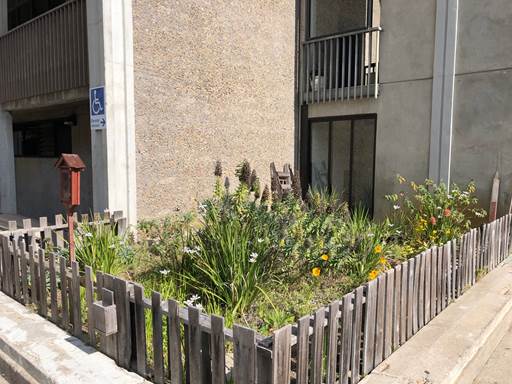
This little plot of dirt has sat fallow and unattended for decades outside the Main Gym at UC San Diego until Laurel D, took it upon herself to create a pollinator garden for Monarch butterflies and other insects critical to our collective survival.

By simply planting, watering and creating a pit stop on their long journey, Laurel has modeled for all of us how we can contribute positively to our complex and threatened ecosystem through a constructive investment and with a caring spirit.

Maybe we can all change the world for the better if we start with small acts of intentionality and kindness…

Start your secret garden today!


Decide to be Vitamin C:
In the 21st century, we tend to privilege Information and subordinate Energy
Our capacity to influence others through our energy alone is palpable and powerful…

Decide to Be Vitamin C
(Excerpt from The Power of a Positive Team)

“You are contagious!
The energy you put into your team and culture determines the quality of it.”

Research from the Heart Math Institute (HeartMath.org) shows that when you have a feeling in your heart, it goes to every cell in the body, then outward – and people up to 10 feet away can sense these feelings. This means that each day you are broadcasting to your team how you feel. You are broadcasting negative energy or positive energy, apathy or passion, indifference or purpose. Research from Harvard University also supports the idea that the emotions you feel are contagious and affect the people around you.

Your team is just as likely to catch your bad mood as the flu, and on the flip side, they will catch your good mood as well.

As a team member, your attitude, energy and leadership are contagious, and has a big impact on your culture and team.

When you walk into the office, or the meeting, or into the school, hospital, or locker room, you have a decision to make. Are you going to be a germ to your team or a big dose of Vitamin C?

Please know that you don’t have to be an extrovert to be positively contagious. Sharing positive energy doesn’t mean you have to be a rah-rah person and bounce off the walls. It means that, from the heart, you simply broadcast the love, passion, positivity, and purpose that you have for your team. It means that you decide to be a fountain of energy instead of an energy drain. It means that you fuel your team with positive energy instead of being an energy vampire that sucks the life out of them.

Great teams are collectively positive and positively contagious. They give and share positive energy to each other, and the more they give, the more comes back to them.


All-Star Teachers Play The Skills Game:
The 90th annual MLB All-Star Game was played on July 9th at Progressive Field in Cleveland, Ohio. The American League won the game for the seventh straight year. Players are selected based on their SKILLS by three groups—fan voting, player voting, and the Commissioner’s office.

In schools and classrooms, we call it the SKILLS GAME taught by All-Star Teachers at all grade levels. The “fan voting” includes parents and students. “Player voting” includes teachers and staff. The “commissioner’s” selections are from school and district administrators.

What might you find on a SKILLS SCORECARD?
On one of the older cards, you will find Bloom’s Taxonomy—the “go to game” for thinking skills a few decades ago.
Many of you will remember the SCANS Scorecard, highlighting the need for employee skills in three general areas:
1) basic skills (reading, writing, math, listening, speaking);
2) thinking skills (thinking creatively, making decisions, solving problems, reasoning); and
3) personal qualities such as responsibility, self-esteem, sociability, self-management, and honesty.

You may have seen the Business World’s Scorecard where people are talking and writing about “soft skills.”
Like it or not, emotions are an intrinsic part of our biological makeup, and every morning they march into the office (and our schools and classrooms) with us and influence our behavior. Executives are starting to talk about the importance of such things as trust, confidence, empathy, adaptability and self-control.”
Shari Caudron, “The Hard Case for Soft Skills”
Currently we have the 21st-Century Skills Scorecard that includes:

  • Ways of Thinking (creativity, critical thinking, problem-solving, decision-making and learning);
  • Ways of Working (communication and collaboration);
  • Tools for Working (communications technology and information literacy); and,
  • Skills for Living (citizenship, life and career, and personal and social responsibility).

Two skills that cut across all four categories are “collaborative problem solving” and “learning in digital networks.”
The Fortune 500 Companies Scorecard identifies five top qualities these companies seek in employees:

  • Teamwork,
  • Problem solving
  • Interpersonal skills
  • Oral communication
  • Listening

Another Scorecard offered by the Pew Research Center showed that adults identified several essential skills that were most important for children and youth to learn “to get ahead in the world today.” These included communication skills as the most important, followed by reading, math, teamwork, writing and logic.

There are two other very essential Skills Scorecards. One is on the topic of Emotional Intelligence (ET) and the other is a scorecard that describes Social Intelligence (SI).

You know well the All Star for Emotional Intelligence. Psychologist Daniel Goleman hit a couple of “homeruns” with his books Emotional Intelligence: Why It Can Matter More Than IQ, and Working with Emotional Intelligence. His scorecard included such skills as self-confidence, self-awareness, self-control, commitment and integrity.

In discussing emotional intelligence, Daniel Goleman cites Peter Salovey, a Yale professor who categorized components of emotional and social skills into five areas:

  • Knowing one’s emotions
  • Managing emotions
  • Motivating oneself
  • Recognizing emotions in others
  • Handling relationships

The scorecard for Social Intelligence is also revealing and relevant.

Social intelligence [social skills] is as important as IQ when it comes to happiness, health, and success. Empathetic people are less likely to experience anxiety, depression, and addictions later in life. They are also more likely to be hired, promoted, earn more money, and have happier marriages and better-adjusted children.
Mitch Prinstein, Ph.D., Board-Certified Clinical Child and Adolescent Psychologist
If we increase social skills, we see commensurate increases in academic learning. That doesn’t mean that social skills (including cooperation and self-control) make you smarter; it means that these skills make you more amenable to learning.
Stephen Elliott, Vanderbilt Peabody Education and Psychology Researcher and
co-author of the newly published The Social Skills Improvement System.
Lastly, there is the Ten Skills Scorecard from the work of Stephen Elliott and Frank Gresham who surveyed over 8,000 teachers and examined 20 years of research in classrooms across the country. They identified these top 10 skills that students need to succeed:

  • Listen to others
  • Follow the steps
  • Follow the rules
  • Ignore distractions
  • Ask for help
  • Take turns when you talk
  • Get along with others
  • Stay calm with others
  • Be responsible for your behavior
  • Do nice things for others

“Top 10 Social Skills Students Need to Succeed,” Research News at Vanderbilt University, 9-27-2007
Does this sound like the “skills-game“ teachers are now playing in schools and classrooms? If so, then give these teachers your vote and be sure they are rewarded for being an ALL-STAR.
Ed DeRoche, Director, Character Education Resource Center, University of San Diego.
BLOG, July 2019


How to Keep a Commonplace Book:

A commonplace book, if you’re unfamiliar, is a notebook, digital or otherwise, that you fill with information like ideas from books, notes from courses, thought-provoking quotes, and more. So, today, I learn about how to build a commonplace book. https://www.samuelthomasdavies.com/how-to-keep-a-commonplace-book/

P.S. If you’re interested, you can learn more about the commonplace book here: https://www.samuelthomasdavies.com/commonplace-book/


If you are Local…
Join Us at the Purpose Party Next Week on August 1st and Connect with Kindred Spirits!

Purpose Party 2019
Presented By: Corporate Alliance & Chamber of Purpose

Join the Purpose Community of San Diego at our first Annual Purpose Party on August 1st!

Come out to the Corporate Alliance Hub and mingle with Members of Corporate Alliance, Chamber of Purpose, and guests for a fun evening of socializing and networking.

Branch Out Market will be bringing a fun pop-up selection of handmade and give-back items for you to shop the night of the party. Every purchase makes a difference in the life of an artisan, woman entrepreneur, or beneficiary such as orphanage and school. Come shop and be amazed at the products which are giving back all over the world. High quality and guilt free shopping for sure!

Connect with Chamber of Purpose!

August 1, 2019

Doors Open at 4:00PM

Sign up today, this event will sell out!

REGISTER

Check out Corporate Alliance 

Connect with the Chamber of Purpose

Email

Thanks this week go to Bob C, Laurel D, Larry H, Ed D, Moshe E, The Purpose Players, and all of you who hold the space for making our world better!
Please pay it forward
Love,
Neville

Follow me on Twitter: https://twitter.com/NevilleB108
Follow me on Facebook: https://www.facebook.com/nbillimoria

“As long as you have certain desires about how it ought to be you can’t see how it is.”— Ram Dass

Teach Your Parents Well

This week:

07.19.19-1

You’ve Got a Friend In Me:
This will surely brighten your day!
https://biggeekdad.com/2017/01/youve-got-friend/

A Child’s Defiance Is Often NOT a Relationship NOR a Discipline Problem:
Parents beat themselves up because they assume that these conflicts are proof that they have failed to establish the authority and respect they deserve. Or, worse yet, they believe that these conflicts occur due to the selfish nastiness of their children. Often the challenges and refusals occur even around small issues and seem to go on and on.

For many parents, the repeated refusals and never-ending conflicts are a painful reminder of their failure as parents. They feel that if they communicated a strong image of their authority from the “get go” then there would be fewer arguments. They falsely assume that asserting authority better results in more positive parent-child communication and cooperation. In many homes the stress that results as a parent struggles to control what he perceives to be a defiant child seriously affects the parent-child relationship.

https://www.pillarsforsuccess.com/a-childs-defiance-is-often-not-a-relationship-problem-nor-is-it-a-discipline-problem/?fbclid=IwAR23R16r-HnwS7xyMGu0uFPsz4C0-ASAAcHwEwRbVgD__1geVd-MY2KJYwY


Study Finds that Children Raised Without Religion Show More Empathy and Kindness:
This does not mean that religious children cannot be good people or even grow up to be good people, but it does imply strongly that religious parenting is not an ideal parenting method and it gives evidence to the case for a stronger secularization of the U.S. and the world.
https://www.patheos.com/blogs/danthropology/2015/11/study-finds-that-children-raised-without-religion-show-more-empathy-and-kindness/


Creative Types Survey:
A fun survey to give you insights into your creative gifts…
https://mycreativetype.com/share/visionary/

Thanks this week go to Bob C and Arman S-B

Please pay it forward!
Love,
Neville

Follow me on Twitter: https://twitter.com/NevilleB108
Follow me on Facebook: https://www.facebook.com/nbillimoria

“Children are the living messages we send to a time we will not see.”
-John W. Whitehead

Challenge Orthodoxies!

This week:

07.12.19-1.png

Why Are Many Wealthy Americans Suddenly Calling To Be Taxed More?
In a recent spate of op-eds, wealthy individuals like Eli Broad, Abigail Disney and others seem to be embracing the idea of a “wealth tax” to fight economic inequity.
https://www.wbur.org/hereandnow/2019/07/01/wealth-tax-wealthy-americans


Happy Ever After: 25 ways to Live Well into Old Age:

Determined to enjoy longer and healthier lives, two women researched the science to find the key. Here, they share what they discovered…

https://www.theguardian.com/lifeandstyle/2019/may/26/happy-ever-after-25-ways-to-live-well-into-old-age?CMP=Share_iOSApp_Other


Thanks this week go to Bob C, Ron M, and NPR as my rich source of high quality journalism!
Please Pay it Forward
Love,
Neville

Follow me on Twitter: https://twitter.com/NevilleB108
Follow me on Facebook: https://www.facebook.com/nbillimoria

“The old believe everything, the middle-aged suspect everything, the young know everything.”—Oscar Wilde

Be the best at whatever you do. Be world-class. Whether with a mop. Or as a colleague. Or as a parent.

This week:

There’s No Such Thing As “Just a Janitor”:

There may be a movie someday about Richard Montañez.

I wouldn’t bet against it. If you’ve eaten a Flamin’ Hot Cheeto, you have him to thank. His story (The Hustle) is the stuff of legends.

07.05.19-1

Montañez is a first-generation Mexican immigrant. He had a hard time in school and eventually dropped out. He eventually landed a job as a janitor in a Frito-Lay plant in California. Before he started, his grandfather gave him advice.

“Make sure that floor shines,” the man told his grandson. “And let them know that a Montañez mopped it.”

Montañez decided he was going to be the “best janitor Frito-Lay had ever seen” — and he quickly made his presence known.

“Every time someone walked into a room, it would smell fresh,” he says. “I realized there’s no such thing as ‘just a janitor’ when you believe you’re going to be the best.”

Montañez worked hard, learning everything he could about Frito-Lay. When he heard the CEO of Frito-Lay urge employees to act like an owner, something was triggered within him.

After nearly a decade mopping floors, Montañez gathered the courage to ask one of the Frito-Lay salesmen if he could tag along and learn more about the process.

They went to a convenience store in a Latino neighborhood — and while the salesman restocked inventory, Montañez made a fortuitous observation: “I saw our products on the shelves and they were all plain: Lay’s, Fritos, Ruffles,” he recalls. “And right next to these chips happened to be a shelf of Mexican spices.”

In that moment, he realized that Frito-Lay had “nothing spicy or hot.”

A few weeks later, Montañez stopped at a local vendor to get some elote, a Mexican “street corn” doused in chili powder, salt, cotija, lime juice, and crema fresca. Cob in hand, a “revelation” struck: What if I put chili on a Cheeto?

Montañez made his own prototype spicy Cheetos, and boldly set up a meeting with Frito-Lay’s CEO.

Montañez stepped into the boardroom. “Here I was,” he says, “a janitor presenting to some of the most highly qualified executives in America.”

At one point during the presentation, an executive in the room interjected: “How much market share do you think you can get?”

“It hit me that I had no idea what he was talking about, or what I was doing,” Montañez recalled. “I was shaking, and I damn near wanted to pass out…[but] I opened my arms and I said, ‘This much market share!’ I didn’t even know how ridiculous that looked.”

The room went silent as the CEO stood up and smiled. “Ladies and gentlemen, do you realize we have an opportunity to go after this much market share?” he said, stretching out his arms.

He turned to Montañez. “Put that mop away, you’re coming with us.”

Today, Montañez is the VP of multicultural sales for PepsiCo America – the holding company of Frito-Lay.

His story is remarkable. And I think it all boils down to his mindset.

Be the best at whatever you do. Be world-class. Whether with a mop. Or as a colleague. Or as a parent. 

Or with a Cheeto.


A Patriotic Tribute from the American Rodeo:

Happy 4th of July! Stand Up for the Values We Hold Near and Dear…

https://www.youtube.com/embed/2eBxVxO0nh4


If you are local, support your community…

07.05.19-2

07.05.19-3.jpg

Mission Fed Community Moments

This new edition of Mission Possible is filled with the people and programs that are part of Mission Fed’s community engagement.

Thank you for your membership, trust and loyalty!

35 Years in the Making: Mission Federal ArtWalk
Art, music, dance—all in one place—all in one weekend—all for 35 years! This is Mission Federal ArtWalk, where on April 27 and 28 the streets of Little Italy were filled with vibrancy, inspiration and whimsical fun. The community event brought more than 350 visual and performing artists into the neighborhood and reflected how friendliness, accessibility and creativity abound in San Diego. Mission Fed believes arts and culture are critical to the positive health and well-being of our region and we were honored to support this festival for the eleventh year. Read the complete newsletter to find out more!

Young Ideas Worth Spreading: TEDxYouth@SanDiego
A group of teenagers put on a day full of empowering talks, novel experiences, and profound opportunities on March 22 at Lincoln High School. As a sponsor of TEDxYouth@SanDiego, a special event focused on “Ideas Worth Spreading,” Mission Fed joined the community as local high school speakers covered topics such as bringing greater diversity into STEM, being bold when facing constant rejection, the interplay of self-image, self-identity, self-discovery and many more. The event was organized by TEDxSanDiego, a local not-for-profit, volunteer-driven organization, whose vision is to be a forum that encourages and facilitates the unleashing of ideas which have the power to change our world.

These Community Moments are just some of the ways that we support and give back to the local San Diego community—and your continued membership makes that Mission Possible!

07.05.19-4

Thanks this week goes to Debra S, Larry H and the whole team at Mission Fed.
Please Pay it forward!
Love,
Neville

Follow me on Twitter: https://twitter.com/NevilleB108
Follow me on Facebook: https://www.facebook.com/nbillimoria

“Heroism is really the quest to live according to one’s internal standards of right and wrong, regardless of whether the world is watching.”

—- John F. Groom

Are You Happy? Through it all, What Makes You Happy?

06.28.19-1

This week: Are YOU Happy?

Some tips and tricks to help you courtesy of Bill Gates, Harvard, Yale, Shawn Achor and more:

  • Follow through on your commitments
  • Have a mindset of giving
  • Treat your body like a sacred temple
  • Put family first
  • Focus on your strengths
  • Invest in experiences
  • Learn to savor more
  • Express gratitude and spread kindness
  • Exercise more – 7 minutes might be enough
  • Sleep more – you’ll be less sensitive to negative emotions
  • Move closer to work – a short commute is worth more than a big house
  • Spend time with friends and family – don’t regret it on your deathbed
  • Go outside – happiness is maximized at 57°F
  • Help others – 100 hours a year is the magical number
  • Practice smiling – it can alleviate pain
  • Plan a trip – but don’t take one
  • Meditate – rewire your brain for happiness
  • Practice gratitude – increase both happiness and life satisfaction
  • Getting older will make yourself happier


Bill Gates says he’s happier at 63 than he was at 25 because he does 4 simple things

  • Microsoft cofounder Bill Gates recently did an “Ask Me Anything” on Reddit.
  • He was asked two compelling questions: “Are you happy?” And shortly after, “Through it all, what makes you happy?”
  • Gates said that following through on commitments, having a “giving” mindset, treating his body like a temple, and putting his family first have all contributed to his happiness today.

In the most recent “Ask Me Anything” on Reddit, Microsoft cofounder Bill Gates was asked a host of humanitarian-related questions ranging from topics like climate change to the future of education.

About 30 minutes into his live session, questions shifted to the personal life of Bill Gates. Gates, now 63, was asked two compelling questions: “Are you happy?” And shortly after, “Through it all, what makes you happy?”

To the first question, the world’s second-richest man responded: “Yes! When I was in my 30s, I didn’t think people in their 60s were very smart or had much fun. Now I have had a counter-revelation. Ask me in 20 years and I will tell you how smart 80-year-olds are.”

To the second question, Gates said, “Some recently said that when your children are doing well it really is very special, and as a parent, I completely agree. Sometimes following through on commitments to yourself, like doing more exercise, also improves your happiness.”

Gates’ “counter-revelation” of happiness in his 60s versus that in his 20s or 30s is an interesting one. In his 30s, things were unquestionably “fun” from the business standpoint of relentlessly driving Microsoft’s original mission to put “a computer on every desk and in every home.”

But that mission was fulfilled, at least in the developed world. Things have since shifted for Gates. He recently shared in a Facebook post: “When I was in my 20s and early 30s, I was fanatical about software. I didn’t take vacations or weekends off and I wasn’t interested in getting married. (Obviously, that changed when I met Melinda!)”

He is now enjoying the fruits of his labor through his family- and personal-life ambitions, as well as fulfilling his larger-than-life vision of ending the world’s extreme poverty and hunger through the Bill & Melinda Gates Foundation.

But before you say, “I’m not Bill Gates: I don’t have the same luxuries in life,” you don’t have to be a billionaire to achieve the happiness of which he speaks. Paraphrasing his new revelations in life, here’s how anyone can achieve the same level of happiness as Gates.

1. Follow through on your commitments.

How people become smarter as they age is not so much about increasing intellectual knowledge or accumulating more wealth (although both will happen by virtue of making good choices). It’s about intentionally choosing and following through on what matters most — following through on your commitments, as Gates said.

Maybe you feel stuck in a dead-end job, chose the wrong career, or feel that you were made for something else —something more significant.  While it’s totally normal to question your career direction or motivation to do your job, what is not normal is for these feelings to reside permanently in the deepest crevices of your mind when you know you were made for something bigger.

If you grapple with thoughts about “what if,” start the beginning of your journey with this question: Am I doing what I want — what most matters to me?

At some point, a person needs to break the cycle of swallowing his own voice to speaking into his truth faultlessly about what matters.

When you ask yourself what you want, and you hear from deep down inside your gut, “This is what I want,” that discerning voice is the voice of truth to which you should commit wholeheartedly.

2. Have a mindset of giving.

The late motivational guru Jim Rohn said, “Only by giving are you able to receive more than you already have.” Through his generous foundation, Gates has achieved this on a scale most of us reading this article can’t fathom.

In 2006, his close friend Warren Buffett, now the third-richest person on the planet, signed papers that gave $31 billion of his fortune to fund the Gates Foundation’s work in fighting infectious diseases and reforming education.

Closer to home, consider giving for your own well-being. Science has confirmed that giving makes us feel happy, is good for our health, and evokes gratitude. One Harvard Business School report even concluded that the emotional rewards are the greatest when our generosity is connected to others, like contributing to a cancer-stricken friend’s GoFundMe campaign.

And you needn’t restrict your idea of giving to financial generosity. Consider as well the positive effects of giving your time, mentoring others, supporting a cause, fighting injustice, and having a pay-it-forward mentality.

3. Treat your body like a sacred temple.

Gates said that exercise leads to happiness. He is an avid tennis player. And according to research, he’s dead on. Exercise has been shown to improve your mood and decrease feelings of depression, anxiety, and stress.

Conversely, if you cringe at the thought of having to fight for a treadmill at a crowded and sweaty gym, your mood can benefit from a simple exercise no matter the intensity or length of it.

One study of 24 women diagnosed with depression showed that exercise of any intensity significantly decreased feelings of depression. In fact, it reduced depressed mood 10 and 30 minutes following the physical activity.

4. Put family first.

Gates’ priorities shifted to more focus on family life and the special feeling of seeing his children excel in life.

The choice not to place family life on equal par with, or even ahead of, career priorities can be costly. Scientific analysis of the causes that lead to death in the workplace listed, among other things, “long hours/overtime” and “work-family conflict” as common sources of workplace stress destroying the health of U.S. workers.

If work-life balance is a struggle of guilt because you think your business or career will suffer, the solution is simple: Set nonnegotiable boundaries around your family priorities first, and then use the same rigor to place strict boundaries at work.

Having solid lines around each area of life will ultimately make you more focused, efficient, and effective at work. And your kids will love that daddy or mommy comes home on time to watch a ballet recital or little league game.

Read the original article on Inc. Copyright 2019. Follow Inc on Twitter.

I’m taking Yale’s class on happiness — and halfway through, these 4 tricks are already working

  • Yale’s most popular class ever, “The Science of Well-Being,” was designed by professor Laurie Santos.
  • She collected all the psychological science related to happiness and came up with a step-by-step process for boosting your own.
  • After five weeks in the class, the writer Justin Maiman says that the principles — such as taking time to savor experiences and focusing on your strengths — are already working.

Happiness can be learned.

That’s the central idea behind Yale’s most popular class ever. Professor Laurie Santos has collected all the psychological science out there and come up with a step-by-step process for boosting your own happiness.

I took the 10-week course online through Coursera for free. It’s officially called “The Science of Well-Being” and has already been taken by more than 225,000 students online. About one in four students at Yale have taken it since it was first offered.

Santos told me she designed the course for three reasons: to synthesize what psychologists have learned about making our lives better, to help undergrads overcome stress and unhappiness on campus, and “to live a better life myself.”

Five weeks in, I’m a convert. Here’s why: The seminars are great, but you also get a lot of homework centered around daily exercises geared toward changing your habits — recognizing and then dropping bad ones while developing new good habits.

Here are just four exercises I picked out from a slew of new tips and tricks I’ve learned so far. Again, the point here is that these positive habits have been tested and proven to work, based on psychological science.

Focus on your strengths

This first homework was all about identifying your signature strengths and refocusing on them each day. I took the VIA Survey online — anyone can take this test for free, check it out here — which revealed my 24 greatest strengths. My top four: love of learning, appreciation of beauty and excellence, leadership, and fairness.

If you’re pretty self-aware, the results won’t be a big surprise. The key though is to identify them and find situations to use your strengths every day. That’ll lead you down the path to flourishing. Studies show happiness increases and depression decreases when a person uses his or her signature strengths regularly. In my case, I looked for simple ways to use fairness, humor, and love of learning throughout my day. Pro tip: Additional research shows that if you’re able to “bundle” four of your top strengths while at work, you’ll likely flourish and have more positive experiences, and you are more likely to think of your work as a “calling.”

Invest in experiences

I spend money on experiences such as live music, trips, and meals over new toys. It’s always made me happier. Now I know that research backs this up, regardless of income levels: Going for a walk or traveling to a new place are much better investments in terms of happiness than buying material things.

Turns out your stuff loses “happiness value” almost as soon as you’ve purchased it. Paying for experiences, however, has multiple benefits for happiness. One, the anticipation of the experience leads to more happiness and joy. Two, talking about the experience afterward with friends reignites your own happy memories and, incredibly enough, sharing these tales with friends tends to boost their happiness, too. Finally, we don’t tend to get used to experiences the way we do with new stuff. There’s no time to get used to a trip to Mexico City, but science shows the joy you get from buying some awesome new thing, such as a phone, begins to diminish immediately. It’s just how your brain works.

Learn to savor more

Savoring is the act of stepping outside of an experience to review and really appreciate it — a way of helping you to stay present in the moment. And savoring often forces you to enjoy an experience for longer.

My homework was to pinpoint a moment to savor each day. One of mine stuck out: I was running around the park when a strong gust of wind at my back almost lifted me off the ground. It was a strange and wonderful moment, and I made sure to tell my wife when I got home. Looking for these moments has boosted my sense of awe at the world around me. Research shows reliving these happy memories can make your positive emotions last up to a month.

Express gratitude and spread kindness

This one is fun. If you’re generally thankful and show appreciation for what you have, your happiness levels soar. Sounds too easy, but it works. One exercise we did was make a list of five things we were grateful for each day. Staring at your list simply makes you thankful and reflective. Even doing this once a week has been shown to boost happiness and reduce ill health symptoms.

Meanwhile, doing random acts of kindness is another way to find happiness. One study showed that spending money on others makes you happier than spending it on yourself, even across different cultures and income levels. For example, small changes, such as spending $5 to buy a friend, colleague, or stranger a coffee, boosted happiness levels. So I’ve been buying a lot of coffees.

Santos adds, “It kind of seems like our brains are wired to see other people’s rewards as our own rewards. And so it’s kind of like getting a little click of cocaine every single time you do a nice thing for another person. It’s kind of an accident of the way our social brain is wired up.”

Read more: 10 proven ways to increase your happiness

The road to happiness

Remember to also do the things you probably already know are proven to boost your well-being, such as exercising daily and getting as much sleep as possible.

But the key here is to pick up a new habit that will lead you to feeling happier. So find one above that works for you and try it. It’s been well worth it already for me.

Justin Maiman writes a weekly newsletter called Ginger that’s devoted to moments of inspiration. You can read Ginger and subscribe for free here. He’s a journalist with more than 20 years of experience in digital media and television, including working at media titans like Business Insider, Yahoo, Bloomberg, Fox News and PBS affiliates in St. Paul and Boston. He’s currently the president and managing director of Cochrane Media, a boutique media shop in New York.

10 Proven Ways To Increase Your Happiness

Belle Beth Cooper,

Buffer

Nov. 15, 2013, 1:33 PM

06.28.19-2

Flickr/Chimothy27

Happiness is so interesting, because we all have different ideas about what it is and how to get it. It’s also no surprise that it’s the No.1 value for Buffer’s culture, if you see our slidedeck about it. So naturally we are obsessed with it.

I would love to be happier, as I’m sure most people would, so I thought it would be interesting to find some ways to become a happier person that are actually backed up by science. Here are ten of the best ones I found.

1. Exercise more – 7 minutes might be enough

You might have seen some talk recently about the scientific 7 minute workout mentioned in The New York Times. So if you thought exercise was something you didn’t have time for, maybe you can fit it in after all.

Exercise has such a profound effect on our happiness and well-being that it’s actually been proven to be an effective strategy for overcoming depression. In a study cited in Shawn Achor’s book, The Happiness Advantage, three groups of patients treated their depression with either medication, exercise, or a combination of the two. The results of this study really surprised me. Although all three groups experienced similar improvements in their happiness levels to begin with, the follow up assessments proved to be radically different:

The groups were then tested six months later to assess their relapse rate. Of those who had taken the medication alone, 38 percent had slipped back into depression. Those in the combination group were doing only slightly better, with a 31 percent relapse rate. The biggest shock, though, came from the exercise group: Their relapse rate was only 9 percent!

You don’t have to be depressed to gain benefit from exercise, however. It can help you to relax, increase your brain power and even improve your body image, even if you don’t lose any weight.

A study in the Journal of Health Psychology found that people who exercised felt better about their bodies, even when they saw no physical changes:

Body weight, shape and body image were assessed in 16 males and 18 females before and after both 6 × 40 mins exercise and 6 × 40 mins reading. Over both conditions, body weight and shape did not change. Various aspects of body image, however, improved after exercise compared to before.

We’ve explored exercise in depth before, and looked at what it does to our brains, such as releasing proteins and endorphins that make us feel happier, as you can see in the image below.

06.28.19-3

2. Sleep more – you’ll be less sensitive to negative emotions

We know that sleep helps our bodies to recover from the day and repair themselves, and that it helps us focus and be more productive. As it turns out, it’s also important for our happiness.

In NutureShock, Po Bronson and Ashley Merryman explain how sleep affects our positivity:

Negative stimuli get processed by the amygdala; positive or neutral memories gets processed by the hippocampus. Sleep deprivation hits the hippocampus harder than the amygdala. The result is that sleep-deprived people fail to recall pleasant memories, yet recall gloomy memories just fine.

In one experiment by Walker, sleep-deprived college students tried to memorize a list of words. They could remember 81% of the words with a negative connotation, like “cancer.” But they could remember only 31% of the words with a positive or neutral connotation, like “sunshine” or “basket.”

The BPS Research Digest explores another study that proves sleep affects our sensitivity to negative emotions. Using a facial recognition task over the course of a day, the researchers studied how sensitive participants were to positive and negative emotions. Those who worked through the afternoon without taking a nap became more sensitive late in the day to negative emotions like fear and anger.

Using a face recognition task, here we demonstrate an amplified reactivity to anger and fear emotions across the day, without sleep. However, an intervening nap blocked and even reversed this negative emotional reactivity to anger and fear while conversely enhancing ratings of positive (happy) expressions.

Of course, how well (and how long) you sleep will probably affect how you feel when you wake up, which can make a difference to your whole day. This graph showing decreases in brain activity provides great insight into how important getting enough sleep is for productivity and happiness.

06.28.19-4.jpg


Another study tested how employees’ moods when they started work in the morning affected their work day.

Researchers found that employees’ moods when they clocked in tended to affect how they felt the rest of the day. Early mood was linked to their perceptions of customers and to how they reacted to customers’ moods.

And most importantly to managers, employee mood had a clear impact on performance, including both how much work employees did and how well they did it.

Sleep is another topic we’ve looked into before, exploring how much sleep we really need to be productive.

3. Move closer to work – a short commute is worth more than a big house

Our commute to the office can have a surprisingly powerful impact on our happiness. The fact that we tend to do this twice a day, five days a week, makes it unsurprising that its effect would build up over time and make us less and less happy.

According to The Art of Manliness, having a long commute is something we often fail to realize will affect us so dramatically:

… while many voluntary conditions don’t affect our happiness in the long term because we acclimate to them, people never get accustomed to their daily slog to work because sometimes the traffic is awful and sometimes it’s not. Or as Harvard psychologist Daniel Gilbert put it, “Driving in traffic is a different kind of hell every day.”

We tend to try to compensate for this by having a bigger house or a better job, but these compensations just don’t work:

Two Swiss economists who studied the effect of commuting on happiness found that such factors could not make up for the misery created by a long commute.

4. Spend time with friends and family – don’t regret it on your deathbed

Staying in touch with friends and family is one of the top five regrets of the dying. If you want more evidence that it’s beneficial for you, I’ve found some research that proves it can make you happier right now.

Social time is highly valuable when it comes to improving our happiness, even for introverts. Several studies have found that time spent with friends and family makes a big difference in how happy we feel, generally.

I love the way Harvard happiness expert Daniel Gilbert explains it:

We are happy when we have family, we are happy when we have friends and almost all the other things we think make us happy are actually just ways of getting more family and friends.

George Vaillant is the director of a 72-year study on the lives of 268 men.

In an interview in the March 2008 newsletter to the Grant Study subjects, Vaillant was asked, “What have you learned from the Grant Study men?” Vaillant’s response: “That the only thing that really matters in life are your relationships to other people.”

He shared insights of the study with Joshua Wolf Shenk at The Atlantic on how the men’s social connections made a difference to their overall happiness:

The men’s relationships at age 47, he found, predicted late-life adjustment better than any other variable, except defenses. Good sibling relationships seem especially powerful: 93 percent of the men who were thriving at age 65 had been close to a brother or sister when younger.

In fact, a study published in the Journal of Socio-Economics states than your relationships are worth more than $100,000:

Using the British Household Panel Survey, I find that an increase in the level of social involvements is worth up to an extra £85,000 a year in terms of life satisfaction. Actual changes in income, on the other hand, buy very little happiness.

I think that last line is especially fascinating: Actual changes in income, on the other hand, buy very little happiness. So we could increase our annual income by hundreds of thousands of dollars and still not be as happy as if we increased the strength of our social relationships.

The Terman study, which is covered in The Longevity Project, found that relationships and how we help others were important factors in living long, happy lives:

We figured that if a Terman participant sincerely felt that he or she had friends and relatives to count on when having a hard time then that person would be healthier. Those who felt very loved and cared for, we predicted, would live the longest.

Surprise: our prediction was wrong… Beyond social network size, the clearest benefit of social relationships came from helping others. Those who helped their friends and neighbors, advising and caring for others, tended to live to old age.

5. Go outside – happiness is maximized at 57°F

In The Happiness Advantage, Shawn Achor recommends spending time in the fresh air to improve your happiness:

Making time to go outside on a nice day also delivers a huge advantage; one study found that spending 20 minutes outside in good weather not only boosted positive mood, but broadened thinking and improved working memory…

This is pretty good news for those of us who are worried about fitting new habits into our already-busy schedules. Twenty minutes is a short enough time to spend outside that you could fit it into your commute or even your lunch break.

A U.K. study from the University of Sussex also found that being outdoors made people happier:

Being outdoors, near the sea, on a warm, sunny weekend afternoon is the perfect spot for most. In fact, participants were found to be substantially happier outdoors in all natural environments than they were in urban environments.

The American Meteorological Society published research in 2011 that found current temperature has a bigger effect on our happiness than variables like wind speed and humidity, or even the average temperature over the course of a day. It also found that happiness is maximized at 57°F, so keep an eye on the weather forecast before heading outside for your 20 minutes of fresh air.

The connection between productivity and temperature is another topic we’ve talked about more here. It’s fascinating what a small change in temperature can do.

6. Help others – 100 hours a year is the magical number

One of the most counterintuitive pieces of advice I found is that to make yourself feel happier, you should help others. In fact, 100 hours per year (or two hours per week) is the optimal time we should dedicate to helping others in order to enrich our lives.

If we go back to Shawn Achor’s book again, he says this about helping others:

…when researchers interviewed more than 150 people about their recent purchases, they found that money spent on activities — such as concerts and group dinners out — brought far more pleasure than material purchases like shoes, televisions, or expensive watches. Spending money on other people, called “prosocial spending,” also boosts happiness.

The Journal of Happiness Studies published a study that explored this very topic:

Participants recalled a previous purchase made for either themselves or someone else and then reported their happiness. Afterward, participants chose whether to spend a monetary windfall on themselves or someone else. Participants assigned to recall a purchase made for someone else reported feeling significantly happier immediately after this recollection; most importantly, the happier participants felt, the more likely they were to choose to spend a windfall on someone else in the near future.

So spending money on other people makes us happier than buying stuff for ourselves. What about spending our time on other people? A study of volunteering in Germany explored how volunteers were affected when their opportunities to help others were taken away:

Shortly after the fall of the Berlin Wall but before the German reunion, the first wave of data of the GSOEP was collected in East Germany. Volunteering was still widespread. Due to the shock of the reunion, a large portion of the infrastructure of volunteering (e.g. sports clubs associated with firms) collapsed and people randomly lost their opportunities for volunteering. Based on a comparison of the change in subjective well-being of these people and of people from the control group who had no change in their volunteer status, the hypothesis is supported that volunteering is rewarding in terms of higher life satisfaction.

In his book Flourish: A Visionary New Understanding of Happiness and Well-being, University of Pennsylvania professor Martin Seligman explains that helping others can improve our own lives:

…we scientists have found that doing a kindness produces the single most reliable momentary increase in well-being of any exercise we have tested.

7. Practice smiling – it can alleviate pain

Smiling itself can make us feel better, but it’s more effective when we back it up with positive thoughts, according to this study:

A new study led by a Michigan State University business scholar suggests customer-service workers who fake smile throughout the day worsen their mood and withdraw from work, affecting productivity. But workers who smile as a result of cultivating positive thoughts — such as a tropical vacation or a child’s recital — improve their mood and withdraw less.

Of course it’s important to practice “real smiles” where you use your eye sockets. It’s very easy to spot the difference.

06.28.19-5.jpg

According to PsyBlog, smiling can improve our attention and help us perform better on cognitive tasks:

“Smiling makes us feel good which also increases our attentional flexibility and our ability to think holistically. When this idea was tested by Johnson et al. (2010), the results showed that participants who smiled performed better on attentional tasks which required seeing the whole forest rather than just the trees.”

A smile is also a good way to alleviate some of the pain we feel in troubling circumstances:

Smiling is one way to reduce the distress caused by an upsetting situation. Psychologists call this the facial feedback hypothesis. Even forcing a smile when we don’t feel like it is enough to lift our mood slightly (this is one example of embodied cognition).

One of our previous posts goes into even more detail about the science of smiling.

8. Plan a trip – but don’t take one

As opposed to actually taking a holiday, it seems that planning a vacation or just a break from work can improve our happiness. A study published in the journal, Applied Research in Quality of Life showed that the highest spike in happiness came during the planning stage of a vacation as employees enjoyed the sense of anticipation:

In the study, the effect of vacation anticipation boosted happiness for eight weeks. After the vacation, happiness quickly dropped back to baseline levels for most people.

Shawn Achor has some info for us on this point, as well:

One study found that people who just thought about watching their favorite movie actually raised their endorphin levels by 27 percent.

If you can’t take the time for a vacation right now, or even a night out with friends, put something on the calendar — even if it’s a month or a year down the road. Then whenever you need a boost of happiness, remind yourself about it.

9. Meditate – rewire your brain for happiness

Meditation is often touted as an important habit for improving focus, clarity and attention span, as well as helping to keep you calm. It turns out it’s also useful for improving your happiness:

In one study, a research team from Massachusetts General Hospital looked at the brain scans of 16 people before and after they participated in an eight-week course in mindfulness meditation. The study, published in the January issue of Psychiatry Research: Neuroimaging, concluded that after completing the course, parts of the participants’ brains associated with compassion and self-awareness grew, and parts associated with stress shrank.

Meditation literally clears your mind and calms you down, it’s been often proven to be the single most effective way to live a happier live. I believe that this graphic explains it the best:

06.28.19-6.jpg

According to Shawn Achor, meditation can actually make you happier long-term:

Studies show that in the minutes right after meditating, we experience feelings of calm and contentment, as well as heightened awareness and empathy. And, research even shows that regular meditation can permanently rewire the brain to raise levels of happiness.

The fact that we can actually alter our brain structure through mediation is most surprising to me and somewhat reassuring that however we feel and think today isn’t permanent.

We’ve explored the topic of meditation and it’s effects on the brain in-depth befor e. It’s definitely mind-blowing what this can do to us.


10. Practice gratitude – increase both happiness and life satisfaction

This is a seemingly simple strategy, but I’ve personally found it to make a huge difference to my outlook. There are lots of ways to practice gratitude, from keeping a journal of things you’re grateful for, sharing three good things that happen each day with a friend or your partner, and going out of your way to show gratitude when others help you.

In an experiment where some participants took note of things they were grateful for each day, their moods were improved just from this simple practice:

The gratitude-outlook groups exhibited heightened well-being across several, though not all, of the outcome measures across the 3 studies, relative to the comparison groups. The effect on positive affect appeared to be the most robust finding. Results suggest that a conscious focus on blessings may have emotional and interpersonal benefits.

The Journal of Happiness studies published a study that used letters of gratitude to test how being grateful can affect our levels of happiness:

Participants included 219 men and women who wrote three letters of gratitude over a 3 week period.

Results indicated that writing letters of gratitude increased participants’ happiness and life satisfaction, while decreasing depressive symptoms.

For further reading, check out 7 Simple productivity tips you can apply today, backed by science, which goes even deeper into what we can do to be more grateful.

Quick last fact: Getting older will make yourself happier

As a final point, it’s interesting to note that as we get older, particularly past middle age, we tend to grow happier naturally. There’s still some debate over why this happens, but scientists have got a few ideas:

Researchers, including the authors, have found that older people shown pictures of faces or situations tend to focus on and remember the happier ones more and the negative ones less.

Other studies have discovered that as people age, they seek out situations that will lift their moods — for instance, pruning social circles of friends or acquaintances who might bring them down. Still other work finds that older adults learn to let go of loss and disappointment over unachieved goals, and hew their goals toward greater wellbeing.

So if you thought being old would make you miserable, rest assured that it’s likely you’ll develop a more positive outlook than you probably have now.

Read the original article on Buffer. Copyright 2019.


Speaking of Harmonizing with Nature…

Summer Solstice Follow Up:

If you always wanted to see a sunrise from Stonehenge on the Solstice but couldn’t get there in person, you are in luck!

This short article explains this project and contains the link to the virtual view. Enjoy!

https://www.theguardian.com/uk-news/2019/jun/21/sunrise-stonehenge-visible-around-world-live-feed-solstice?CMP=Share_iOSApp_Other


Thanks this week to Greg C, Ron M, and everyone in my life who makes me happier!
Please pay it forward
Love,
Neville

Follow me on Twitter: https://twitter.com/NevilleB108
Follow me on Facebook: https://www.facebook.com/nbillimoria

“We tend to forget that happiness doesn’t come as a result of getting
something we don’t have,
but rather of recognizing and appreciating what we do have.”

— Frederick Koenig

Your Soul Food for Friday Summer Solstice 2019: Love of Nature, Giving, History and Humanity

This week:

06.21.19-1

Love of Nature- Summer Solstice 2019 Salutations from Billy S:
Wishing you a wonderful summer solstice!

This is a time of changing seasons, in the Northern Hemisphere summer begins, and for the Southern Hemisphere it’s the beginning of winter.

The summer solstice is the longest day and the shortest night in our year. The sun also now sets the farthest north on the horizon.
At this time of the year, the days are warm, all the plants are energized by the sun and the land is filled with rich new growth.

Summer is truly a celebration of the primal creative force of nature, fertile and blooming with abundance.
Humans for many millennia have marked this sacred time in the yearly cycle of life.
Celebrating the solstice can be a beautiful reminder that our lives are part of a larger order, always changing always renewing.
The beginning of summer represents a time for purification and renewed energy.
This is a time of cutting through resistance and obstacles, using the sun energy to illuminate and light your way upon your path.
Fire is especially important, symbolizing the light, heat and power of the sun.
Into a fire, you can throw a piece of paper with written goals you strive to achieve, and anything to release.

Now is a good time to plant seeds for a more intuitive, simpler and natural lifestyle.
Stay in tune with nature!


Love of Giving- This Might Flip Your Paradigm:

“So much of what we call love is fish love.” with Rabbi Dr. Abraham Twerski

https://youtu.be/YNx7kDJ2kDI


Love of His/Herstory- Getting Perspective Through Pictures:
Guessing You Have Never Seen Some of These Historic Pics…
http://www.douglascountygensoc.org/photos004.html


06.21.19-2

World Refugee Day Fundraiser for Compassion It:
Fundraiser by Sara Schairer
for Compassion it


June 20 is World Refugee Day. Please donate and help us embed compassion within refugee camps around the world.

According to @[13204463437:274:UNHCR, the UN Refugee Agency], “We are now witnessing the highest levels of displacement on record. An unprecedented 70.8 million people around the world have been forced from home. Among them are nearly 25.9 million refugees, over half of whom are under the age of 18.”

In honor of World Refugee Day, we’re launching the second fundraising campaign for Compassion It’s efforts to support the American Refugee Committee. We raised $10,000 in our first fundraiser (!!!!) and now only need $5,000 more to reach our goal! In case you missed the first fundraiser, here are details about this incredible initiative: In April, the American Refugee Committee (ARC) brought together 20+ thought leaders to come up with ideas for cultivating compassion within refugee camps, and they invited me and my teammate Burrell Poe to join. That meeting in Minneapolis went so well that the ARC has asked us to join them at a refugee camp in Rwanda at the end of July 2019. We will help develop a scalable process and methods that embed compassion within refugee camps. (Learn more: https://amandi.global/) This is an important opportunity to be a part of a global compassion initiative. This program may impact not only millions of refugees, but it would also tremendously benefit the front-line staff members who suffer from burnout and empathy fatigue. I’m honored and thrilled that Compassion It will be able to influence a global effort to impact refugees and humanitarian aid workers. If this is something you’re excited about, too, would you consider making a donation to help us reach our goal? Feel free to reach out if you have questions. Thank you! -Sara

How much would you like to donate?

06.21.19-3


About the Nonprofit

06.21.19-6

Compassion it
EIN 46-1164639
Visit Guidestar Page

MISSION COMPASSION IT’s mission is to inspire daily compassionate actions. VISION At COMPASSION IT, we strive to improve the social consciousness of the world. We envision a time when we can measure a million acts of compassion taking place each day, all over the globe.


If you are local:
National Philanthropy Day 2019- Last Call for Nominations is today!

06.21.19-4.jpg

National Philanthropy Day 2019

Call for Nominations

Extended Deadline:
Friday, June 21, 5:00 p.m.

Nominate Now!

Joining a Legacy of Philanthropists, Fundraising Professionals and Volunteers who have made an outstanding impact
in our community.

Nominate an Individual, Organization, or Company
that is Making a Great Difference

National  Philanthropy Day 2018 Awardees

06.21.19-5

Do you know of a philanthropic story, or story
of giving that needs to be told?

Is there someone who is doing good work for your community?

Submitting a nomination for National Philanthropy Day San Diego
is a great way to show your admiration and appreciation.

And the nominations process has been streamlined!

The AFP San Diego Chapter annually recognizes individuals and organizations whose philanthropic achievements have made an impact in the San Diego region, Imperial County and Tijuana. On Monday, November 4th, we look forward to building on the success of our predecessors and celebrating and honoring the rich diversity of our region.

Please help AFP San Diego honor those most deserving!

Nomination Categories:

Outstanding Philanthropist
Outstanding Fundraising Volunteer
Outstanding Organizational Volunteer
Outstanding Grant Making Organization
Outstanding Philanthropic Business or Corporation
Outstanding Development Professional
Outstanding Youth/Student Volunteer


Nominations will close on June 21, 2019 at 5:00 PM.


For more information, including the categories and criteria,

Click Here.

For Questions: Contact Katie Gomez, AFP San Diego Chapter Manager, katiegomez@afpsd.org

Thanks this week go to Billy S, Arman S-B, Larry H, Sara S, Team AFP, and Compassion IT souls everywhere.

Can you help me pay it forward?
Love,
Neville

Follow me on Twitter: https://twitter.com/NevilleB108
Follow me on Facebook: https://www.facebook.com/nbillimoria

”Ring the bells (ring the bells) that still can ring
Forget your perfect offering
There is a crack in everything (there is a crack in everything)
That’s how the light gets in”—
Leonard Cohen

Your Soul Food for Friday June 14 2019: Passion + Purpose = World Change

Happy Soul Food Friday!

This week:

NevilleDrumSFF

Pattern Interrupt!

The Power of Music

Enjoy this range from opera to flamenco- all on a ukulele!

https://www.facebook.com/AllChosenMusic/videos/590330801474276/UzpfSTE0NTAyNTU3ODY6MTAyMTc1MjYzNjAyOTgxMjE/?from_close_friend=1


Experts Say ‘How Much’ Is the Wrong Way to Assess Screen Time (Time)
Way back in the late 1990s—not long after home Internet use became widespread in the U.S.—researchers started turning up links between time spent on computers and poor mental health. A 1998 study in the journal CyberPsychology and Behavior found heavy internet use—defined as 38 hours or more of non-work, non-school online activity—was associated with “significant social, psychological, and occupational impairments.”
https://apple.news/AVQh-iWlWRaKTUEwaXTCCHg


Is Technology Weakening Your Leadership?

When used effectively, technology can enhance your success as a leader, and, when used ineffectively, technology can undermine your success as a leader. When should you come out from behind the veil of technology?

https://peterstark.com/technology-leadership/


Marcy Morrison Interviews Neville Billimoria – Passion + Purpose = World Change

Here is an interview I did this week hoping to touch one life for the better…

https://www.youtube.com/watch?v=vhkDrNyZbfk


Thanks this week go to Arman S-B, Peter B-S, & Marcy M.

Please pay it forward!

Love,

Neville

SunsetSFF

Adventure is not outside man; it is within. ” ― George Eliot

Love, Inspiration, Transformation & Social Equity

This week:

06.07.19-1

Pattern Interrupt!
I Love You Hooman
This vid will touch your heart!
https://youtu.be/VomYt89dp70


Once a homeless teen dad, CSUSM honors graduate uses his story to inspire others:
Commencement speaker Stephen “Vee” Vandereb plans to teach sociology, helping students overcome the challenges of their past…
https://www.sandiegouniontribune.com/communities/north-county/story/2019-05-16/once-a-homeless-teen-dad-csusm-honors-graduate-uses-his-story-to-inspire-others

‘It’s a miracle’: Helsinki’s Radical Solution to Homelessness:

As in many countries, homelessness in Finland had long been tackled using a staircase model: you were supposed to move through different stages of temporary accommodation as you got your life back on track, with an apartment as the ultimate reward.

“We decided to make the housing unconditional,” says Kaakinen. “To say, look, you don’t need to solve your problems before you get a home. Instead, a home should be the secure foundation that makes it easier to solve your problems.”
https://www.theguardian.com/cities/2019/jun/03/its-a-miracle-helsinkis-radical-solution-to-homelessness?CMP=Share_iOSApp_Other


Does Your Education Level Affect Your Health?
Some clever studies have teased out causal effects by taking advantage of natural experiments.
https://www.nytimes.com/2019/06/03/upshot/education-impact-health-longevity.html


06.07.19-2.jpg

Public libraries are not just about books. At their heart, they are about social equity!
Bad libraries build collections, good libraries build services, great libraries build communities
https://www.theguardian.com/commentisfree/2019/may/10/public-libraries-are-not-just-about-books-at-their-heart-they-are-about-social-equity?fbclid=IwAR3WLkd-u4J4CsyjFJLTwcVCHHC8Fkl5diL3kpLXbTtJlwgQ7o4uWn7Tbtg


06.07.19-3

Thanks this week go to Bob C, Brenda H, Sean D and everyone making our world better!
Please pay it forward
Love,
Neville

Follow me on Twitter: https://twitter.com/NevilleB108
Follow me on Facebook: https://www.facebook.com/nbillimoria

Cooperation is the thorough conviction that nobody can get there unless everybody gets there“–Virginia Burden

Kids and Pressure, Writing Tips and the Inaugural Purpose Newsletter

This week:

05.31.19-1

If You Feel Pressure – WATCH THIS by Jay Shetty
This might garner some well-deserved empathy for our kids…
https://www.youtube.com/watch?v=V4a7giVa2E0

Video of Joyful Afghan Boy Dancing on New Prosthetic Leg Goes Viral:
When Ahmad Rahman was eight months old he and his sister, Salima, were injured when fighting broke out between Afghan government forces and the Taliban in their village in Logar province. Rahman was shot in the leg, which was later amputated. His story is one of tens of thousands in Afghanistan, of people losing limbs due to war, but a video of him testing out his new prosthetic leg has provided a moment of joy.
https://www.theguardian.com/world/2019/may/09/video-of-joyful-afghan-boy-dancing-on-new-prosthetic-leg-goes-viral?CMP=Share_iOSApp_Other

Check Out The Chamber of Purpose San Diego Inaugural Purpose Newsletter:

Welcome to the Inaugural Purpose Newsletter

Your Leadership team has been hard at work reconstituting our Chamber of Purpose efforts around the 3 C’s of Connect, Coach and Champion.  This Newsletter is one outcome of a renewed effort to ensure we all are connected and purpose-filled as we make purpose-driven the norm rather than the exception.

05.31.19-2

Here is what we have been up to since we last connected…

We are concurrently working on updating our web presence, supporting this year’s 21st Annual Cause Conference in October (by shining a bright light on the leaders and organizations modeling Purpose with our Second Annual Purpose Awards), as well as co-creating a Summer Party bringing together kindred spirits in the purpose ecosystem on August 1.

In each Newsletter, we intend to spotlight articles of relevance, calendar items of interest, and in subsequent issues feature talented Chamber of Purpose members, like you.  If you or your organization would like to be featured, please send a picture and short write up of 100 words and a website link to  chamberofpurpose@gmail.com and we will schedule you to be featured in one of our upcoming issues.
Soon, our website will have tools to easily upload your organization’s purpose-related events. In the meantime, we’d be so grateful if you would send us an email with upcoming events to include in future editions (subject line: Upcoming Event). Also, we’re very interested in your content recommendations for our Newsletter and social media sites. Please email us content that you think will resonate with our community with the subject line: Content Ideas.
Thanks for your continued commitment to advancing our community by living and working in purpose!

Love,

Neville Billimoria & Steven Schindler your co-leads (on behalf of the entire Chamber of Purpose Leadership team

Spotlight Video

05.31.19-3

Spotlight Article:   Socially Responsible Business Can Only Succeed If It Becomes a Movement

05.31.19-4


What does it take to cause something big about a community to change — something that no one individually has much power over, even something as big as [Read More at HBR]


Featured Articles

05.31.19-5

Capitalism is getting a bad rap lately. Particularly from younger generations. The misuse of capitalist power by a few has lead to negative stereotypes that paint it with an immoral and predatory brush.  But capitalism, when done right  [Read More at Entrepreneur]


05.31.19-6 The Bicycle Mayor & Leaders Program is a global initiative to accelerate the progress of cycling in cities and help get another one billion people onto bikes. Pretty simple, right?

Bicycle Mayors are a catalyst to bring together the public and private realms to uncover the massive economic, health, and environmental benefits of increased cycling capacity.  [Read More at FastCompany]

05.31.19-7


Profits are in no way inconsistent with purpose – in fact, profits and purpose are inextricably linked.  [Read More about Blackrock]


If you are local:

Join Me for Triton Talks
Saturday, June 1 | 2:00 – 3:00 p.m.
Free for Alumni & Guests

Look deeper. Hear from select 2019 Alumni Award honorees and award-winning graduate students in a TEDx-like forum that will inform and inspire you. Learn how Tritons are disrupting the status quo and shaping what’s yet to come.

https://www.alumni.ucsd.edu/s/1170/rd18/wide-notitle.aspx?sid=1170&gid=1&pgid=9426

Featured Presenters
Suman Kanuganti, MBA ’14
As the technologist and innovator who co-founded and serves as CEO of Aira Tech Corp., Suman is leveling the playing field for people who are blind or have low vision by empowering them to fully engage, explore and experience the visual world.

Bryn Sakagawa, MPIA ’98
As Health Office Director at the United States Agency for International Development (USAID), Bryn is focused on improving the well-being and health of populations around the world.

Angela Nicholson, PhD ’20
As a graduate student at UC San Diego, Angela recently won first place at GradSLAM with her presentation titled, “RNA Regulation: the Tail Wagging the Dogma”.

Emily Pierce, PhD ’20
As a graduate student at UC San Diego, Emily recently won third place at GradSLAM with her presentation titled, “War and Peace of Cheese”.

Joanna Wang, PhD ’19
As a graduate student at UC San Diego, Joanna recently won second place at GradSLAM with her presentation titled, “Using Color to Fight Infection”.
Learn How to Crush Performance at Work- Tuesday June 4th @ 7pm
KeynoteFlyer_6_4_2019

Thanks this week go to Marlaine C, Ron M, Feroza A, and the entire Chamber of Purpose San Diego team!
Please pay it forward
Love,
Neville

Follow me on Twitter: https://twitter.com/NevilleB108
Follow me on Facebook: https://www.facebook.com/nbillimoria

‘The two most important days in your life are the day you are born
and the day you find out why.’- Mark Twain

The Power of Apology, Forgiveness, Gratitude & Love

This week:

It’s all about education…

  • Billionaire Pledges to Pay Student Debt for 2019 Class at Historic Black US College:
  • Apology, Forgiveness, Gratitude, Love with Dr. Ed DeRoche:
  • Teachers Predict Pupil Success Just As Well As Exam Scores:         
  • 88% of Employers Believe Students Are Not Prepared For The Workforce:
  • Survey on Value of Non Degree Credentials:
  • Making Playgrounds A Little More Dangerous:
  • High School Senior Loses 115 Pounds By Walking To School, Changing Diet:

05.24.19-1

Billionaire pledges to pay student debt for 2019 class at historic black US college:

Robert Smith makes pledge to eliminate students’ debt estimated at $40m at Morehouse, Martin Luther King’s alma mater.

“On behalf of the eight generations of my family that have been in this country, we’re gonna put a little fuel in your bus,” Smith said. “This is my class, 2019. And my family is making a grant to eliminate their student loans.”

https://www.theguardian.com/us-news/2019/may/19/morehouse-college-billionaire-pledge-pay-student-debt?CMP=Share_iOSApp_Other

Apology, Forgiveness, Gratitude, Love with Dr. Ed DeRoche:

Last month I read a novel titled, The Hummingbird, by Stephen P Kiernan, (Harper Collins Publishers, 2015). In the book one of the characters asked another “what would be your answer to each of these four questions?”

Is there anyone you need to say ‘I’m sorry’ to?
Is there anyone you need to say ‘I forgive you’ to?
Is there anyone you need to say ‘thank you’ to?
Is there anyone you need to say ‘I love you’ to?

I bookmarked the page saying to myself, “Here is your May Blog – apology, forgiveness, gratitude (thanks), and love.”
I was struck by the power of the four questions and what they say about “reflection” – something I do not think we do often in our classrooms. As you know, ”reflection” is a component in learning, a source of both knowledge and beliefs, and an aspect of critical thinking—looking back on the implications of one’s actions.
I asked a few teachers what they thought about the idea of having students answer these questions about once a month during class-meeting time.
“I like it! What a good way to teach students to reflect on the substance of the questions. I would have them write down their answers and discuss them in class, but only those students who want to do so publically.”
Another teacher suggested that she would have her students add their own reflective question(s) to the list.
I have written about gratitude (thanks) and love in two previous blogs—November 2018 and February 2019. Before we revisit those two virtues, some commentary about “apology and forgiveness.”

 Apology
The question—how does one “apologize?”
How to apologize can be the key to getting true forgiveness and moving a relationship forward in a positive way,” writes Marlee McKee. McKee offers seven tips for apologizing sincerely and successfully:

  1. Ask for permission to apologize.
  2. Let them know that you realize you hurt them.
  3. Tell them how you plan to right the situation.
  4. Let them know that inherent in your apology is a promise that you won’t do what you did again.
  5. After you’ve talked through things, formally ask them for forgiveness.
  6. Consider following up with a handwritten note.
  7. Now it’s time for both people to go forth and live out their promises.

https://www.mannersmentor.com/gracious-living/how-to-apologize-the-7-steps-of-a-sincere-apology

 Forgiveness
Teaching children “forgiveness” as you may have guessed, is a parent and teacher responsibility. Enright and Fitzgibbons write that “Forgiveness is a virtue hard to exercise and challenging to implement in the face of injustice, but one that offers a concrete hope for peace.”
They recommend “family forgiveness gatherings” at least once a week, such as during mealtimes, to talk about “what forgiveness means, how it feels, and what is easy and hard about.” Here is a strategy that would work in the classroom as well.
Robert Enright, Forgiveness is a Choice (Washington: APA, 2001); Robert Enright and Richard Fitzgibbons, Helping Clients Forgive (Washington: APA, 2000); cf. International Forgiveness Institute, web-site: www.forgiveness-institute.org

Jamie Perillo, LPC, a child and family psychotherapist and parent educator, offers seven ideas to help parents and teachers get started on teaching children forgiveness. He notes that to forgive is to say, “I do not like your words or actions, but I am willing to let it go because it does not help me to hold onto these feelings.” He suggests that we look beyond the action and explore the person— helping her/him to answer the question: “what triggered the behavior?”
Perillo also suggests that the child (student) should be encouraged to “identify the feeling” he/she is experiencing (angry, embarrassment, disappointment) and then “state the feeling before offering forgiveness.”
We need to teach our children at home and in school that there are usually two or more sides to an issue or problem. “We need to teach our kids to be able to see things from the other side. Forgiving is much easier when we know the whole story and not just half of it. Ask your kids how they would want someone to respond when they did something wrong. They would want to be forgiven. Then tell them to do likewise.”
https://psychcentral.com/blog/how-to-teach-a-child-forgiveness/

Gratitude (Thanks)
In the November blog, I wrote that Robert A. Emmons, Ph.D., the world’s leading scientific expert on gratitude, said: “You literally cannot overplay the hand of gratitude; the grateful mind reaps massive benefits in every domain of life that has been examined so far. There are countless ways in which gratitude could pay off in the workplace” (and in homes and schools).
I wrote that studies have shown that people who experience gratitude and thanks have more positive emotions (joy, love, happiness) and exhibit fewer negative emotions (bitterness, envy, resentment.) The “gratitude experience” also contributes to feelings of connectedness, relationships, and better physical health.

Love
In the “What’s LOVE got to do with it?” blog, I noted that, Barbara Fredrickson, psychologist and author of the book Positivity, discusses “the science of happiness” and ten positive emotions including love.
“Love,” she writes, “comes into play in a close and safe relationship. Love is the most common feeling of positivity and comes in surges. Love fosters warmth and trust with the people who mean the most to us. Love makes us want to do and be better people.”
This might be a good time for you to reflect on each of the four questions and plan your next steps. Take 10 minutes and ask yourself “is there anyone I need to say I’m sorry, I forgive you, I thank you, I love you to?”

Teachers predict pupil success just as well as exam scores:         

New research finds that teacher assessments are equally as reliable as standardized exams at predicting educational success.

https://www.sciencedaily.com/releases/2019/05/190513081407.htm

88% of Employers Believe School Leavers Are Not Prepared For The Workforce:

Reimagining education so every young person can thrive in a world of constant change by tackling causes not symptoms. We challenge assumptions and explore opportunities. Learn what change is needed and target action where it’s most transformational. All with the recognition that big change only happens when we work together.

https://www.big-change.org/

 Survey on Value of Non Degree Credentials:

“Through this new research, we’re seeing that not only do short-term credentials and certificates deliver an immediate impact for adults looking to upskill, but they also have the potential to foster the sort of wage increases needed to sustain a family and power true social and economic mobility,”

https://www.insidehighered.com/quicktakes/2019/05/15/survey-value-nondegree-credentials

Making Playgrounds a Little More Dangerous:

“I came to the counterintuitive conclusion that engaging in risk is actually very important in preventing injuries,” a researcher says.

https://www.nytimes.com/2019/05/10/well/family/adventure-playgrounds-junk-playgrounds.html

High school senior loses 115 pounds by walking to school, changing diet:

https://abcnews.go.com/GMA/Wellness/high-school-senior-loses-115-pounds-walking-school/story?id=63047775

Thanks this week go to Ed DeR, Paula C, John C, Marlaine C, and whole-person educators everywhere!

Please Pay it Forward!
Love,
Neville

Follow me on Twitter: https://twitter.com/NevilleB108
Follow me on Facebook: https://www.facebook.com/nbillimoria

“The best way to make your dreams come true is to wake up.”—Paul Valery