“I Will Never Do That Again”: Teachers Share Incidents With Students That Caused Them To Change Their Policies “This realization shook me, and I still think about that student often.”
“The true soldier fights not because he hates what is in front of him, but because he loves what is behind him.”- G.K. Chesterton
This week:
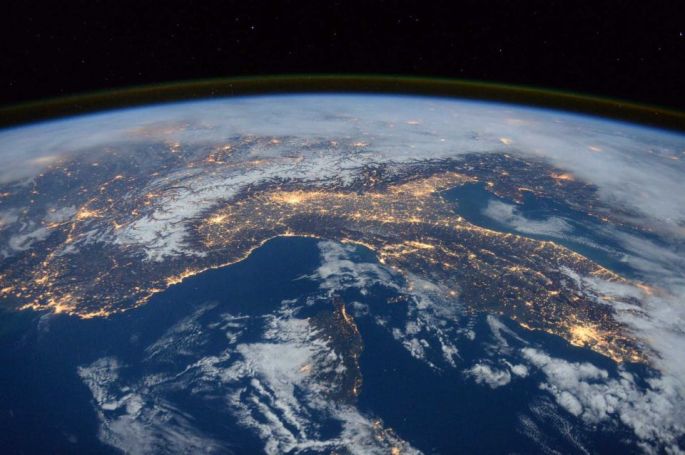
While we invest a great deal of time trying to optimize our inner climate, as the COP26 Climate Change Conference is winding up in Glasgow, Scotland with world leaders from more than 120 countries gathering to respond to our emergent climate catastrophe, this week’s Soul Food is about helping us understand the predicament we have put ourselves in, and our role in navigating the path forward…
If time is short, just read the first article to reframe the issue and the last to have a personal plan of action.
“The greatest threat to our planet is the belief that someone else will save it.”
How attenuated is your survival instinct?
Love,
Neville
Hidden Brain Reframes the Climate Issue Brilliantly!
Capitalism is killing the planet – it’s time to stop buying into our own destruction:
When faced with an impending or chronic threat, such as climate or ecological breakdown, we seem to go out of our way to compromise our survival. We convince ourselves that it’s not so serious, or even that it isn’t happening. We double down on destruction, swapping our ordinary cars for SUVs, jetting to Oblivia on a long-haul flight, burning it all up in a final frenzy. In the back of our minds, there’s a voice whispering, “If it were really so serious, someone would stop us.” If we attend to these issues at all, we do so in ways that are petty, tokenistic, comically ill-matched to the scale of our predicament. It is impossible to discern, in our response to what we know, the primacy of our survival instinct.
Solutions to Climate change by sector that can be taken TODAY
Project Drawdown:
Our mission is to help the world reach “Drawdown”— the point in the future when levels of greenhouse gases in the atmosphere stop climbing and start to steadily decline, thereby stopping catastrophic climate change — as quickly, safely, and equitably as possible.
Thanks this week go to all preservers and protectors of our tiny blue planet. Special thanks to Dana V and Fab V for sharing Project Drawdown with me.
Please pass it forward for future generations!
Love All,
Neville
“We can’t save the world by playing by the rules, because the rules have to be changed. Everything needs to change – and it has to start today!” – Greta Thunberg
A Heartfelt Tribute to Dr. Danny Friedland: Living Well From Within
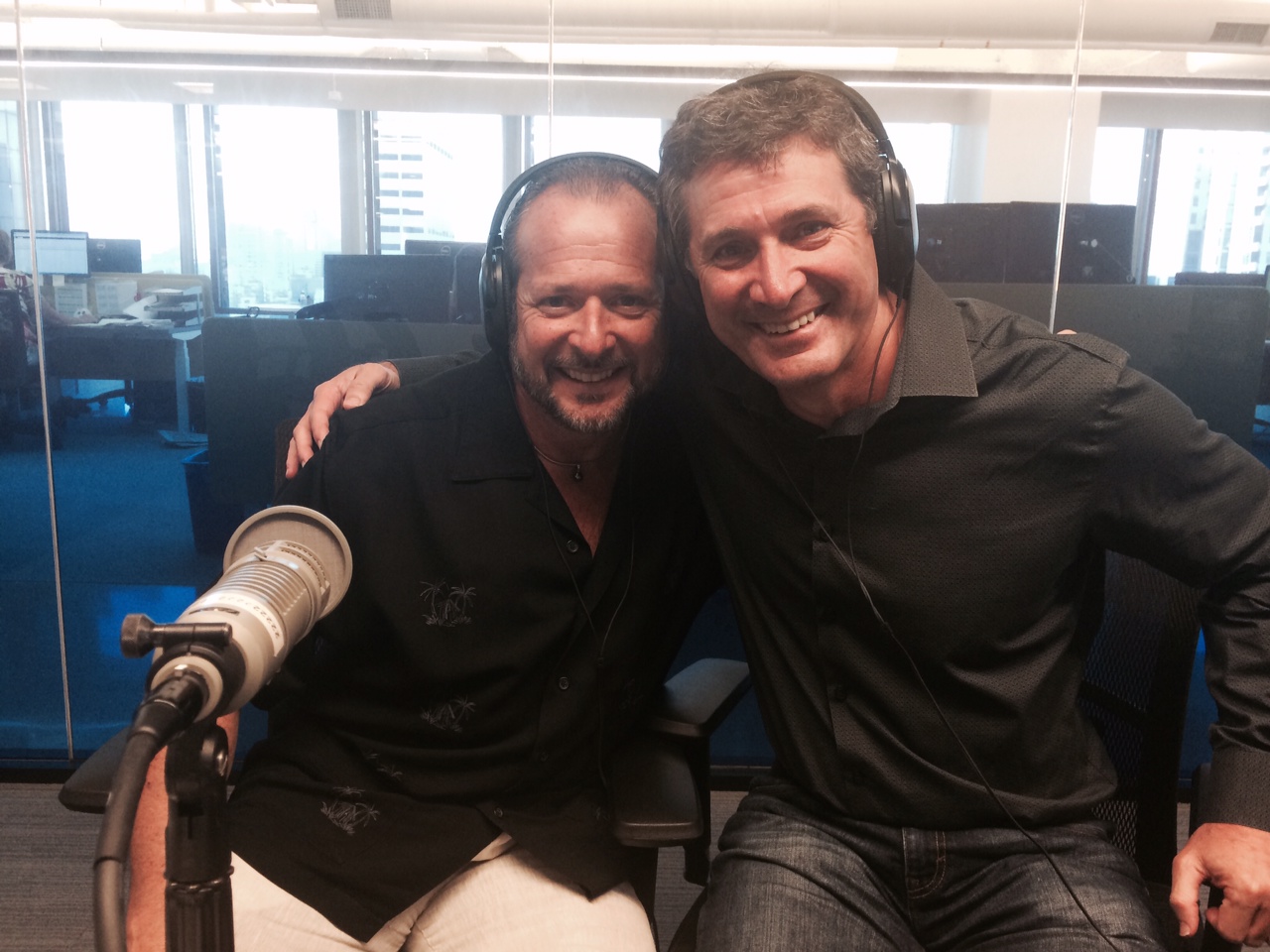
With Danny recording an episode of the Community Spotlight Show with Drew Schlosberg on Purpose-Driven Leadership
This past weekend we lost another great soul- the inestimable Dr. Danny Friedland; physician, healer, teacher, founding chair of the largest integrative health organization in the country, author of “Leading Well from Within”, executive coach, loving spouse and father, and so much more after nearly a year long struggle with brain cancer.
About 11 months ago, Danny and I recorded this impactful interview when he was fully dialed in to making every day count.
About halfway in, you can capture the full expression of wisdom and passion.
Full of gems and wisdom, here are some examples:
Your suffering right now might well be your gift to awaken your own self compassion and kindness.
Beating up on yourself does not serve you or humanity, but in your own self compassion arises the capacity to serve others around you!
We claim our personal transformation only for the purpose of giving it away in the spirit of your own self-actualization.
Danny unpacks his Personal Vow: “I vow to live my life from home, and when I get lost, find my way back and to inspire others to live from their homes too”. This is a powerful example of a direct apprehension of reality and a true embodiment of his wisdom and spirit.
Danny also reminds us that the root of the word health is not just wholeness but also holy.
I hope you enjoy this sacred conversation with a great soul I was blessed to know and learn from!
Thanks this week go to Dr. Danny- gone but not forgotten- his beloved family, and to conscious leaders past, present and future touched by his life work.
Remember leadership is not a position, it’s a decision.
Choose LOVE!
Please pay it forward as you live, love, learn and leave a legacy!
What I Learned From Colin Powell by Marc Benioff In many ways, we came from completely different worlds. Colin Powell was born in Harlem, raised in the South Bronx and, as a young R.O.T.C. cadet in the late 1950s, endured the injustice of the segregated South. I was born in San Francisco and grew up in the 1970s amid the summer of love, marches for women’s rights, and where neighbors proudly flew rainbow flags. Former Secretary of State and Chairman of the Joint Chiefs of Staff, General Colin Powell at the 1993 Harvard University Commencement.
Want a Productive Day? Do this 1 Thing, According to Virgin CEO Richard Branson Forget to-do lists, apps, mornings routines. If you want to be energized throughout your day, fold in some exercise — it even has some surprise benefits.
A neuroscientist shares the 4 brain-changing benefits of exercise—and how much she does every week Exercise offers many benefits, including more energy, weight loss and stronger muscles. But we rarely consider the effects it has on our brain. A neuroscientist breaks down how physical activity can improve your focus, memory, learning — and even promote longevity.
If You Answer Yes to This 1 Question, Chances Are You’re a Better Leader Than Most People One question to determine where you stand against the high bar of effective leadership.
“Time and space are not conditions in which we live, but modes by which we think.”
Happy Soul Food Friday!
This week:
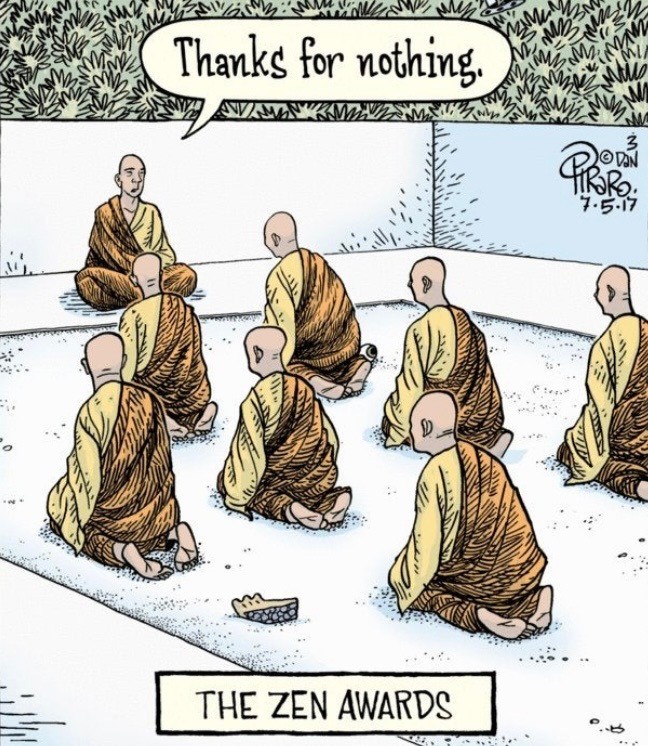
The Zen Awards
Insights Inspired by Albert Einstein:
“I didn’t arrive at my understanding of the fundamental laws of the universe through my rational mind.”
“Concerning matter, we have been all wrong. What we have called matter is energy, whose vibration has been so lowered as to be perceptible to the senses.
Matter is spirit reduced to point of visibility. There is no matter.”
“Time and space are not conditions in which we live, but modes by which we think.”
Physical concepts are free creations of the human mind, and are not, however it may seem, determined by the external world.”
“Time does not exist – we invented it. Time is what the clock says. The distinction between the past, present and future is only a stubbornly persistent illusion.”
“I think 99 times and find nothing. I stop thinking, swim in silence, and the truth comes to me.”
“The intellect has little to do on the road to discovery. There comes a leap in consciousness, call it intuition or what you will, the solution comes to you and you don’t know how or why.”
“A human being experiences himself, his thoughts and feelings as something separated from the rest, a kind of optical delusion of consciousness. This delusion is a kind of prison for us, restricting us to our personal desires and to affection for a few persons nearest to us. Our task must be to free ourselves from this prison by widening our circle of compassion to embrace all living creatures and the whole of nature in its beauty.”
“Our separation from each other is an optical illusion.”
“When something vibrates, the electrons of the entire universe resonate with it. Everything is connected. The greatest tragedy of human existence is the illusion of separateness.”
“Reality is merely an illusion, albeit a very persistent one.”
“We are souls dressed up in sacred biochemical garments and our bodies are the instruments through which our souls play their music.”
“When you examine the lives of the most influential people who have ever walked among us, you discover one thread that winds through them all.
They have been aligned first with their spiritual nature and only then with their physical selves.”
“The true value of a human being can be found in the degree to which s/he has attained liberation from the self.”
“The ancients knew something, which we seem to have forgotten.”
“The more I learn of physics, the more I am drawn to metaphysics.”
“One thing I have learned in a long life: that all our science, measured against reality, is primitive and childlike. We still do not know one thousandth of one percent of what nature has revealed to us. It is entirely possible that behind the perception of our senses, worlds are hidden of which we are unaware.”
“I’m not an atheist. The problem involved is too vast for our limited minds. We are in the position of a little child entering a huge library filled with books in many languages. The child knows someone must have written those books.”
“The common idea that I am an atheist is based on a big mistake. Anyone who interprets my scientific theories this way, did not understand them.”
“Everything is determined, every beginning and ending, by forces over which we have no control. It is determined for the insect, as well as for the star. Human beings, vegetables, or cosmic dust, we all dance to a mysterious tune, intoned in the distance by an invisible piper.”
“The religion of the future will be a cosmic religion. It will transcend a personal God and avoid dogma and theology.”
“Energy cannot be created or destroyed, it can only be changed from one form to another.”
“Everything is energy and that is all there is to it. Match the frequency of the reality you want and you cannot help but get that reality. It can be no other way. This is not philosophy. This is physics.”
“I am happy because I want nothing from anyone. I do not care about money. Decorations, titles or distinctions mean nothing to me. I do not crave praise. I claim credit for nothing. A happy man is too satisfied with the present to dwell too much on the future.”
How to Express Your Gratitude (Without Feeling Awkward)
YOU MAY ALREADY have a regular gratitude practice—mentally savoring sunsets and other everyday wonders, or even journaling about your many blessings. But when it comes to communicating your heartfelt appreciation to others, it can feel, well, kind of awkward. What if they get embarrassed—or they think you’re sucking up? What if you start gushing and come off as insincere?
International Credit Union Day 2021: “Building financial health for a brighter tomorrow”:
This week on October 21, Mission Fed joined more than 86,000 credit unions from 118 countries to celebrate the 73rd anniversary of International Credit Union Day. This year’s theme is “Building financial health for a brighter tomorrow” and speaks to how the COVID-19 pandemic continues to challenge the financial well-being of credit union members around the globe, and how we as credit unions are helping members rebuild their lives financially.
ICU Day 2021 is a celebration of the impact we have made—and continue to make for our members. It is also a chance to be thankful for the lives and communities that have been improved by our movement.
In the spirit of this International Credit Union Day, let us look beyond our local community to recognize credit unions and other financial cooperatives for the important role they play in many distressed urban and rural areas worldwide. Many people would not have been able to afford to own homes, start new businesses or attend school without the help of their credit unions. In some areas of the world, people would have no access to financial services at all without their credit unions.
Whether members are affluent or less fortunate, from villages or cities, in communities at peace or in conflict, credit unions are present across cultures and languages, helping members turn hopes and dreams into reality. Here in San Diego, we are working to build a stronger community – one member at a time.
Thank you for joining us to celebrate International Credit Union Day!
Drone Photo Award winners capture a dizzyingly fantastic view of the world This year’s best pictures include two friends sunbathing on giant shards of ice in Kazakhstan, workers at a red chili factory in Bangladesh and a white mangrove forest in Vietnam.
Special thanks this week go to Dan C for helping me launch Soul Food Friday more than 13 years ago. Dan is retiring this week.
Thanks also to Marcy M and the Bright Lights, Eric K and the Conscious Leaders for their energy & inspiration and to all my credit union brethren working hard for social justice and equity!
Please pay it forward.
Love,
Neville
“I never teach my pupils; I only attempt to provide the conditions in which they can learn.”— Albert Einstein: The father of modern physics
When Tony Bennett’s family announced he had Alzheimer’s disease in February, few of the 94-year-old singer’s fans imagined they’d ever see him on stage again. But this summer, with his family’s help, the legendary crooner began rehearsing for two concerts at Radio City Music Hall, with his friend Lady Gaga. No one knew for sure if Tony would be able to pull it off, but his family believed that Tony’s story could give hope to others struggling with Alzheimer’s. And invited us to follow him preparing for, what would likely be, his final act.
In each stage of life, our brains morph and change. This hour, TED speakers explore pivotal chapters where the brain can either flourish or decline — and what control we might have over brain health.
Psychologists are calling upon Cognitive Behavioral Therapy to treat insomnia, so here are the CBT techniques to help you sleep Simple steps towards better sleep.
High School Football Player Goes Viral for Helping Injured Opponent During Game Senior Mario Hoefer, an Iowa football player, is being praised for his sportsmanship after helping his opponent who had a cramp mid-game
See Stunning Undersea Images That Showcase Our Blue Planet From reef sharks to bioluminescent squid, the Ocean Photography Award highlights the wonders and perils of life in the sea
We are playing at Teo Leo’s 5302 Napa Street in Linda Vista this Saturday at the very reasonable hour of 7pm, if you are ready to get funked up and let your hair down. This outdoor venue makes it both fun and safe to rock out and socialize – all things considered, with San Diego’s #1 rated cover band… Tio Leo’s live music (tioleos.com)
My son Arman will be playing keys and I will sit in on percussion, when I am not shake, shake, shaking on the dance floor with my wife Barb!
Hope to see you there..
Love,
Neville
Mentorship 2.0, Fostering a Community of Practice:
Most of us intuitively know we can learn and grow with the help of experienced mentors and/or peers who share our same values and are committed to our success. The value of mentor and peer relationships are arguably even more critical in a post-COVID environment with uncharted seas and frequent storms we have not experienced before. Since no one of us is as smart as all of us, and we are all striving to make sense and create new ways to grow and improve our results, those who can tap the collective wisdom of the group might find themselves at a clear advantage.
North County Philanthropy Council (NCPC) is planning to unveil Mentorship 2.0, Fostering a Community of Practice, in November 2021. This new mentorship model creates cohorts of experienced and caring peer learning communities to help professionals grow and maximize their value for the causes that matter most to them.
We are conducting focus groups with community leaders like you to obtain feedback on Mentorship 2.0, prior to its launch. Each focus group will consist of approximately 10 participants on a one-hour Zoom conference call.
Focus group times – you will choose ONE:
Wednesday, Oct. 13 from 9 am to 10 am
Thursday, Oct. 14 from 3 pm to 4 pm
We invite you to attend one of these sessions to share your thoughts abouts this new NCPC mentor/peer development program. Space is limited. You may sign-up HERE if you are able to join us. Please let us know by October 11 if you are able to participate in this exciting new offering from NCPC.
Happy Soul Food Friday for the Week of a Full Moon, World Peace Day and the Fall Equinox!
This week: Attention, Intention, Attitude & Energy
‘What do we need to let go of to achieve more balance in our lives?
Earth’s Population Statisticsin Perspective So We Can Count Our Blessings:
The population of Earth is around 7.8 Billion. For most people, it is a large figure. However, if you condensed 7.8 billion into 100 persons, and then into various percentage statistics the resulting analysis is relatively much easier to comprehend.
Out of 100: 11 are in Europe 5 are in North America 9 are in South America 15 are in Africa 60 are in Asia
49 live in the countryside 51 live in cities
12 speak Chinese 5 speak Spanish 5 speak English 3 speak Arabic 3 speak Hindi 3 speak Bengali 3 speak Portuguese 2 speak Russian 2 speak Japanese 62 speak their own language.
77 have their own dwellings. 23 have no place to live.
21 are over-nourished. 63 can eat full. 15 are under-nourished 1 ate the last meal, but did not make it to the next meal.
The daily cost of living for 48 is less than 2 USD (US Dollars).
87 have clean drinking water. 13 either lack clean drinking water or have a water source that is polluted.
75 have mobile phones 25 do not.
30 have internet access 70 do not have the availability to go online
7 received university education 93 did not attend college.
83 can read 17 are illiterate.
33 are Christians 22 are Muslims 14 are Hindus 7 are Buddhists 12 are other religions 12 have no religious beliefs.
26 live less than 14 years 66 died between 15 – 64 years of age 8 are over 65 years old.
If you have your own home, Eat full meals & drink clean water, Have a mobile phone, Can surf the internet, and Have gone to college, You are in the minuscule privileged lot. (in the less than 7% category)
Amongst 100 persons in the world, only 8 live or exceed the age of 65.
If you are over 65 years old, be content & grateful. Cherish life, grasp the moment.
If you did not leave this world before the age of 64 like the 92 persons who have gone before you, you are already the blessed amongst mankind.
Take good care of your own health. Cherish every remaining moment.
International Peace Day or World Peace Day 2021:
The 2021 theme for the International Day of Peace is “Recovering better for an equitable and sustainable world”. We invite you to join the efforts of the United Nations family as we focus on recovering better for a more equitable and peaceful world. Celebrate peace by standing up against acts of hate online and offline, and by spreading compassion, kindness, and hope in the face of the pandemic, and as we recover.
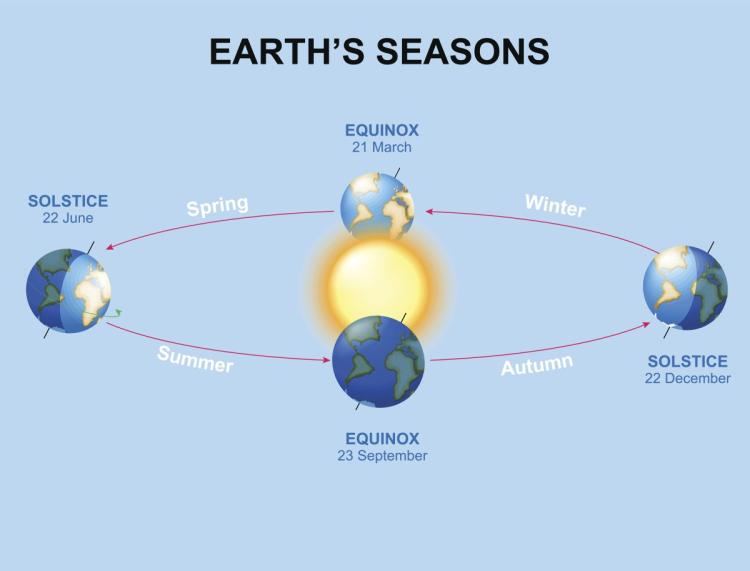
The Equinox reminds us about the passage of time, the motion of the Earth, and the changing of the seasons.
It marks the start of Autumn for us in the Northern Hemisphere. For our friends in the Southern Hemisphere, Spring has just begun.
Translated literally, equinox means “equal night”. On the equinox, the length of day and night is nearly equal in all parts of the world. Twelve hours of each, because the sun is positioned above the equator. It’s one of two times a year that the day and night are about the same length.
After the Autumnal equinox, the days become shorter and the air cooler.
On this day, the Sun rises directly in the East, and sets directly in the West.
Wishing you a special day, symbolic of balance in our life and with the environment. Stay in tune with nature and wellness!
Unleashing Your Magician for the Equinox:
Each of us is a “magician”, and our predominant thoughts are the magic spells that produce the life we are experiencing.
All the situations you see in front of you can be changed, but first you must change where you mind is fixated.
The Magician is in complete control of his/her environment. S/he represents the power of your mind’s focus, which creates the reality you are living in.
You don’t have to believe in tarot cards or magic, but you DO have to believe in yourself!
The Best Fall Equinox Ritual To Practice, According to Your Zodiac Sign Even if your back-to-school days are behind you, there’s just something about September that ushers in an energy of a fresh (and cozy) start. Astrologically speaking, this new beginning energy is credited to the autumnal equinox, the official first day of fall, happening on September 22. And since every sign is different, learning the best fall equinox ritual for your zodiac sign can help you maximize the energy to its highest potential.
How Music Can Literally Heal the Heart: In a maverick method, nephrologist Michael Field taught medical students to decipher different heart murmurs through their stethoscopes, trills, grace notes, and decrescendos to describe the distinctive sounds of heart valves snapping closed, and blood ebbing through leaky valves in plumbing disorders of the heart.
The Secret Way Sitting Can Extend Your Life, Say Experts Health experts agree that sitting too much every day is far from good for your body in the long run. When you sit too much every day—and rob yourself of many of the basic movements that can bolster your health and your body—you’ll find that your brain isn’t as sharp, your mood is worse, you develop tight muscles and poor posture, and, if you’re a woman, it may in fact affect your ability to conceive a child. Also, you’ll be essentially shaving years off your life.
Looking for Fulfillment at Work? Here’s Why Following Your Curiosity (Not Your Passion) Is Essential In fact, dropping the concept of a passion career can be incredibly freeing.
3 Tips to Help You Develop the Mindset to Adapt to Change The ability to consistently see change as an opportunity, not a threat.
The past 18 months have been a crash course in change and uncertainty. Almost overnight, we reimagined what an office can look like. We redefined workplace rules and communication norms. You may have experienced waves of uncertainty about your own job, your colleagues, or your company’s future. You may have had your dreams dashed, or had new dreams emerge. Collectively, we learned that we can adapt. But, by and large, we were forced to adapt. A pandemic flipped our world upside down, and we had little choice in the matter. Nevertheless, I reckon you’ve been thinking: I can’t wait for all this change to end. And yet, change isn’t ending. Quite the opposite: It’s accelerating…
Your Soul Food for the week of 9/11 Twenty Years Later: Being the Best We Can Be, When the Need is the Greatest
Please follow this blog by signing up on the right –>
It is hard to imagine that twenty years have passed since September 11, 2001.
The sights, sounds and feelings of that day and the days that followed are unforgettable for those that lived through it.
This week, let’s honor and memorialize those who struggled and were lost on 9/11- both first responders and helpers as well as victims of the attacks.
In a divisive world, let’s come together in shared support and unity to forge a more perfect union together because of our differences, not in spite of them.
Twenty years later, Covid has made clear how transient and impermanent live can be.
It has redefined “essential workers” and helped us appreciate those that are willing to risk all to keep us safe.
Here are some examples and stories to help us turn our stumbling blocks into stepping stones and will restore your faith in HumanKind.
Courageous!
60 Minutes Remembers 9/11: The FDNY:
On September 11, 2001, 343 members of the Fire Department of New York perished while trying to rescue people trapped in the World Trade Center. Scott Pelley speaks with firefighters who were there that day and the loved ones of those who never made it home.
20 Years After 9/11, San Diego Firefighters Remember Recovery Efforts at Ground Zero:
This KPBS News story features one of our hometown heroes and a dear friend and martial arts colleague Sensei Matt Nilsen.
“I was on a forward mission and was on top of the Western Union building the very first night that was looking directly into the pile,” he said. “And I was climbing up on scaffolding and installing antennas and establishing communications for a task force.”
As we pause to reflect on the events of 9/11/2001, you’ll likely remember down to the finest detail exactly where you were, what you were doing and how your life was altered that day. This story narrated by Tom Brokaw is about a little town in Canada named Gander, about the people there, and about what they did on 9/11 and in the days that followed.
A beautiful moment: Paralympic cyclist lauded after slowing to will on another rider Australian Stuart Jones pauses to encourage South African rider Toni Mould, who was doing it tough in a different race at the Tokyo Games
“At this point I wasn’t going to podium and I knew how hard that climb would be on her own, so I basically ceased my race there and then and put everything into encouraging Toni to climb.”
Thanks this week go to all our neighbors relying on neighbors, Matt N as emblematic of all our essential workers, Bob C for the Gander story, and ALL OF YOU that choose service before self.
“Simple kindness to one’s self and all that lives is the most powerful transformational force of all.”–David Hawkins
On Climate
We’ve been radically underestimating the true cost of our carbon footprint The Biden administration needs to factor in climate change’s cost in human lives — and what we owe to future generations.
Bigger ears? New study shows climate change is causing animals to ‘shapeshift’ A study of warm-blooded animals found beaks, tails and legs have been growing in species living in places with rising temperatures.
Dolphins Alert Rescue Crew to Lost Swimmer Who Had Been Stranded for 12 Hours A lost swimmer was found off the coast of Ireland when rescuers spotted him surrounded by a pod of dolphins
Can pets provide a path to spirituality and world peace? How companion animals benefit our lives Can animals teach us life’s lessons? Anyone who has had a companion animal is certainly nodding, “Of course, animals enrich our lives.”
Caring for a dog makes us more spiritual, thriller writer contends, and animal-behavior experts agree
A great escape: Wild boars team up to free a pair of fellow pigs caught in a trap Wild boars at a Czech nature reserve teamed up to free two other pigs captured in a trap, a rare observation of rescue behavior in animals.
Left-handed vs. right-handed face-off: Dog edition In the human world, there’s a growing body of scholarship around handedness and any possible link to superior talent, intellect, or athleticism. Are some of us more fated to succeed in life, solely by virtue of which arm our five-year-old selves used to pick up a writing utensil? Scientists have scoured nearly every corner of the brain for answers, but results are still relatively inconclusive—and so, in the spirit of tribalism, we’re going beyond the limits of our species.
6 Tips For Coping With COVID Anxiety This Fall And Winter It’s clear the next couple of seasons won’t be the “life as usual” we all hoped for. Rituals, deep breathing and reaching out to friends are just a few ways to manage anxiety when the days grow dark.
31 photos from the Nat Geo archives that capture extraordinary moments in time See some of the unforgettable images our editor discovered in Nat Geo’s historic photography collection.











 Happy Soul Food Friday!